


Victorian Stemware
These Victorian stemware pieces bring nineteenth-century craftsmanship to the table, offering shaped glass and lead crystal designed for wine, champagne and spirits.
Victorian Stemware
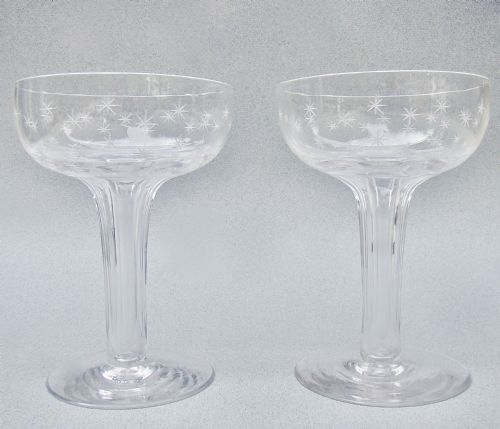
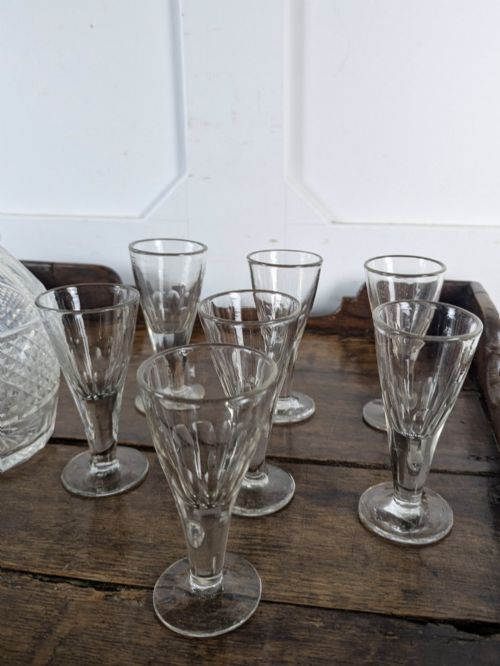
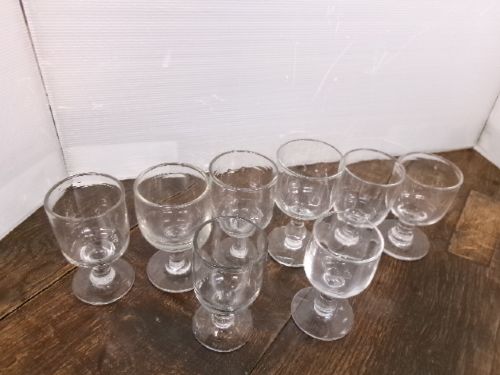
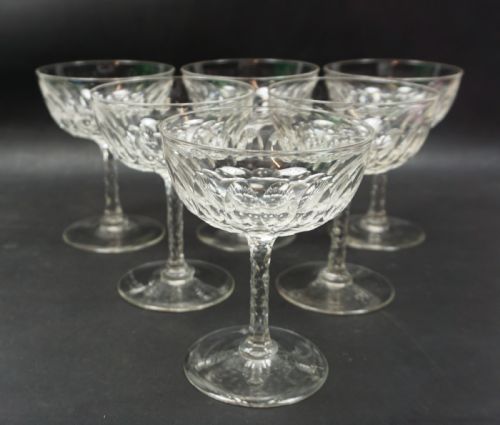
Victorian stemware encompasses drinking vessels produced across the nineteenth century, including wine glasses, champagne coupes, rummers, and goblets. These pieces bridge utilitarian dining items and decorative tableware.
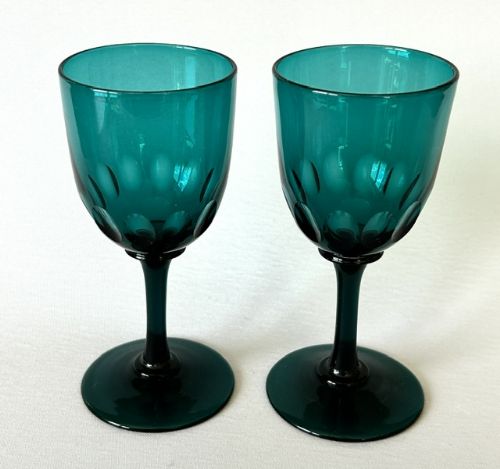
Wine glasses dominate the selection, appearing frequently in coloured glass such as cranberry, green, and amber. Sets span pairs up to larger gatherings of fifteen or sixteen pieces.
English and continental origins appear alongside Georgian carryovers and later Edwardian examples. Forms range from plain bowls to heavy cut crystal and delicate etched designs.
Materials and Technique
Makers utilised lead crystal, clear glass, and coloured glass, frequently casing contrasting layers together as seen in cranberry or red over crystal vessels. Hand-blowing provided the base form for many bowls and stems.
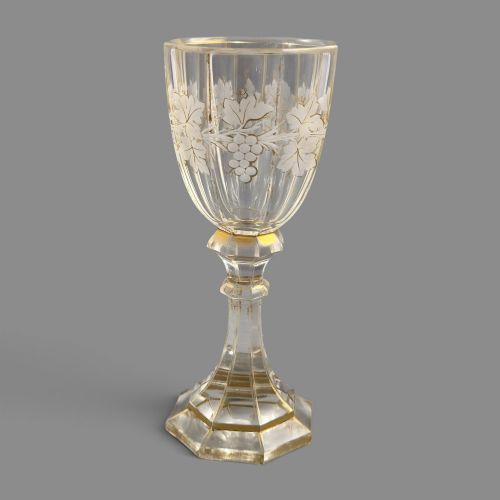
Decoration relied heavily on mechanical and manual manipulation, utilising wheel-cut facets, thumb-cuts, and star-etching. Intaglio engraving, enamelling, and gilding added surface detail to bowls and feet.
Some Victorian wine glasses contain uranium to achieve a vibrant vaseline green glow under ultraviolet light.
Gradations in Quality
Depth and crispness of wheel-cut facets separate standard production from superior output, alongside the precision of hand-etched botanical or geometric motifs. Coloured glass intensity and the evenness of cased glass layers also indicate finer production standards.
The weight and clarity of lead crystal influence the tactile presence of a goblet or flute. Uniformity across larger sets demonstrates skilled batch production by period glasshouses.
Moser Bohemian·Fritz Heckert·Stevens and Williams
The Victorian Stemware Glossary
- Rummer
- A heavy-bowled drinking glass used for wine or ale during the Georgian and Victorian periods. These pieces typically feature short stems and sturdy feet.
- Cranberry glass
- A transparent pinkish-red glass produced by adding gold chloride to the molten batch. It appears frequently in Victorian wine glass sets.
- Intaglio engraving
- A technique where designs are carved into the glass surface using small rotating wheels, creating sunken patterns. This differs from cameo glass, where the background is cut away.
- Vaseline glass
- A yellow-green glass containing uranium dioxide that glows under ultraviolet light. Victorian examples include wine glasses produced around eighteen eighty.
- Tazza
- An elevated ornamental cup or shallow bowl on a stem and foot, used for serving desserts or displaying fruit. These items often feature gilded or etched ornamentation.
Victorian Stemware: Frequently Asked Questions
Are these glasses safe for daily use?
Many Victorian stemware pieces remain structurally sound for occasional dining and toast use. Handle them with care due to their age and handmade construction.
Coloured glass and lead crystal perform well with standard table service. Hand placement on the stem prevents undue pressure on historical bowls.
How do I identify Victorian stemware?
Examine the weight, pontil marks on the base, and manufacturing characteristics such as hand-blown bowl irregularities. Styles often incorporate heavy cutting or vibrant colours typical of the nineteenth century.
Comparing forms against dated examples helps narrow down production windows. Colour palettes like cranberry, amber, and vaseline strongly point toward Victorian manufacture.
What is a harlequin set?
A harlequin set consists of drinking vessels that share a general period or form but vary in their individual colours or decorative patterns. These assembled groups offer a decorative table display.
Such sets bring together diverse nineteenth-century tones like green, amber, and cranberry. They allow collectors to enjoy multiple glass shades within a single matching form factor.