




Victorian Cranberry Glass Jug
These vibrant pieces of victorian cranberry glass jug bring rich pink-red warmth to a table, prized for their glowing tones and tactile forms.
Victorian Cranberry Glass Jug
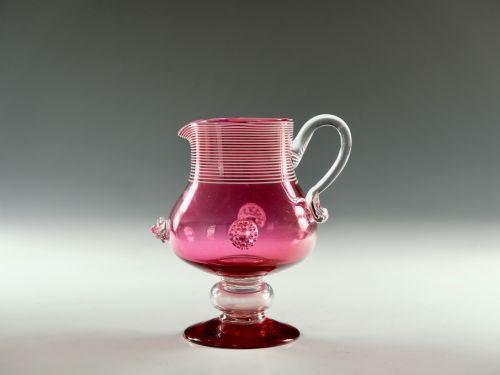
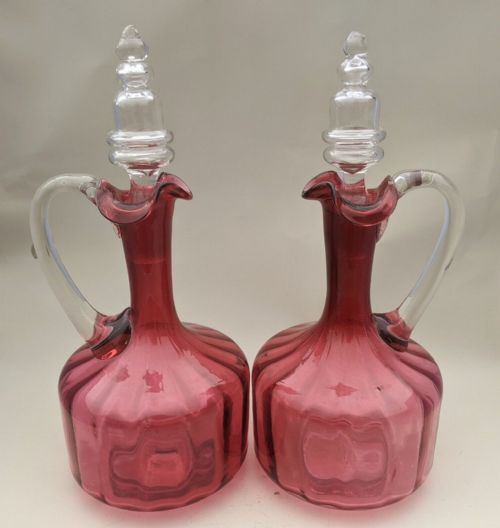
A victorian cranberry glass jug is a serving vessel shaped for cream, water, or wine, originating predominantly from the nineteenth century and the Edwardian era. You will encounter forms ranging from small cream jugs with white piping to large water pitchers and decanters fitted with silver plate mounts.
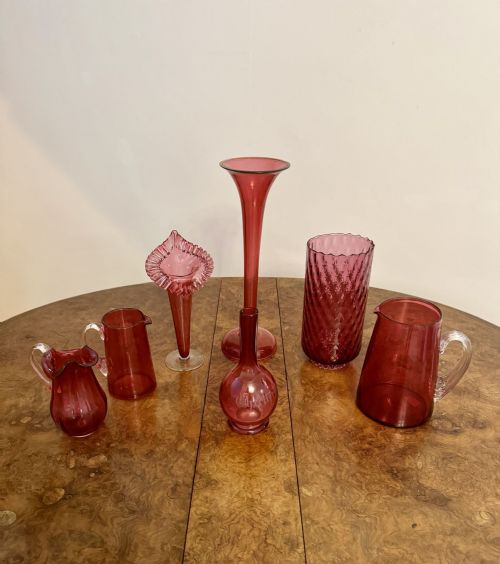
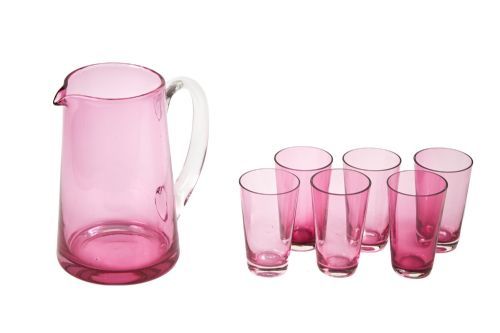
The objects span practical drinkware and decorative glassware collections, frequently appearing alongside matching tumblers, bowls, or glasses. The physical evidence shows pieces dating from the eighteen-sixties through to nineteen-ten, embodying Victorian and Edwardian domestic styles.
Most examples take the form of water jugs, claret jugs, or cream jugs, produced in English workshops. Collectors look for these specific functional forms when completing a table service or building a glass collection.
Materials and glassmaking techniques
The defining characteristic of these vessels is cranberry glass, achieved through the addition of gold salt to the molten glass batch to produce a distinct pinkish-red hue. Makers also utilised clear glass, ruby glass, and crystal to contrast with or complement the primary colour.
Surface texture and decoration were achieved through various physical methods, resulting in crackle glass, overshot glass, and cut glass finishes. Artisans applied white piping or engraved fruiting vines directly onto the body of the vessel.
Many larger serving pieces incorporated mounts, frames, or liners made from silver plate, combining metalwork with blown glass. These combined materials required skilled collaboration between glassblowers and metalworkers.
The listings show items spanning the Victorian and Edwardian periods, utilising cranberry glass, clear glass, silver plate, and gold salt additives.
Distinguishing quality in the pieces
The depth and consistency of the colour set the visual standard for these vessels, dependent upon the precise proportion of gold salt added during the melt. Rich, even saturation across the body distinguishes finer examples from paler or unevenly tinted pieces.
Execution of decorative techniques, such as the precision of engraved fruiting vines, the crispness of cut facets, or the even distribution of crackle texture, demonstrates the hand of a more accomplished artisan. The integration of silver plate mounts, where present, indicates the original grade of the object.
Form and proportion also govern desirability, with unusual shapes like specialised claret jugs or pitchers commanding attention alongside balanced, traditional cream jugs. The presence of matching sets or original glass pairings elevates the integrity of the piece.
The Victorian Cranberry Glass Jug Glossary
- Cranberry glass
- A transparent glass coloured by the addition of gold to the batch. It yields shades ranging from light pink to deep red.
- Gold salt additive
- The metallic compound mixed into molten glass to create the distinctive cranberry colour. It reacts to heat during the blowing process.
- Claret jug
- A pouring vessel designed specifically for serving red wine at the dining table. They frequently feature silver plate mounts and handles.
- Overshot glass
- A technique where hot glass threads are rolled over the surface of a blown vessel to create a rough, textured finish. This adds tactile grip and visual interest.
- Crackle glass
- Glass deliberately immersed in water while hot to produce a network of fine internal fractures. The vessel is then reheated and shaped further.
Victorian Cranberry Glass Jug: Frequently Asked Questions
Were these jugs used for daily dining?
Victorian households utilised these vessels for serving cream at tea or water and wine at dinner. Their vibrant colour made them centrepieces for formal dining tables as well as parlour settings.
Over time, many transitioned from functional kitchenware to decorative display items. Today, collectors often use smaller cream jugs for casual service while displaying larger pitchers.
How do I spot an older piece?
Examine the base of the vessel for a polished pontil mark where the blowpipe was detached. Nineteenth-century examples often exhibit hand-blown irregularities and subtle variations in thickness.
Look for period-appropriate decorative details like hand-applied white piping or cut glass patterns. Maker styles and silver plate hallmarks, when present, help confirm the nineteenth-century timeline.
Can I use them for hot liquids?
Avoid pouring boiling water directly into these antique vessels. Sudden thermal shock can cause vintage glass to crack or fracture.
Stick to cold or room-temperature liquids such as water, wine, or cream. Gentle use preserves the structural integrity of the glass.