

Victorian Glass Jug
A victorian glass jug brings tactile weight and rich colour to a table, offering both decorative presence and practical service.

Identifying a victorian glass jug
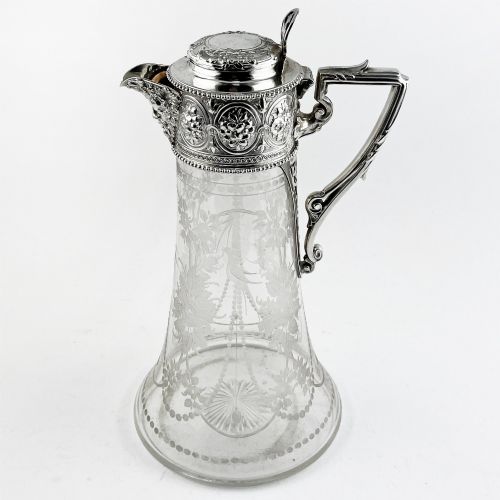
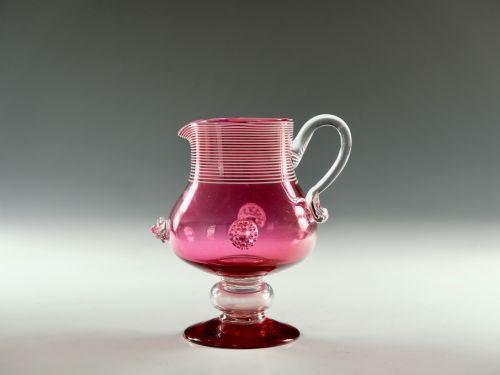
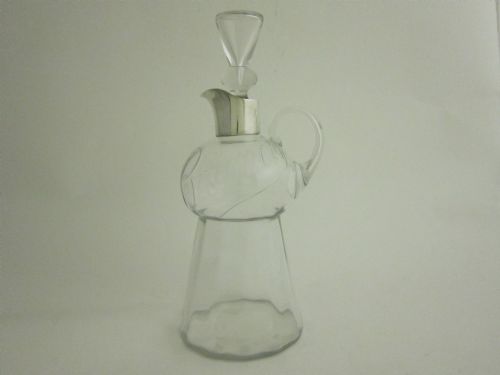
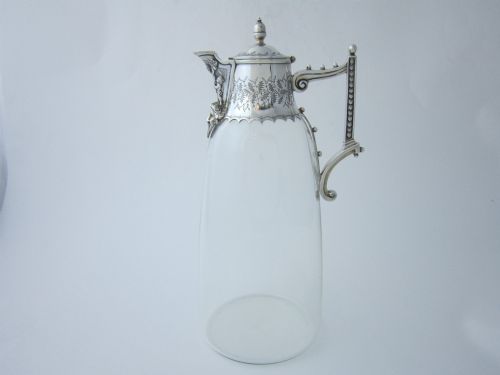
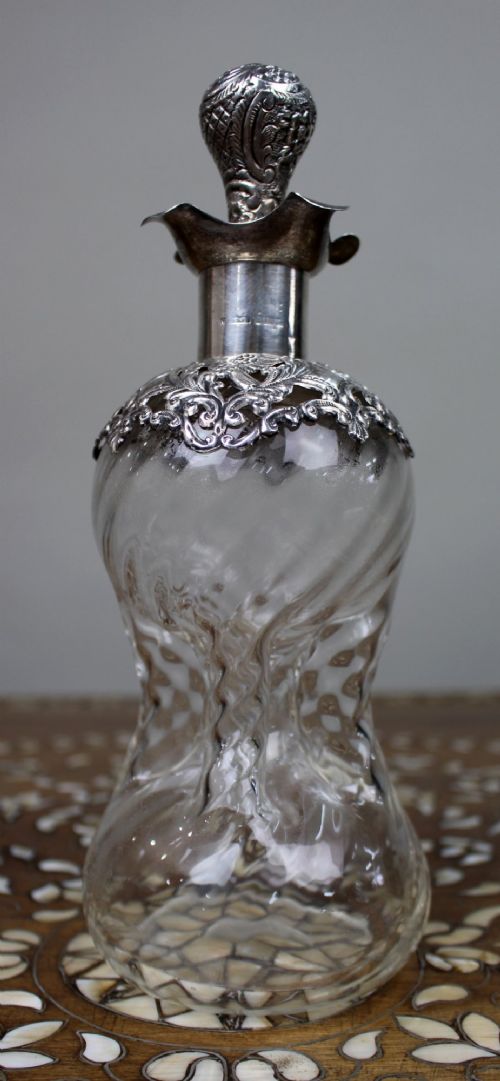
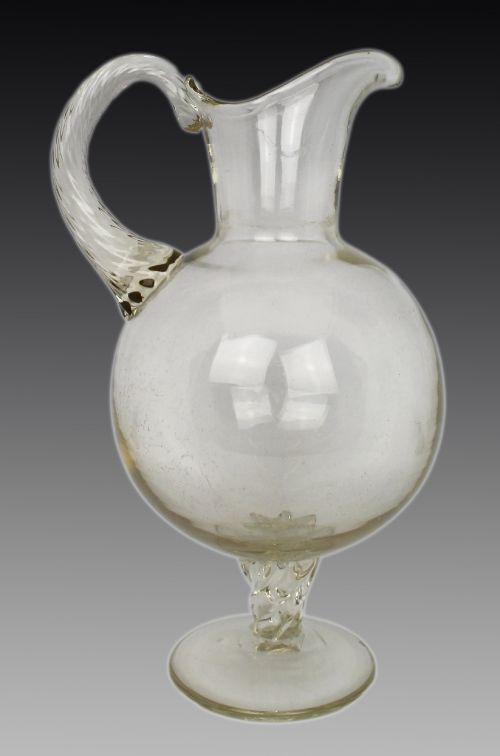
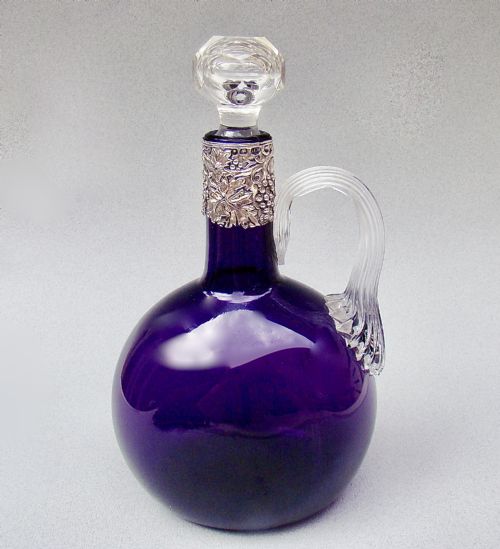
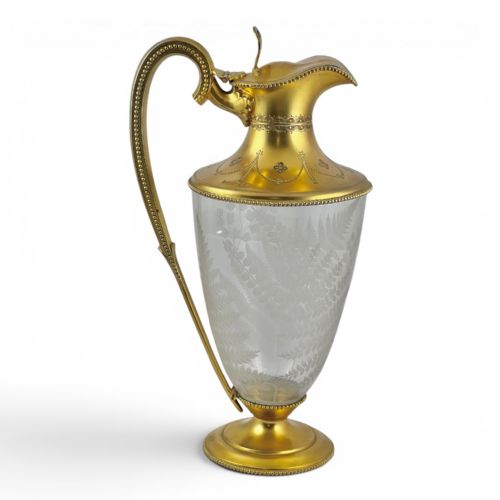
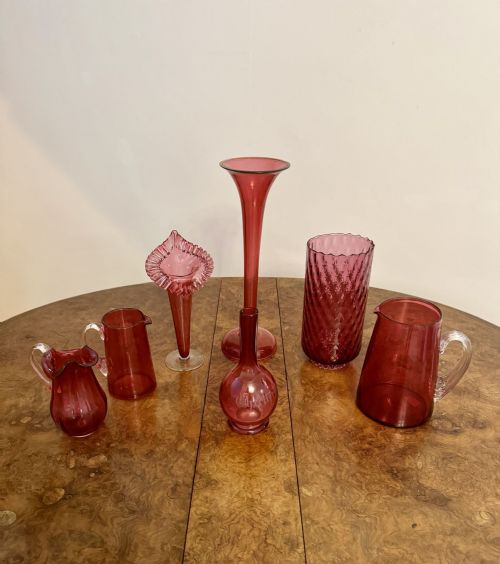
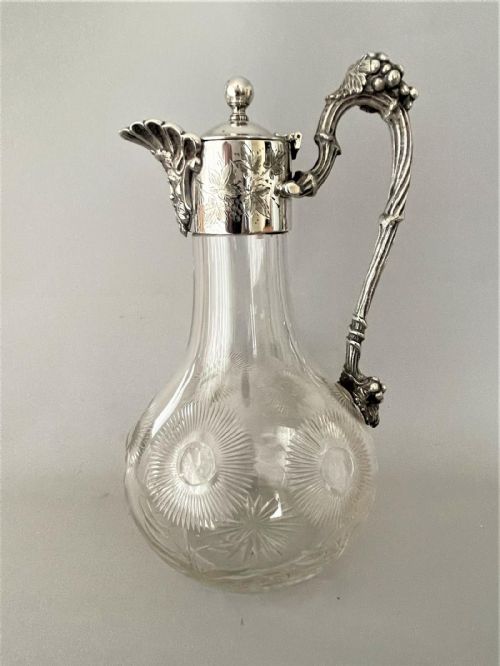
A victorian glass jug spans domestic forms designed for wine, water, cream, and claret, frequently appearing with fitted mounts in silver or silver plate. The selection encompasses vibrant coloured vessels as well as heavy, light-catching cut crystal.
Moulded and blown bodies take shapes ranging from slender claret ewers to robust water pitchers and small cream jugs. These domestic utensils reflect the varied dining and entertaining habits of the nineteenth century.
Examples on this page draw from decades across the Victorian era, showing shifts from simple blown coloured glass to elaborate engraved and mounted showpieces. Each piece demonstrates the heavy utilitarian purpose combined with parlour elegance characteristic of the period.
Materials and construction
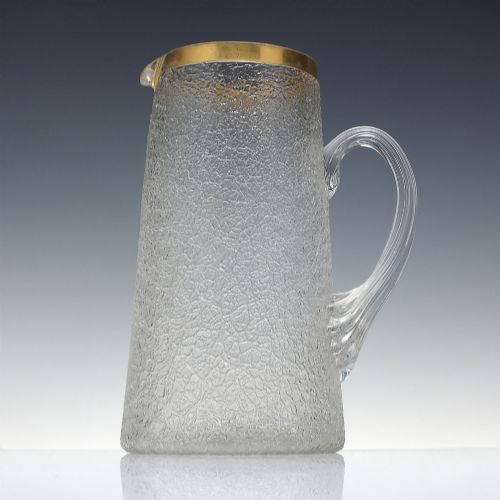
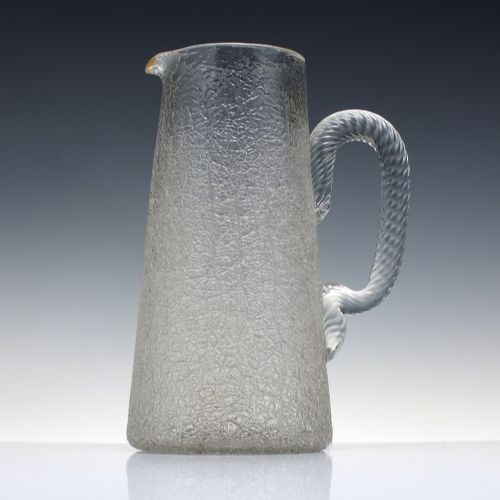
Vessels utilise lead glass, crystal glass, and specialist coloured metal including cranberry, Bristol green, Bristol blue, overshot, and reverse Rubina Verde glass. Some pieces incorporate gold salt additive to achieve their distinct hues.
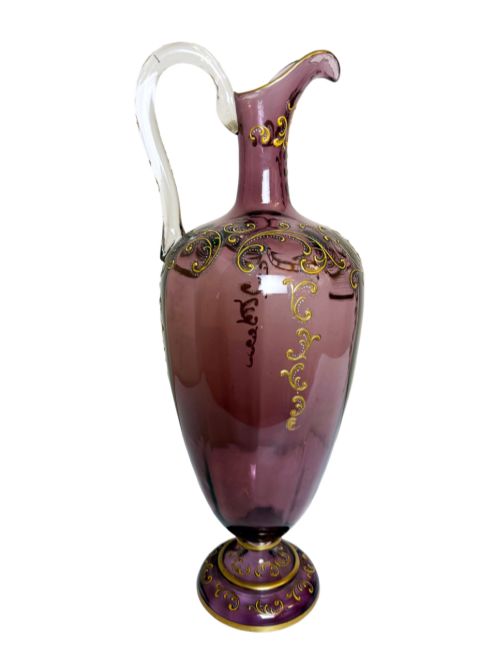
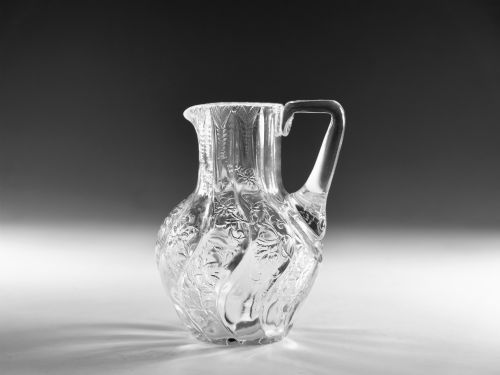
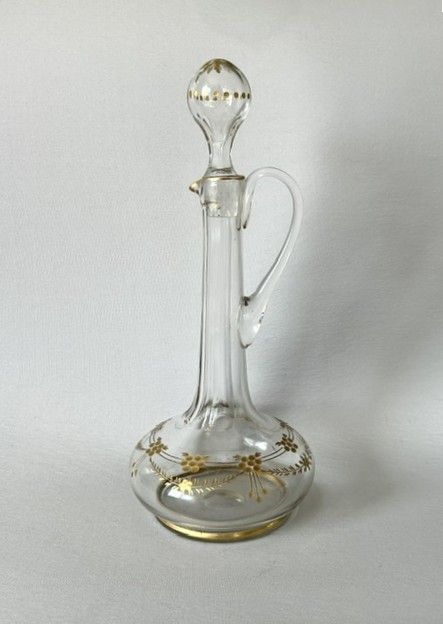
Hot metal techniques allowed makers to shape bodies by hand blowing or pressing into moulds, occasionally adding enamel painting, gilding, or surface engraving of dolphins and foliage. Metal mounts in sterling silver, EPNS, and silver plating were then fitted securely around necks and handles.
Retail Price Guide 2026
Typical UK retail prices for victorian glass jug, calculated from the Sellingantiques database of over a million retail prices indexed since 2003. This retail price guide relies exclusively on Sellingantiques data; no external sources or auction records are used, so the figures do not describe the wider market.
Object forms span claret jugs, water pitchers, cream jugs, and decanters mounted in sterling silver and silver plate.
Judging quality and execution
Distinctions in quality rest upon the crispness of the glass cutting, the depth and clarity of wheel engraving, and the weight of the metal mount. Heavier lead crystal and deeply faceted patterns demand greater skill from the glasscutter.
Makers' marks on silver collars and mounts separate standard production items from pieces bearing the touch of known silversmiths or glasshouses. The integration between the blown vessel and its fitted metal collar indicates the care taken during initial assembly.
Richardsons·Mappin and Hall·Hukin and Heath·John Grinsell·Stevens and Williams
The Victorian Glass Jug Glossary
- Claret jug
- A specialised vessel designed for serving red wine at the dining table. These typically feature hinged metal lids and spouts.
- Cranberry glass
- Transparent red glass coloured by the addition of gold chloride into the molten batch. It is widely seen in nineteenth-century tableware.
- Overshot glass
- A textured glass surface created by rolling a hot vessel over fine threads of molten glass. This leaves a rough, frosted tactile finish.
- Reverse Rubina Verde
- A shaded glass technique transitioning between green and red or amber tones. The colour gradient shifts across the body of the jug.
- EPNS
- Electroplated nickel silver, a common base material used for metal handles, collars, and hinged lids on Victorian tableware.
Frequently Asked Questions
What is a claret jug used for?
A claret jug serves red wine from the bottle into glasses at the dining table, incorporating a hinged lid to keep out dust.
These vessels combine glass bodies with metal mounts, functioning as both functional tableware and decorative centrepieces.
How do I clean an antique glass jug?
Wash these pieces gently in warm soapy water using a soft cloth, avoiding harsh abrasives that might scratch the surface.
Care must be taken around silver plated mounts and delicate engraved glass details during cleaning.
How can I tell the age of a glass jug?
Dating relies on stylistic markers, glass colours, and hallmarks stamped onto silver mounts by assay offices.
Records show specific manufacturing periods through techniques like overshot glass and distinct nineteenth-century silhouettes.
Are these jugs safe for daily use?
Most antique jugs can hold cold liquids safely, though modern dishwashers should be avoided entirely.
Hand washing preserves both the fragile glass body and the historic silver plate or sterling silver mounts.