
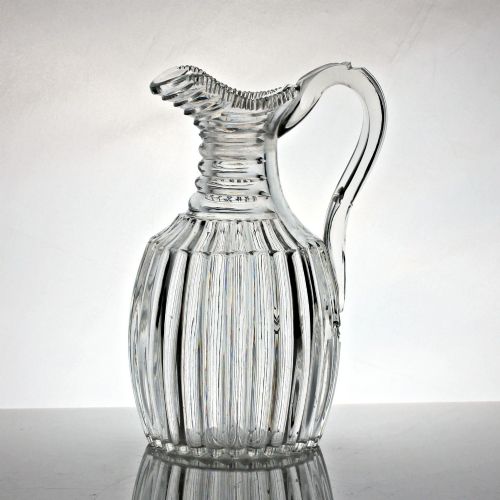
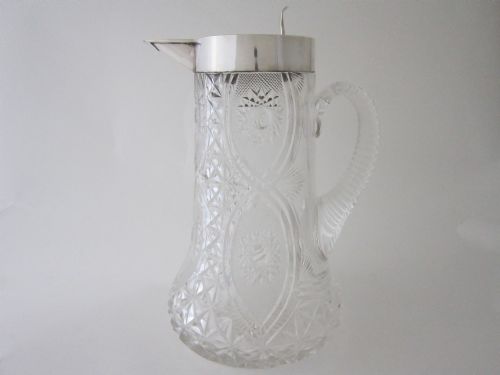
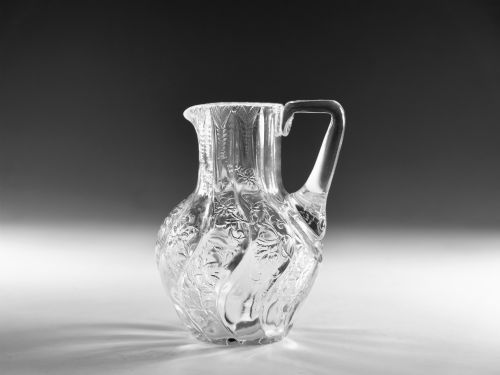
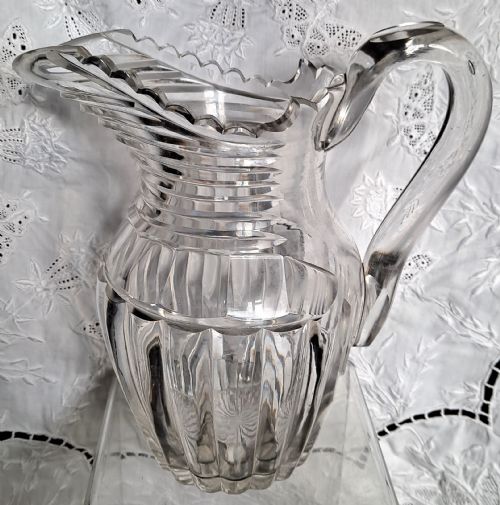




Cut Glass Water Pitcher
A cut glass water pitcher brings weight and brilliant light to a table, combining utility with decorative cut or engraved detail.
What these pitchers are
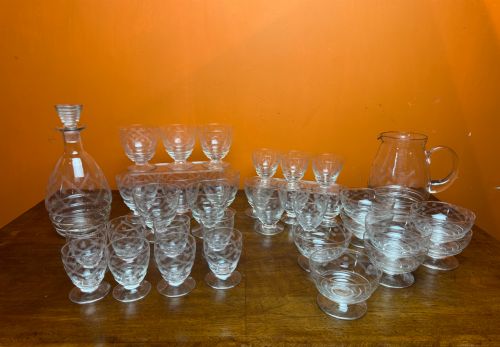
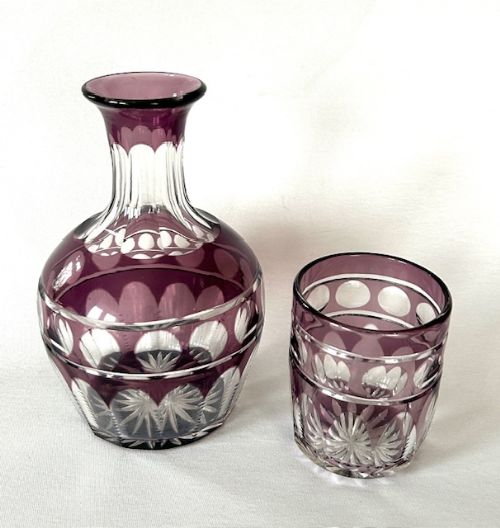
A cut glass water pitcher sits within a broader category of antique glassware that includes water jugs, carafes, and lemonade jugs. The pieces found here span the Victorian, Edwardian, and Art Deco eras, ranging from clear cut crystal to amethyst glass.
Most examples take the form of substantial handled jugs designed for serving water, lemonade, or wine at the table. Several items feature integrated metal mounts, such as sterling silver or silver plate collars and handles, alongside specific functional additions like internal ice tubes.
How they were made
These pieces utilise heavy clear glass, crystal, or coloured glass shaped by blowing or moulding before craftsmen applied deep wheel-cutting or surface engraving. The resulting faceted patterns catch and refract light across the body of the vessel.
Metal components, including sterling silver and silver plate mounts, were joined to the glass bodies to form secure rims, spouts, and handles. Certain specialised lemonade jugs incorporate internal metal ice tubes designed to chill the contents without dilution.
Retail Price Guide 2026
Typical UK retail prices for cut glass water pitcher, calculated from the Sellingantiques database of over a million retail prices indexed since 2003. This retail price guide relies exclusively on Sellingantiques data; no external sources or auction records are used, so the figures do not describe the wider market.
Materials represented across the inventory include clear crystal, amethyst glass, sterling silver, and silver plate.
What varies in quality
Quality rests upon the clarity of the crystal and the crispness of the wheel-cut facets. Sharply defined geometric or engraved patterns require greater skill from the glasscutter than soft or shallow impressions.
The addition of precious metals elevates a piece, particularly when fitted with substantial sterling silver mounts by notable makers. The overall weight and balance of the vessel, combined with the secure integration of handle and spout, determine the standard of the finished object.
Mappin & Webb·Tiffany
The Cut Glass Water Pitcher Glossary
- Cut glass
- Glass decorated by holding the vessel against a rotating abrasive wheel to carve deep geometric or floral patterns into the surface. This technique creates sharp facets that scatter light.
- Crystal
- A type of glass containing lead oxide, which increases weight, brilliance, and the time available for cutting intricate details. It produces a clear ring when struck.
- Sterling silver
- An alloy consisting of ninety-two point five percent silver by mass, used here for decorative mounts, rims, and handles. It provides a durable and polished contrast to the glass body.
- Silver plate
- A base metal coated with a thin layer of silver, frequently utilised for the handles and collars of nineteenth-century jugs. It offered the appearance of solid silver at a lower cost.
- Amethyst glass
- Glass coloured purple through the addition of manganese or other minerals during the melting process. Victorian makers utilised this rich hue for decorative carafes and matching tumblers.
Frequently Asked Questions
How do I date a cut glass water pitcher?
Dating relies on combining the stylistic evidence of the cutting patterns with any accompanying metal mounts or hallmarks. Victorian pieces often display deep, complex hobnail cutting, while Art Deco examples from the nineteen-thirties favour streamlined engraved decoration.
Assay marks on sterling silver collars or ice tubes provide precise year markers where present. The transition from heavy Victorian lead crystal to lighter modernist forms also helps establish the period.
Can I use an antique pitcher for daily serving?
These pitchers were designed for functional table use and remain sturdy enough for serving water or chilled drinks today. Care should be taken to avoid thermal shock by not exposing cold glass to boiling water.
Hand washing is essential to protect any delicate wheel-cut details or aged silver mounts from harsh dishwasher detergents.
How do I clean cloudy antique glass?
Cloudiness often stems from mineral scale left by standing water over long periods. Gentle soaking with warm water and specialised cleaning beads or vinegar usually resolves surface residue without scratching the antique crystal.
Harsh abrasives and scouring pads must be avoided to preserve the polish on both the glass facets and any attached silver elements.