

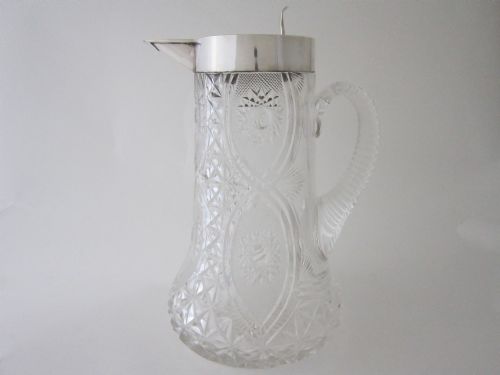
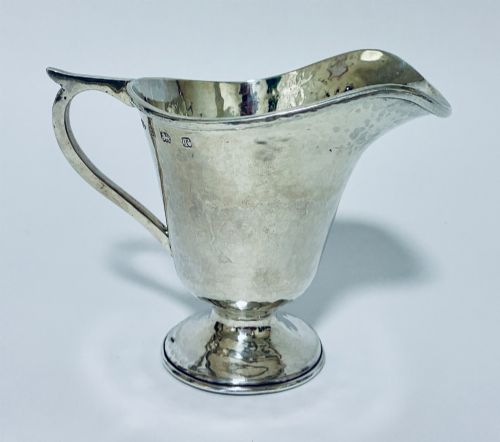
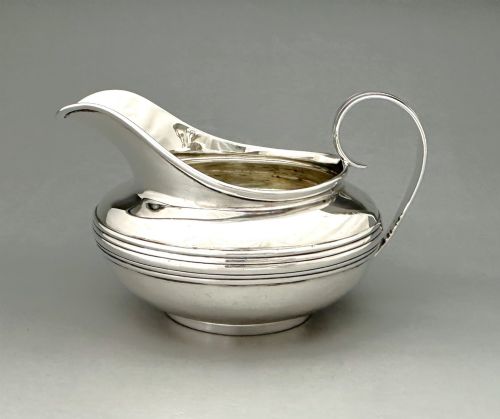
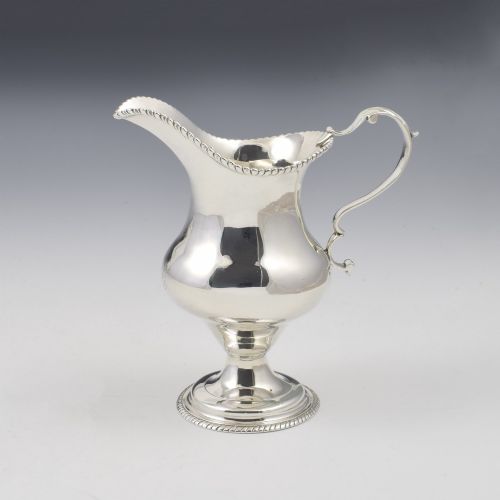
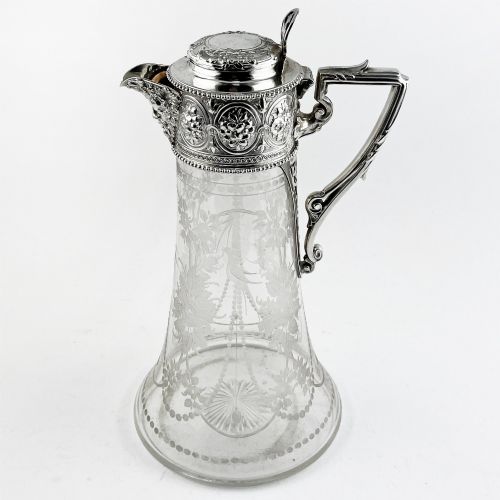
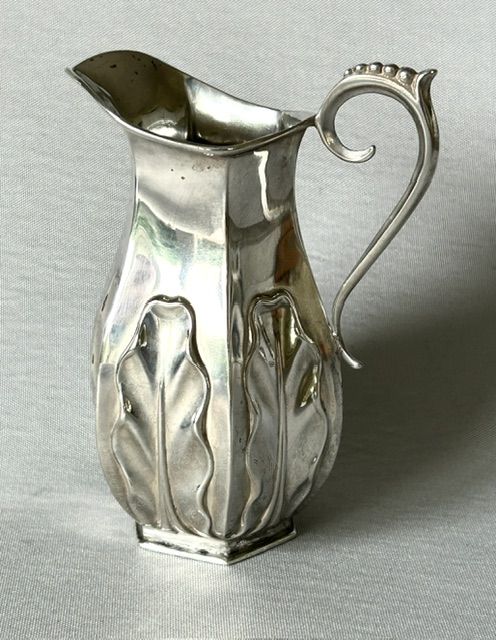
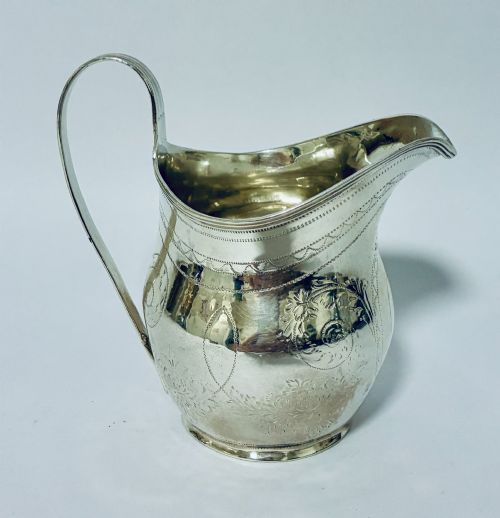
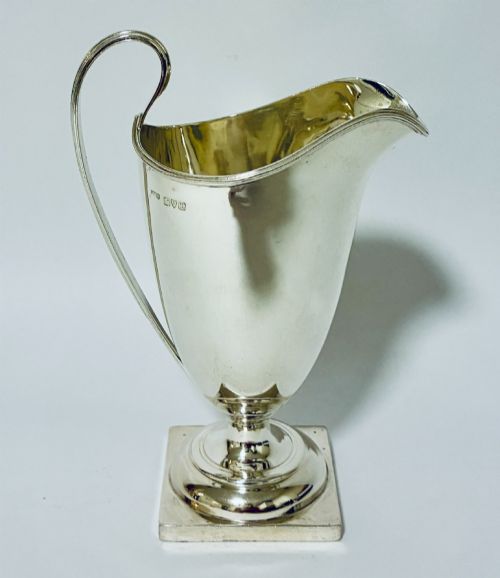
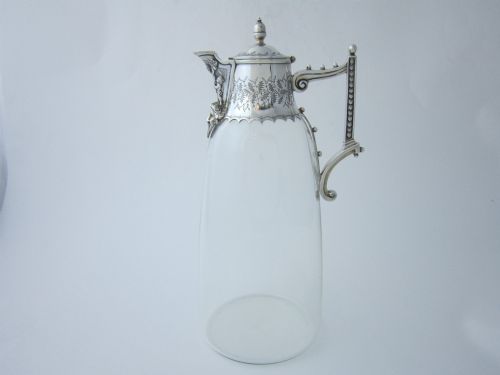
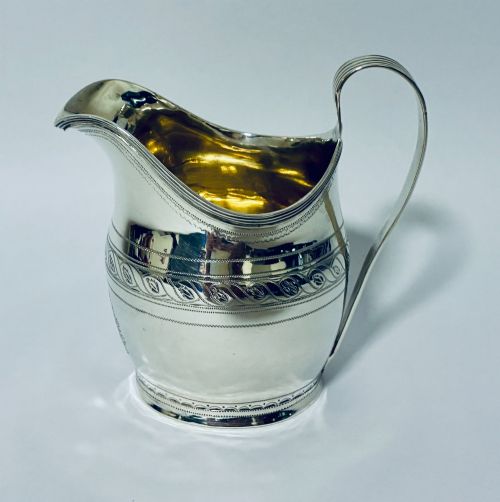
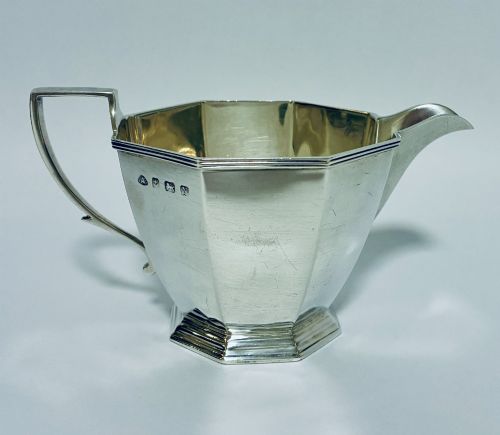

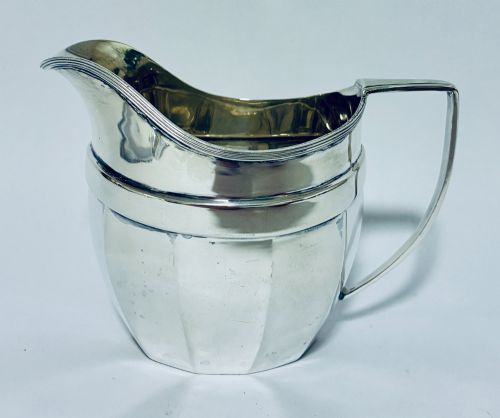
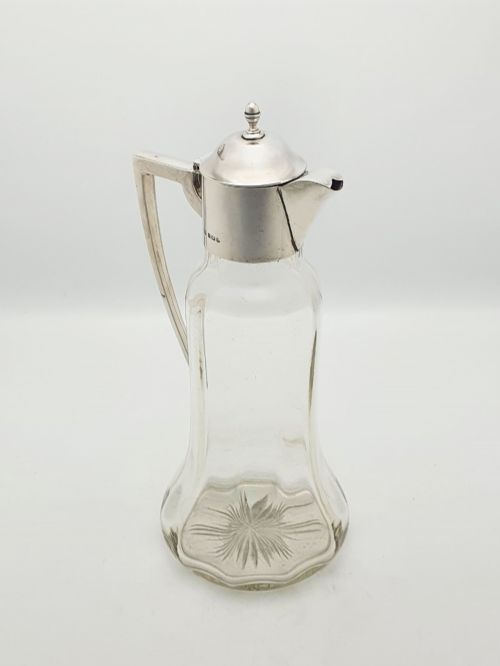
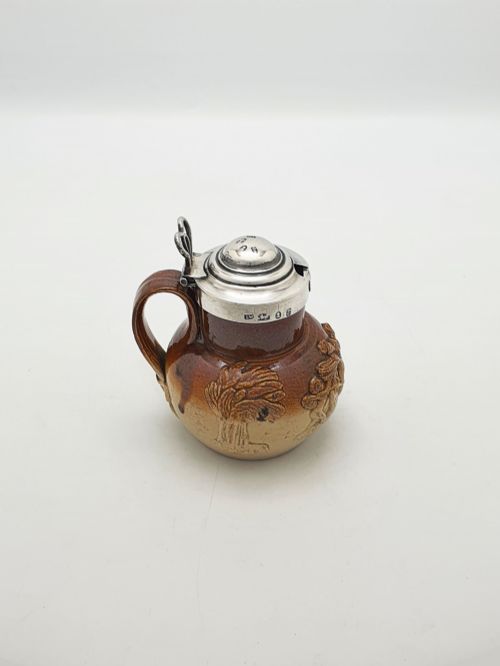
Antique Sterling Silver Pitcher
These antique sterling silver pitchers range from sturdy Georgian cream jugs to striking Art Deco water vessels, prized for their gleaming metal and traditional utility.
Identifying these pieces
An antique sterling silver pitcher encompasses both compact cream jugs and larger water vessels designed for table service. The examples found here span the Georgian, Victorian, Arts and Crafts, and Art Deco eras.
Smaller cream jugs dominate the selection, often appearing in matched pairs or individual forms alongside taller water jugs. These vessels reflect the domestic habits of their respective periods, from formal tea service to daily dining.
Materials and construction
The primary material is sterling silver, occasionally accented with gold gilt interiors or paired with components like wood and cut glass. Silversmiths shaped these metals through traditional forming and hammering techniques.
Constructed across distinct design movements, the pieces demonstrate specialised handling of silver sheet and cast elements. Details such as applied handles and polished surfaces reveal the methods of period workshops.
Retail Price Guide 2026
Typical UK retail prices for sterling silver pitcher, calculated from the Sellingantiques database of over a million retail prices indexed since 2003. This retail price guide relies exclusively on Sellingantiques data; no external sources or auction records are used, so the figures do not describe the wider market.
One graduating pair of Victorian jugs from Chester proves that silver vessels appreciate travelling in close family groups.
Assessing the workmanship
Quality rests in the crispness of the silversmith's shaping and the balance of the handle against the body. Superior examples display deliberate weight and precise finishing without masking the integrity of the silver.
The sophistication of the period style, whether restrained Georgian lines or bold Arts and Crafts execution, dictates the visual success of the piece. Harmony between material thickness and decorative restraint marks the finest work.
Tiffany
The Antique Sterling Silver Pitcher Glossary
- Sterling silver
- An alloy containing 92.5 percent silver by weight, standard for quality British and international tablewares. This composition provides the necessary durability for functional vessels.
- Cream jug
- A small pitcher specifically formed for serving milk or cream at tea. These pieces often mirror the larger teapots and sugar bowls of their service.
- Water jug
- A larger pitcher intended for holding and pouring water at the dining table. They generally feature substantial handles to support the greater volume.
- Gilt
- A thin layer of gold applied to the interior surface of a silver vessel. This technique protects the silver from the corrosive properties of acidic contents.
Frequently Asked Questions
How do I clean an antique sterling silver pitcher?
Use a soft cloth and a specialised silver polish designed to remove tarnish without scratching the metal surface. Avoid harsh chemical dips that can strip away desirable patination.
Rinse the vessel thoroughly in warm water and dry it immediately with a lint-free cloth to maintain its polished appearance.
Can I still use these pitchers for serving drinks?
Sterling silver is entirely food safe and suitable for serving water, milk, or cream during meals. Ensure you wash the vessel by hand promptly after use.
Refrain from placing silver pitchers in a dishwasher, as the harsh detergents and high heat will damage the finish and any wooden elements.
What is the difference between a cream jug and a water jug?
Cream jugs are significantly smaller, holding individual portions or enough dairy for a small tea service. They often date to the Georgian and Victorian periods.
Water jugs are taller and heavier, built to supply multiple diners. They frequently appear in later twentieth-century styles like Art Deco.
How can I tell which period a pitcher belongs to?
Examine the overall silhouette and decorative motifs against known design movements such as Georgian restraint or Arts and Crafts handcrafting. Stylistic cues offer the first indication of age.
Hallmarks stamped directly onto the silver provide precise information regarding the assay office, date letter, and maker where applicable.