







Georgian Silver Milk Pitcher
A georgian silver milk pitcher is a domestic vessel for pouring cream or milk at the tea table, valued for its fine silversmithing and period form.
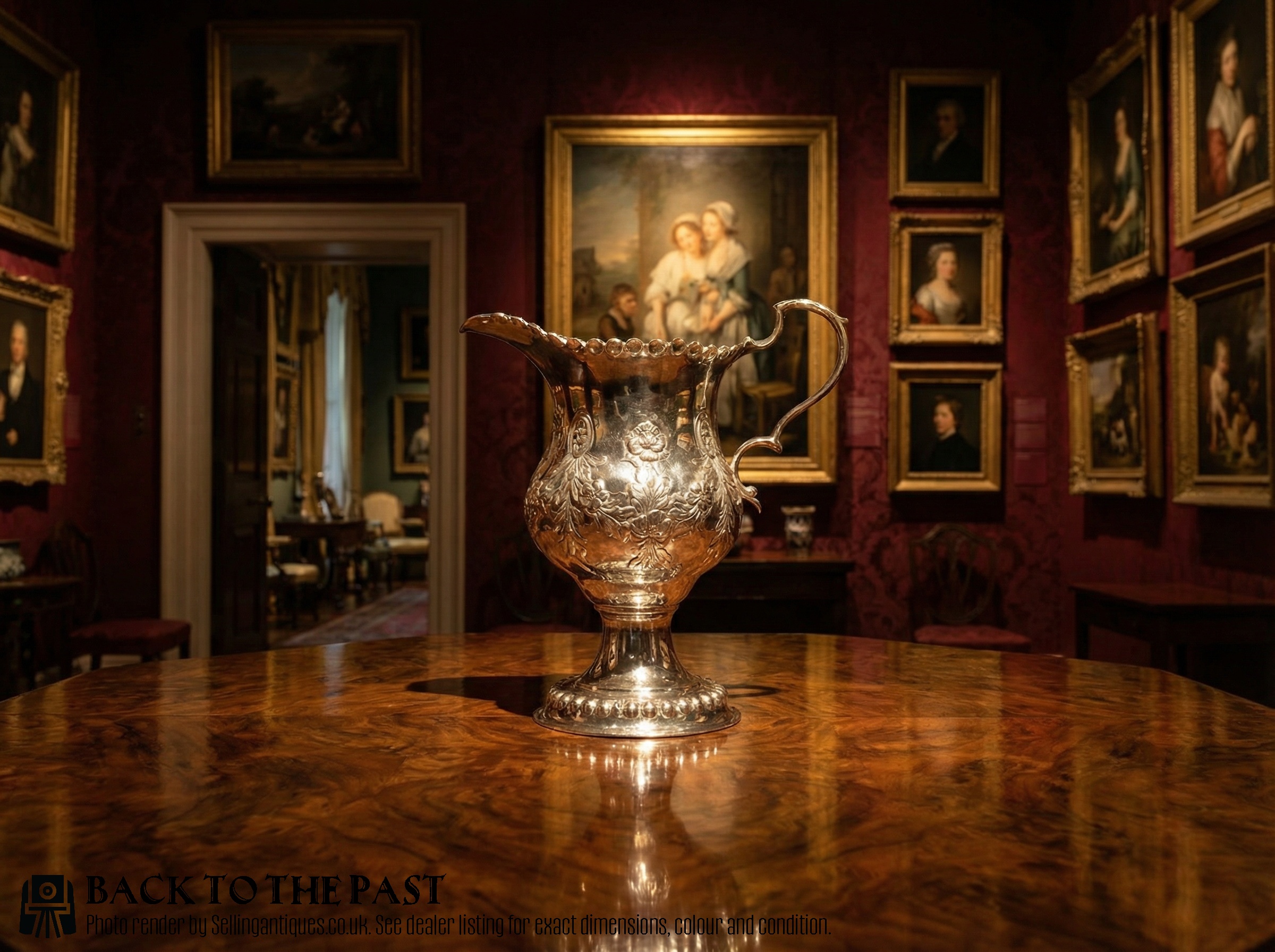
Georgian Silver Milk Pitcher
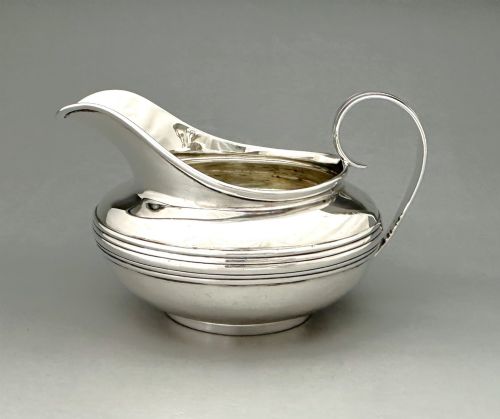
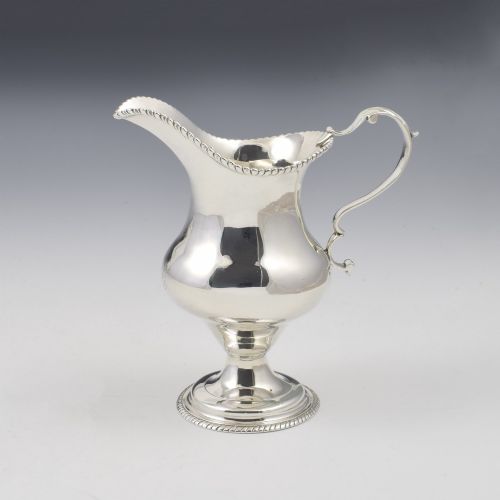
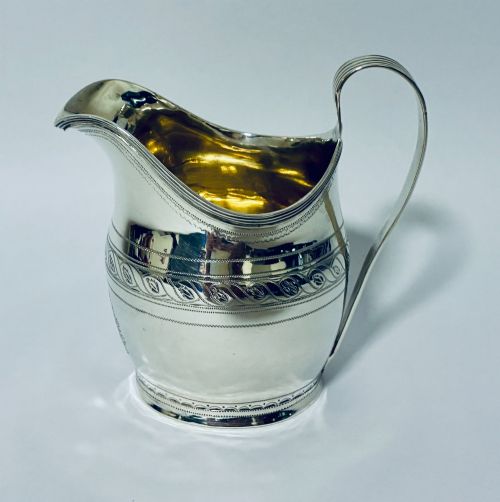
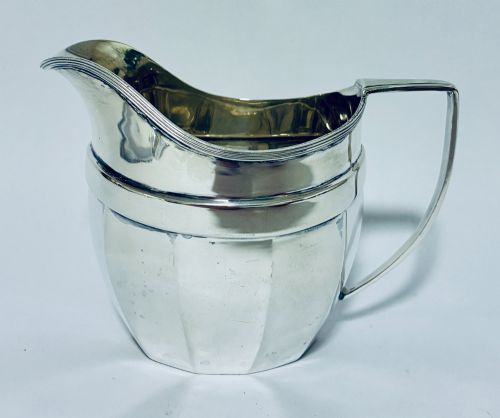
A georgian silver milk pitcher is typically encountered as a cream jug, milk jug, or sparrow beak jug spanning the eighteenth and nineteenth centuries. These vessels form part of broader teaware services and appear in varied regional styles from London, provincial England, Scotland, and Ireland. Makers shaped them to accompany tea and sugar sets in domestic parlours.
The pieces on this page range from early sparrow beak designs of the George I and George II eras to later Regency and George III helmet shapes. Buyers also encounter Sheffield plated examples alongside sterling silver items. Later twentieth-century interpretations occasionally appear, yet the core of the selection remains firmly rooted in the Georgian and Victorian periods.
Measures of Quality
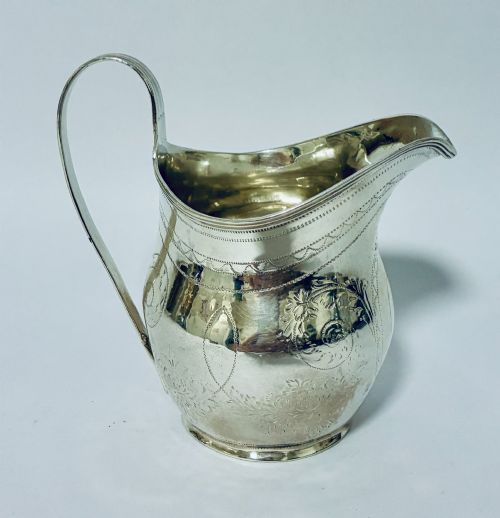
Quality rests upon the crispness of the silversmith's work, from the hand-cut bright engraving to the balance and weight of the handle and body. Early sparrow beak jugs and Irish helmet cream jugs demonstrate superior form when their proportions remain harmonious and uncompromised by wear or repair.
The clarity of the hallmarks and the integrity of the original metal gauge distinguish finer examples from standard production. Vessels retaining their original gilding and sharp, unaltered surface decoration command greater appreciation among collectors of period teaware.
Georgian Silver Milk Pitcher Retail Price Guide 2026
Typical asking prices for georgian silver milk pitcher among the pieces listed under this phrase on Sellingantiques today, from the lower quarter to the upper quarter. They describe what is for sale here now, not the wider market.
The listings on this page span the 18th Century, Georgian, Regency, Victorian, and George V periods, featuring sterling silver, silver gilt, and Sheffield plate.
Stalker and Mitchison·James Gordon·John Emes·Peter and Ann Bateman·George Unite·Robert Pringle and Sons·William Hunter
The Georgian Silver Milk Pitcher Glossary
- Sparrow beak jug
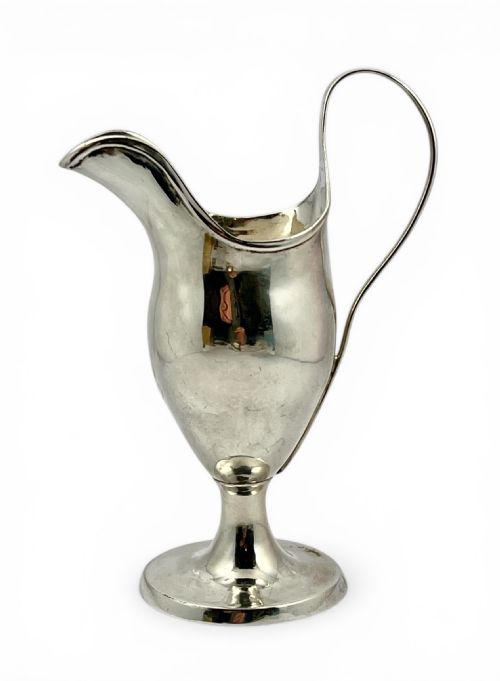
- An early eighteenth-century small cream jug featuring a distinctive pinched spout resembling a bird's beak. These diminutive vessels represent some of the earliest forms of domestic milk containers.
- Helmet cream jug
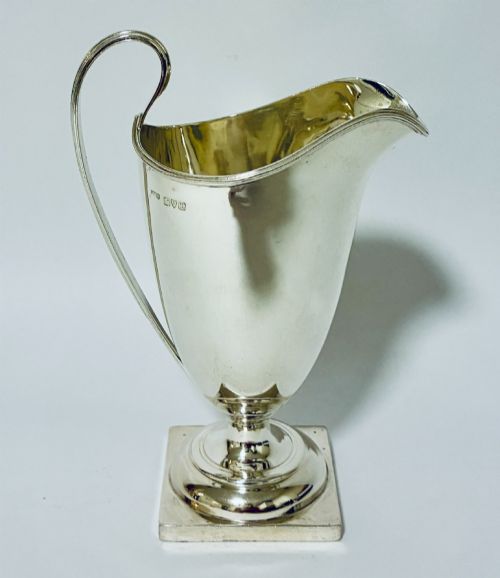
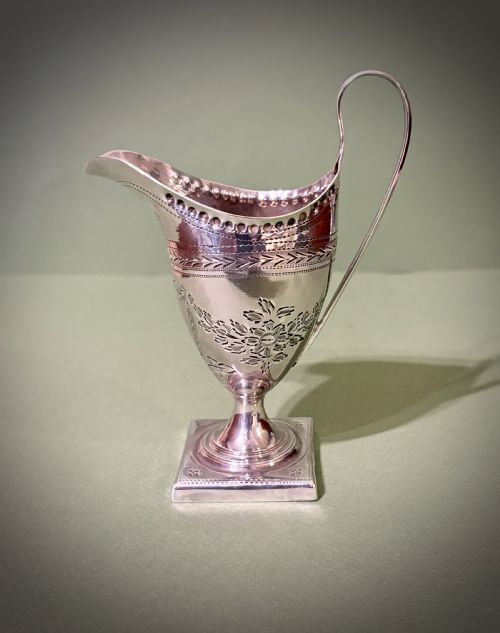
- A popular eighteenth-century jug design shaped with an elevated flared rim and footed base resembling a classical helmet. Silversmiths produced these extensively during the George III period.
- Bright-cut engraving
- A faceted surface decoration technique executed with flat gravers that leave bright, angular cuts in the silver. It creates shimmering geometric and floral patterns popular on late Georgian teaware.
- Sheffield plate
- A composite material made by fusing a thin sheet of sterling silver to a thicker copper base. It was widely utilised for affordable domestic tableware before electroplating was introduced.
Georgian Silver Milk Pitcher: Frequently Asked Questions
What is a sparrow beak jug?
A sparrow beak jug is an early form of cream jug featuring a short, pointed spout that resembles a bird's beak. These pieces date predominantly from the early eighteenth century and belong to early teaware services.
They are smaller than later milk jugs and were designed to pour small quantities of cream into tea cups before the widespread adoption of larger milk pitchers.
How do I date a silver cream jug?
Dating relies primarily on the hallmarks stamped into the metal, which record the assay office, the year letter, and the maker's mark. Monarch profiles found in later Georgian and Victorian hallmarks also narrow down the period.
Stylistic indicators such as bright-cut engraving or a helmet shape further help place a piece within specific reigns like George III or George IV.
What is the difference between a cream jug and a milk jug?
Cream jugs were traditionally smaller vessels intended to hold rich cream for tea, while milk jugs offered a larger capacity for milk as tea habits changed. In historical listings, these terms often overlap depending on the capacity and proportions of the vessel.
Both forms served alongside sugar bowls as essential components of antique tea sets.
Can I use an antique silver milk pitcher daily?
Silver milk pitchers are durable enough for regular use provided they receive gentle hand washing with mild soap and soft cloths. Avoiding harsh abrasives protects the delicate antique surfaces and any original interior gilt.
Many collectors prefer to display them as part of a teaware collection while occasionally using them during special meals.