



English Silver Creamer
An english silver creamer brings functional elegance to the table, and these pieces span centuries of domestic silverwork.
English Silver Creamer
An english silver creamer is a small pouring vessel designed to serve milk or cream alongside tea and coffee, taking forms that range from simple jugs to novelty shapes.
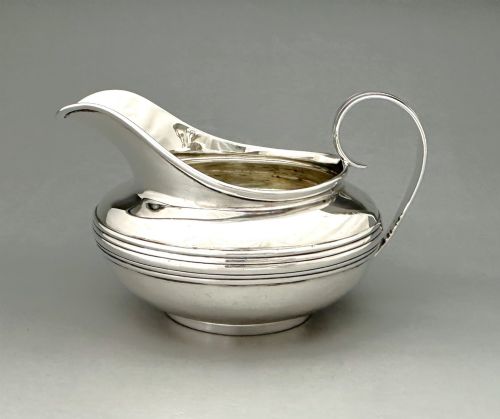
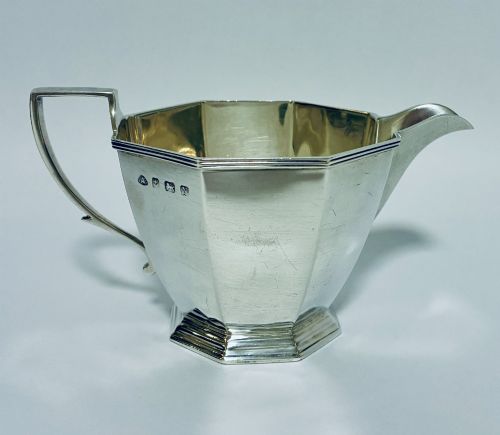
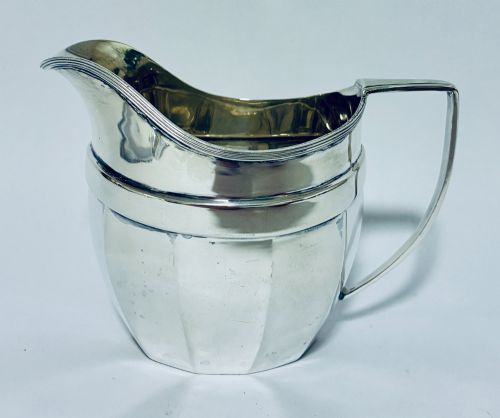
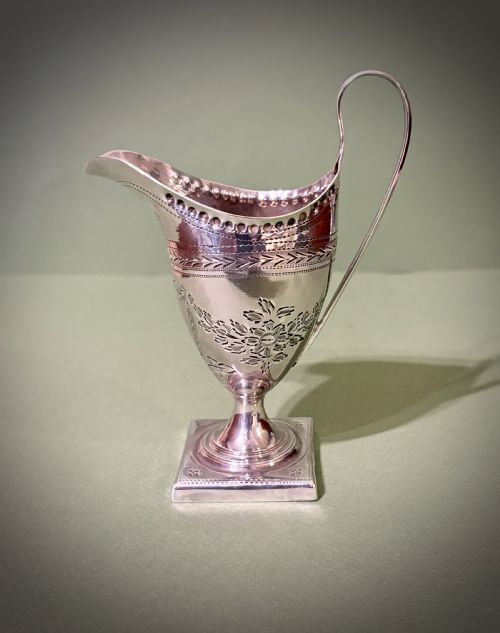
The most common version to meet on this page is the classic Georgian helmet or sparrow beak jug, alongside Victorian and later twentieth century examples in solid silver and silver plate.
Pieces frequently appear as part of larger tea sets or as standalone cream jugs and milk pourers, reflecting changing dining habits across the Georgian, Victorian, and later periods.
Materials and construction methods
Silversmiths constructed these vessels primarily from sterling silver or silver plate, utilising techniques such as hammering, casting, and mounting.
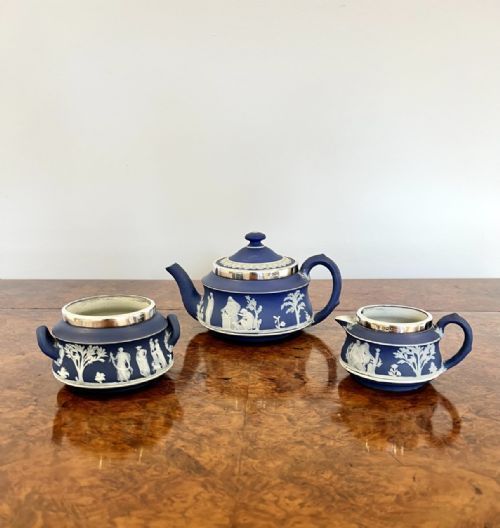
Some examples combine silver with contrasting materials like glass, stoneware, or Wedgwood jasperware, particularly in tea sets spanning the Victorian era.
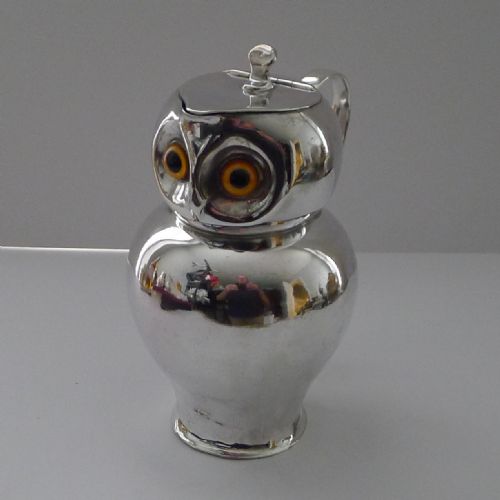
Among the drinking vessels, a silver-plated owl with glass eyes watches the tea table.
Judging quality and character
Quality rests in the crispness of the form, the balance of the handle and spout, and the weight of the metal used in the construction.
Design distinction separates standard utilitarian milk jugs from ambitious novelty items like owl or cow creamers, or those with delicate gold gilt interiors.
The English Silver Creamer Glossary
- Sparrow beak jug
- An early eighteenth century form of cream jug featuring a distinctively pinched, bird-like spout. This shape characterises some of the earliest pieces.
- Helmet cream jug
- A popular Georgian form named after its flared, symmetrical shape resembling a classical military helmet. It sits upon a square or spread foot.
- Jasperware
- A fine stoneware developed by Wedgwood, often mounted in silver during the Victorian period. It provides a striking contrast of blue and white against polished metal.
- Silver plate
- A base metal coated with a layer of sterling silver. This technique allowed makers to produce elaborate tea and coffee sets at a more accessible cost.
English Silver Creamer: Frequently Asked Questions
What is an english silver creamer?
An english silver creamer is a small jug intended for pouring milk or cream at the tea table. These vessels date from the eighteenth century onwards.
They appear in various styles, including Georgian helmet shapes, Victorian designs, and novelty animal forms.
How were these creamers used?
These vessels held cream or milk to be added to tea or coffee during formal and casual meals. They sat alongside teapots, sugar bowls, and kettles on the table.
Many survived as part of larger matching tea and coffee sets or as individual table accessories.
How do I date an english silver creamer?
Dating relies on stylistic clues such as the form of the spout and handle, along with any visible hallmarks. Georgian pieces often show distinct helmet or sparrow beak profiles.
Later Victorian and twentieth century examples introduce different silhouettes, novelty shapes, and alternative materials like silver plate.
Can I use an antique creamer daily?
Many people enjoy using solid silver and silver plate creamers for everyday tea service. Solid silver withstands regular use well when washed by hand.
Care should be taken with plated items and pieces incorporating delicate materials like glass or jasperware.