


Silver Tea Set Jug
A silver tea set jug forms part of a tradition spanning Georgian elegance through to Art Deco modernism, offering both solid silver and silver plate vessels.
Silver Tea Set Jug
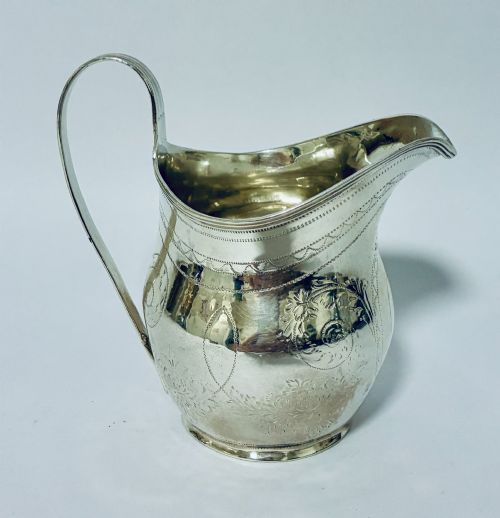
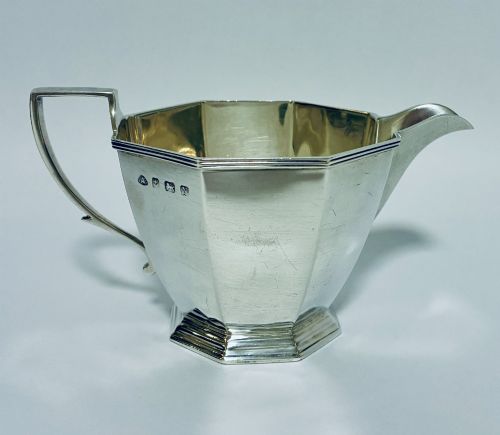
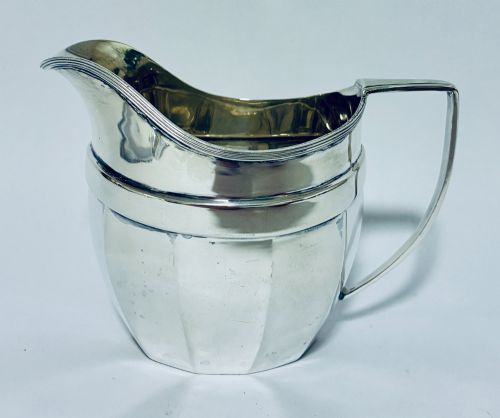
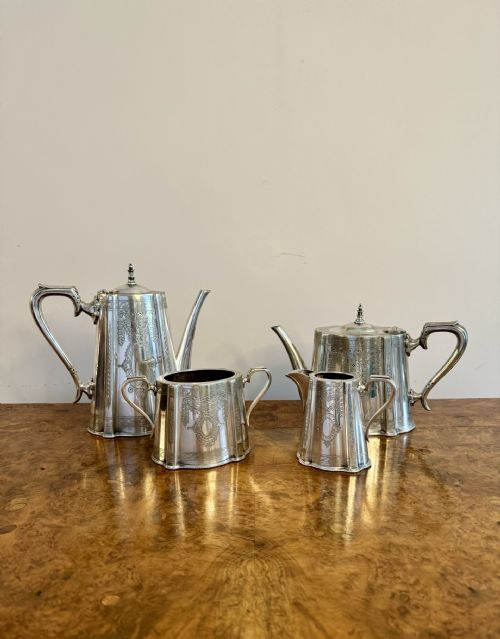
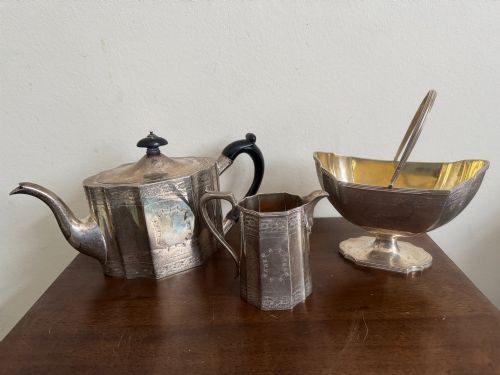
A silver tea set jug encompasses individual cream jugs, milk jugs, and matching components that belong to larger tea and coffee services. These vessels appear across multiple eras including Georgian, Victorian, Edwardian, and Art Deco periods, manifesting in forms ranging from simple standalone creamers to multi-piece sets.
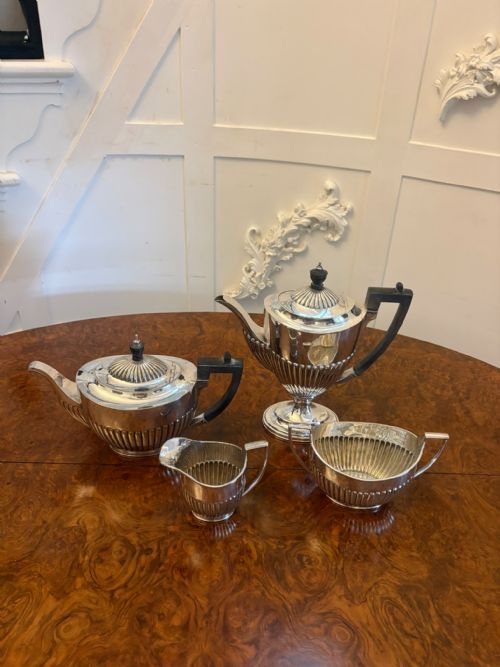
The versions most frequently met on this page are Edwardian silver plated sets and standalone Victorian or Georgian silver milk and cream jugs. Buyers encounter various configurations, from two-piece sugar and jug sets up to extensive six-piece tea services complete with coffee pots.
Origins span English, Scottish, and Irish workshops, reflecting regional silversmithing traditions from the nineteenth and twentieth centuries. Pieces range from plain domestic utilities to highly decorative services featuring ornate grapevine detailing and Indianesque motifs.
How they were made
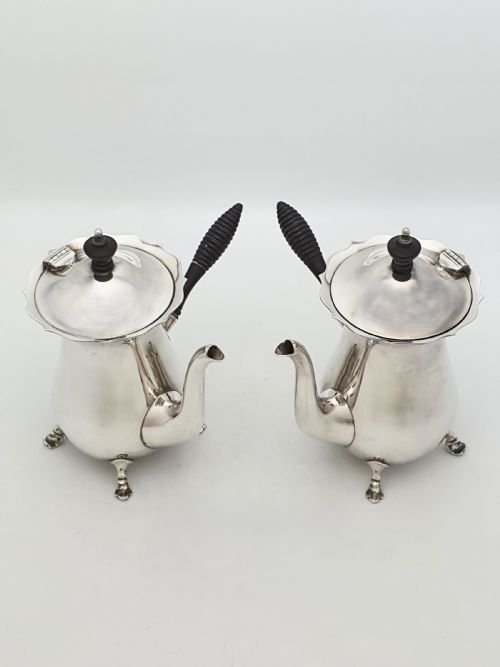
Silversmiths utilised sterling silver and various forms of silver plate, including Sheffield plate and electroplated nickel silver, shaping the metal through hammer work, casting, and spinning. Handles often incorporated insulating elements such as ebonised wood or ebony to prevent heat transfer during use.
Manufacturing techniques evolved from early Georgian hand-wrought methods to later industrial electroplating processes pioneered by firms like Elkington and WMF. Decorative finishes such as chasing, engraving, and applied cast vine motifs demonstrate the distinct craftsmanship of each period.
Listings feature items spanning the Georgian, Victorian, Edwardian, and Art Deco eras, utilising both sterling silver and silver plate.
What varies in quality
The calibre of a piece depends heavily on the crispness of its chased decoration and the weight of the metal utilised in its construction. Heavier gauge silver and deeply cast ornamentation distinguish superior services from lighter, mass-produced commercial alternatives.
Design coherence and the completeness of original matching services dictate distinction within the market. Full sets retaining their original fitted cases or matching sugar bowls and cream jugs achieve greater architectural harmony than assembled groupings.
Walker and Hall·Mappin and Webb·Joseph Craddock·Benjamin Smith·George Fox·Robert Hennell·Harry Atkin·WMF·Elkington
The Silver Tea Set Jug Glossary
- Cream jug
- A small vessel designed for pouring cream into tea, usually matched to a larger teapot and sugar bowl. These form an essential component of many multi-piece tea services.
- Sterling silver
- A silver alloy containing 92.5 percent pure silver and 7.5 percent other metals, typically copper. This standard grade guarantees the metallic purity of British silver items.
- Silver plate
- A base metal such as copper, nickel, or brass covered with a thin layer of silver. This technique allowed makers to produce impressive decorative tablewares at a more accessible cost.
- Sheffield plate
- An early form of silver plating produced by fusing a sheet of sterling silver to a copper core. This historic method precedes modern electroplating techniques.
- Jug and sugar bowl
- A paired set commonly accompanying teapots in domestic tea services. They provide the necessary vessels for serving milk and sweeteners.
Silver Tea Set Jug: Frequently Asked Questions
How do I date a silver jug?
Dating relies heavily on hallmarked stamps indicating the assay office, date letter, and maker's mark on sterling silver pieces. Stylistic clues such as Edwardian proportions or Art Deco geometric lines also help determine the period.
Silver plated items generally lack official hallmarks and require stylistic comparison and manufacturer stamps to establish an approximate date of creation.
What is the difference between a milk jug and a cream jug?
Milk jugs are traditionally larger in capacity, designed to hold the quantity of milk required for multiple cups of tea. Cream jugs tend to be smaller vessels meant for richer cream.
In many antique tea services, the terminology overlaps depending on the maker and the regional naming conventions of the period.
Are silver plated jugs durable?
Silver plated items manufactured by established makers use robust base metals like nickel silver underneath the plating layer. With careful handling, the surface endures generations of daily domestic use.
Over decades of polishing, underlying metals may occasionally show through high points, which many collectors view as evidence of genuine age and history.
How do I clean antique silver?
Cleaning requires a soft cloth and a reputable silver cream designed to lift tarnish without being overly abrasive. Gentle washing in warm soapy water removes residual polish from detailed crevices.
Harsh chemical dips should be avoided on antique silver plated and sterling items, particularly where ebonised wood handles or delicate applied decorations are present.