


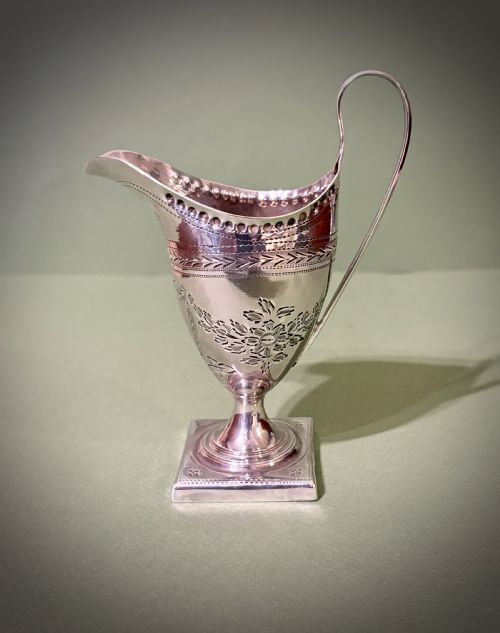


George III Silver Jug
A george iii silver jug brings genuine Georgian refinement to the table, taking the form of cream jugs, milk jugs and hot water vessels crafted in sterling silver.
Forms and Origins
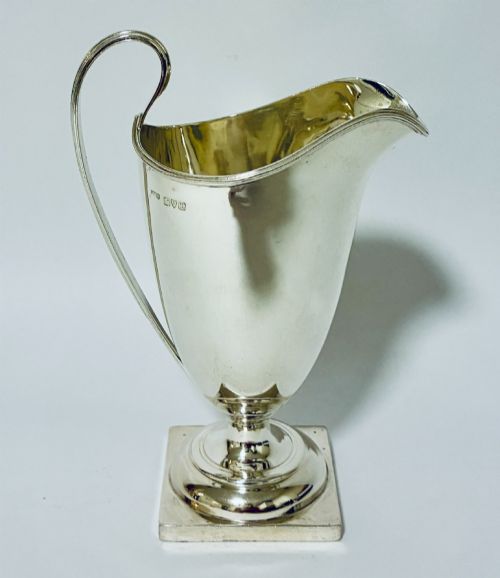
A george iii silver jug most commonly appears as a cream or milk jug from the eighteenth century or the Georgian period. These domestic vessels served at the tea table to hold milk or cream, often mirroring the changing fashions of silversmithing through distinct regional assay offices.
The most frequent iteration on this page is the helmet shaped cream jug, alongside pedestal designs, inverted pear shapes, and bulbous bodies with ribbing. Examples range from provincial pieces made in Exeter and Scotland to London-hallmarked items and Sheffield work.
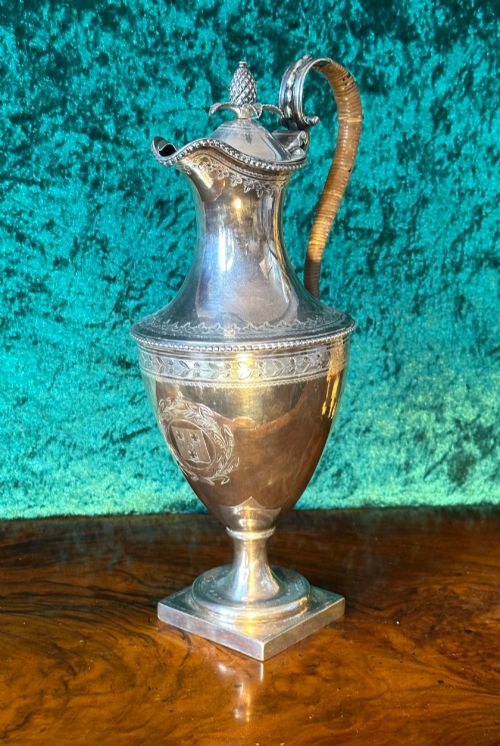
Larger forms such as hot water or coffee jugs also occur within the evidence, alongside unusual variations like sparrow beak designs and silver-mounted cut-glass oil or vinegar jugs with armorial details.
The Spectrum of Quality
Quality in a george iii silver jug rests upon the crispness of the silversmith's hand, visible in the definition of embossed ribbons, fluting, and armorial engravings. Heavier gauge sterling silver provides a more substantial feel in the hand compared to lighter, thinner walls.
Proportion and form dictate visual success, where classic helmet silhouettes or balanced pedestal feet display harmonious lines. The clarity of hallmarks stamped by makers such as London or provincial assay offices anchors the authenticity and origin of each piece.
Listings in this category span the eighteenth century and the wider Georgian period, predominantly comprising sterling silver cream and milk jugs.
Emes and Barnard·Robert and David Hennell·Walter Brind·Richard Ferris·Charles Hougham·Thomas Lamborn·George Burrows
The George III Silver Jug Glossary
- Helmet jug
- A cream jug featuring a flared rim and sweeping handle reminiscent of a classical helmet. This form became particularly popular during the latter half of the eighteenth century.
- Pedestal foot
- A raised circular or ovoid base that elevates the body of the jug. This construction adds height and architectural presence to the vessel.
- Sparrow beak
- A small, pinched spout resembling a bird's beak found on early eighteenth-century style milk jugs. It allows for a controlled, precise pour.
- Assay office
- An official body responsible for testing the purity of precious metals and stamping hallmarks. Marks from London, Sheffield, and Exeter appear frequently in this category.
- Armorial
- A heraldic design or coat of arms engraved onto the silver surface. These personal or family crests denote original ownership and bespoke commissioning.
Frequently Asked Questions
What is the difference between a cream jug and a milk jug?
Cream jugs and milk jugs from the Georgian era primarily differ in scale and capacity, reflecting their respective uses at the tea table. Cream jugs tend to be smaller and more compact, designed to hold rich cream for individual cups of tea.
Milk jugs are generally larger in volume to accommodate milk for multiple guests. Both forms share similar stylistic traits such as helmet shapes, pedestal feet, and sterling silver construction.
How can I date a Georgian silver jug?
Dating these vessels relies primarily upon the hallmarks stamped directly into the silver. Assay office marks, date letters, and maker's marks provide specific years and locations of manufacture.
Stylistic cues also help narrow down the period, such as the transition from early pedestal forms to the classic helmet shapes of the late eighteenth and early nineteenth centuries.
Were these jugs used daily?
These sterling silver vessels were created for domestic use within affluent households during the Georgian period. They formed an essential part of the formal tea service, handling daily service alongside porcelain teapots and sugar bowls.
Their survival in good condition suggests they were carefully maintained and treasured by successive generations rather than subjected to heavy wear.
What does a provincial hallmark mean?
A provincial hallmark indicates that a piece of silver was assayed and marked outside of London, such as in regional offices like Exeter or in Scottish towns. These pieces often exhibit local stylistic preferences or regional variations in construction.
Collectors frequently value provincial silver for its distinct character and the insight it provides into local silversmithing traditions outside the capital.