

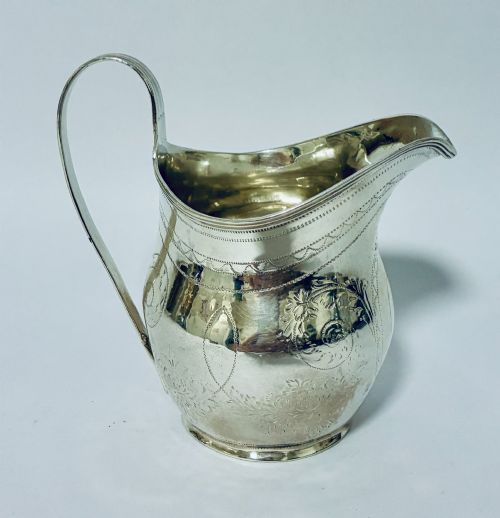
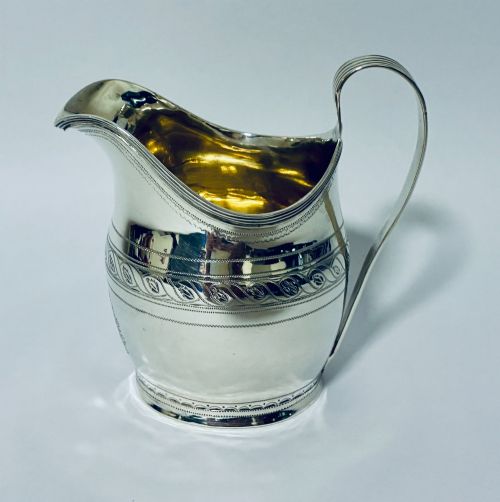


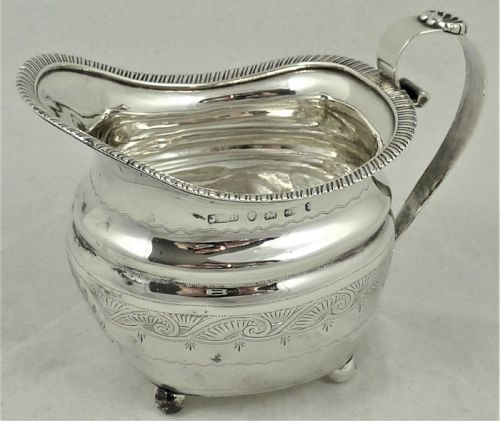

Engraved Silver Cream Jug
An engraved silver cream jug brings domestic history to the tea table, offering small-scale silverwork decorated with period patterns.
Engraved Silver Cream Jug
An engraved silver cream jug is a small vessel designed for serving milk or cream during tea service, appearing across the Georgian, Victorian, and Edwardian periods. These domestic table accessories surface in various forms, from pedestal shapes to provincial designs, all sharing the primary function of holding cream.
The versions most frequently encountered on this page belong to the Georgian and Victorian eras, often featuring bright cut engraving or floral motifs. Pieces from this range span the eighteenth and nineteenth centuries, demonstrating the shift in domestic dining habits over several generations.
Makers such as John Emes, Peter and Ann Bateman, Robert Hennel, Edward Hutton, and Robert Pringle produced these cream jugs in sterling silver and silver gilt, sometimes combining engraved silver with glass mounts. Collectors encounter both standalone jugs and matched pairs alongside sugar bowls.
Materials and construction
Silversmiths constructed these cream jugs primarily from sterling silver, occasionally applying a gold wash or gilt interior to protect the metal from the acidic properties of dairy. Surviving examples demonstrate solid silver construction alongside silver-mounted glass bodies.
Decoration relied on hand engraving techniques such as bright cutting, which utilised faceted cuts to reflect light from the patterned surface. Workshops applied these linear and floral incisions by hand before sending the vessels for hallmarking in assay offices including London.
Some Victorian milk jugs boast diminutive spouts designed specifically to pour a delicate drop into morning tea.
Judging quality in engraved silver
The distinction between standard and superior pieces rests on the crispness and complexity of the hand engraving. Deeply cut, precise bright cutting indicates skilled workmanship, whereas worn or shallow incisions suggest heavy polishing or basic execution.
Form and maker attribution further separate the output, as vessels bearing clear marks from recognised silversmiths command greater interest. The structural integrity of the handle, spout, and pedestal base determines the overall survival condition of the silver.
John Emes·Peter and Ann Bateman·Robert Hennel·Edward Hutton·Robert Pringle
The Engraved Silver Cream Jug Glossary
- Bright cut
- A form of engraving characterised by faceted, angular cuts made with a flat graver to create a sparkling, geometric pattern. This technique gained popularity during the Georgian period for decorating hollowware and flatware.
- Sterling silver
- An alloy consisting of silver and other metals, traditionally copper, standardised at a fineness of ninety-two point five percent. British pieces typically display a lion passant hallmark to confirm this standard.
- Silver gilt
- Sterling silver that has been coated with a thin layer of gold, often applied to the interior of cream jugs to prevent tarnishing from dairy. This treatment is sometimes referred to as gold wash.
- Pedestal base
- A raised foot or support upon which the body of the cream jug stands. This architectural feature elevates the vessel and appears frequently on Victorian examples.
- Assay office
- An official organisation charged with testing the purity of precious metals and stamping items with hallmarks. London served as a primary location for marking these pieces.
Engraved Silver Cream Jug: Frequently Asked Questions
What is bright cut engraving?
Bright cut engraving is a decorative technique involving angled cuts made with a sharp graver to produce facets that catch the light. It appears frequently on Georgian silver cream jugs to create geometric and floral borders.
This method differs from surface scratching by removing tiny chips of silver to leave polished facets. The resulting pattern remains bright and reflective even after centuries of gentle use.
Why are some cream jugs gold inside?
A gold wash or silver gilt interior protected the sterling silver from the corrosive acids found in milk and cream. This treatment prevented the metal from tarnishing quickly and left a pleasant contrast against the exterior silver.
Silversmiths applied this thin layer of gold to the inside bowl during the manufacturing process. Surviving traces of gilding indicate that the interior has retained its original finish.
How do I clean antique silver?
Cleaning antique silver requires mild soap, warm water, and a soft cloth to remove everyday dust without harming the metal or softening the engraving. Commercial dips and abrasive pastes should be avoided because they strip away the accumulated patina and damage fine details.
Light tarnish is a natural characteristic of antique silver and does not require total removal. Storing pieces in dry environments helps maintain the finish between gentle cleanings.
Were cream jugs used alone?
While many cream jugs served as standalone tea accessories, others formed part of matched tea and coffee services alongside sugar bowls. Surviving records show pairs of sugar bowls and cream jugs sharing identical makers and engraving styles.
Domestic customs of the eighteenth and nineteenth centuries dictated the use of matching silver vessels on the tea table. Individual jugs often found their way into collections as families mixed and matched tableware over generations.