
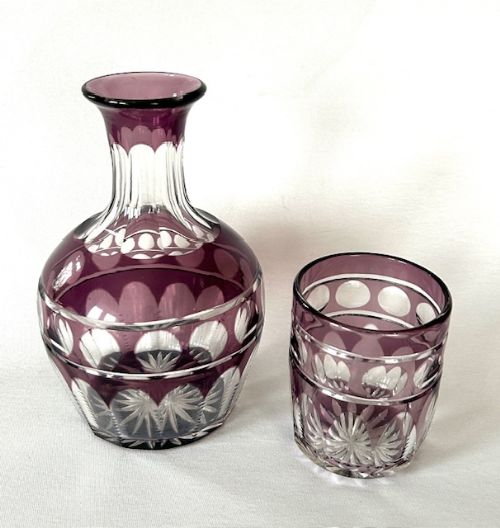


Antique Glass Water Set
An antique glass water set brings functional elegance to any sideboard, offering matched pitchers, jugs, and tumblers crafted for formal hospitality.
Antique Glass Water Set
An antique glass water set comprises coordinated drinking vessels designed for serving water and refreshments in domestic settings. The pieces generally include a central jug or carafe accompanied by a matching group of tumblers, glasses, or occasionally a matching bowl.
Buyers browsing this selection will encounter varied forms spanning the Victorian, Edwardian, and Art Deco periods. These sets originate from English, French, and Czech workshops, reflecting shifting tastes in domestic glassware from the mid nineteenth century through to the interwar years.
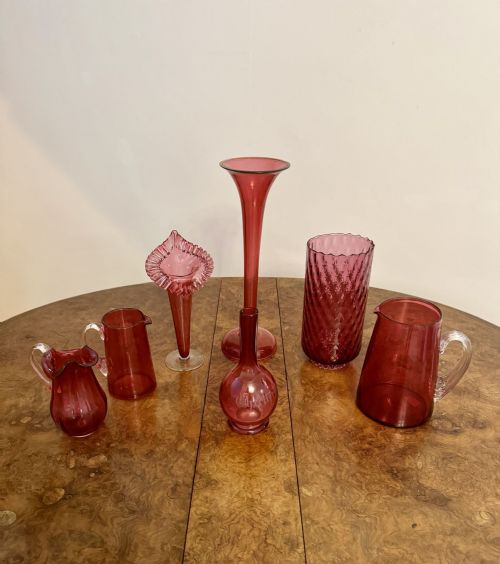
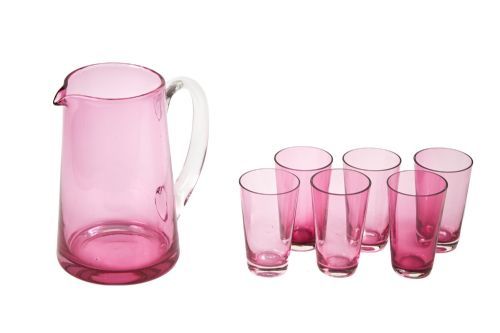
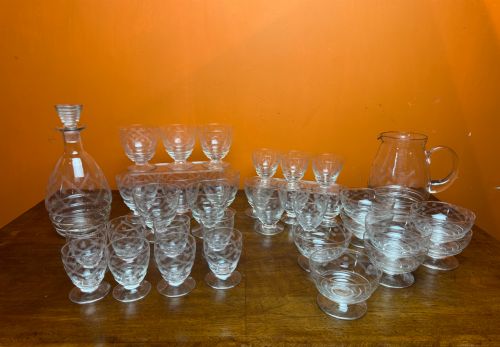
The configurations range from intimate pairs of carafes and tumblers to large suites containing over thirty drinking glasses and a central pitcher. Material choices visible across the inventory include clear lead crystal, vibrant cranberry glass, amethyst glass, and gold salt additive glass.
How they were made
The manufacture of these sets relies primarily on blown and moulded glass production techniques combined with hand finishing. Artisans shaped molten crystal and coloured glass into pitchers and tumblers before applying decorative surface treatments.
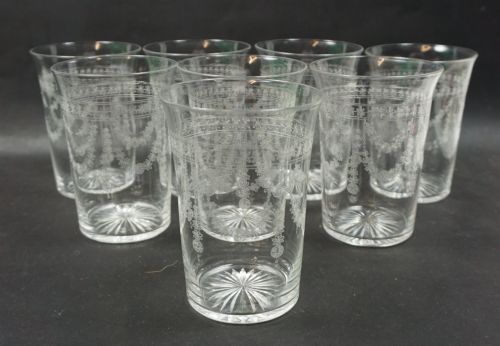
Decoration on these pieces frequently involves acid etching, intaglio cutting, and hand engraving. Some sets also incorporate delicate enamel detailing or contrasting glass colourations achieved through specific chemical additives like gold salt during the melting process.
Materials represented across the inventory include clear lead crystal, cranberry glass, amethyst glass, and gold salt additive glass.
What varies in quality
The distinction between standard domestic sets and finer examples lies in the depth and precision of the decorative work. Crisp intaglio cutting, sharp acid etching, and complex wheel engraving demand advanced skill compared to simpler moulded surfaces.
Completeness and size elevate a set, particularly larger suites that retain their full complement of matching glasses without replacement pieces. The clarity of the crystal and the richness of coloured glass variants, such as cranberry or amethyst tones, further define the standing of individual items.
Webb Corbett
The Antique Glass Water Set Glossary
- Carafe
- A decorative glass container used for holding and serving water or other beverages, typically featuring a narrow neck and a matching tumbler that inverts over the opening.
- Intaglio
- A technique where the design is carved into the surface of the glass rather than left raised, producing a frosted or deeply incised pattern.
- Lead Crystal
- Glass manufactured with the addition of lead oxide, which increases the weight, brilliance, and acoustic resonance of the drinking vessels.
- Cranberry Glass
- A rich red transparent glass created by adding gold chloride to the molten batch during production.
- Acid Etching
- A method of decorating glass by applying acid to eat away exposed areas, leaving a fine matt pattern against polished surfaces.
Antique Glass Water Set: Frequently Asked Questions
What is included in an antique water set?
These sets typically feature a central serving pitcher, jug, or carafe paired with a matching collection of tumblers or drinking glasses. Some variations also incorporate a matching bowl or tray to complete the service.
The number of drinking glasses varies significantly between individual sets, ranging from small groupings of six tumblers up to extensive dining suites containing dozens of pieces.
How do I date an antique glass set?
Dating relies on stylistic indicators, manufacturing techniques, and the characteristic forms associated with specific design eras such as the Victorian period, the Edwardian era, or Art Deco.
Victorian and Edwardian examples often display ornate cutting or rich cranberry tones, whereas Art Deco sets from the 1930s tend to feature geometric profiles and stylised engraved motifs.
Were these sets used only for water?
While designated as water sets, these glassware collections served multiple functions for table hospitality and refreshments in period homes.
Households utilised the jugs and matching glasses for serving cordials, juices, and wine alongside plain water during formal meals and gatherings.
How should I clean antique glass?
Careful hand washing in warm water with a mild detergent is essential for preserving delicate surfaces, enamel details, and polished crystal.
Harsh abrasive scourers and modern dishwashers must be avoided to prevent scratching the glass and damaging historic decorative finishes.