


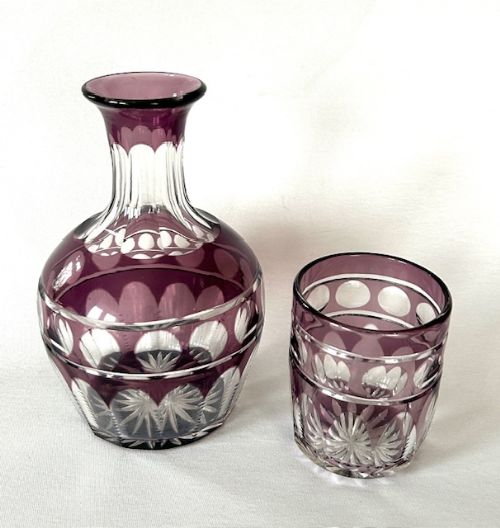


Victorian Glassware Set
These Victorian glassware sets bring colour, weight, and history straight to the table.
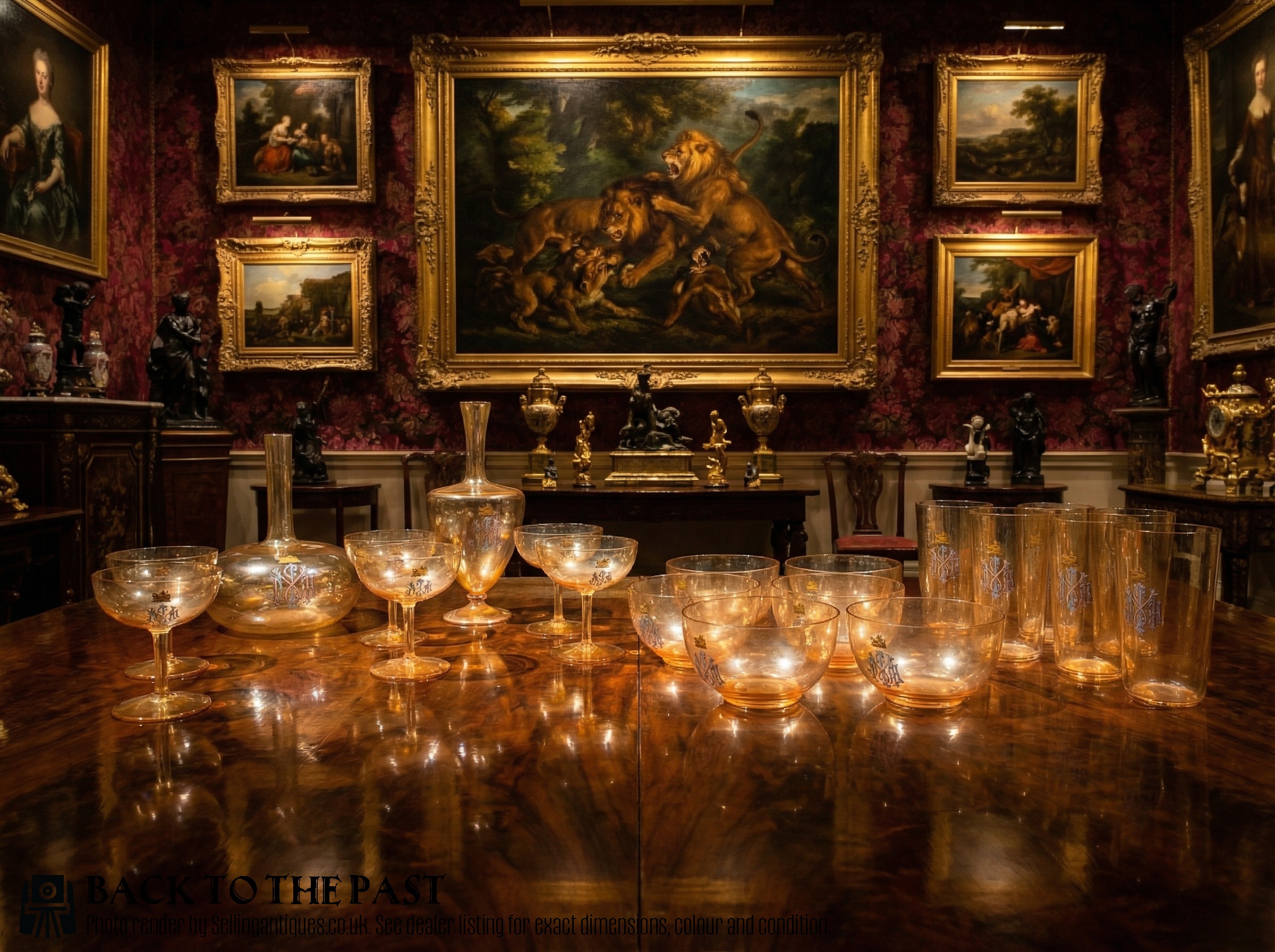
Victorian Glassware Set
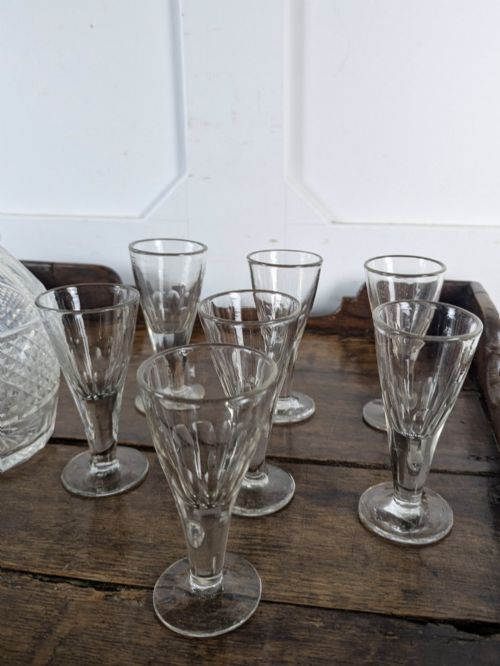
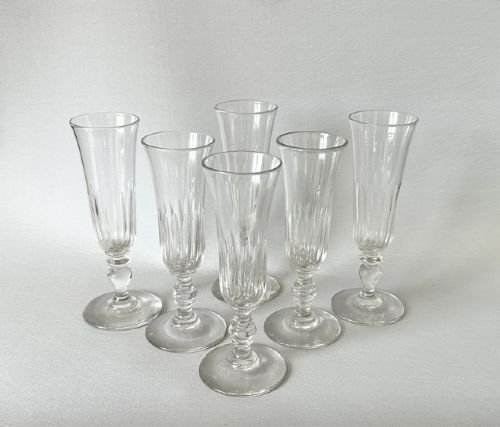
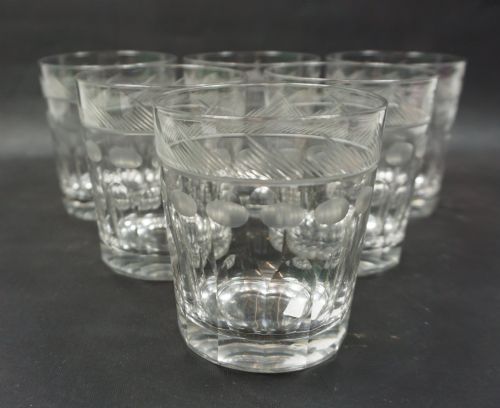
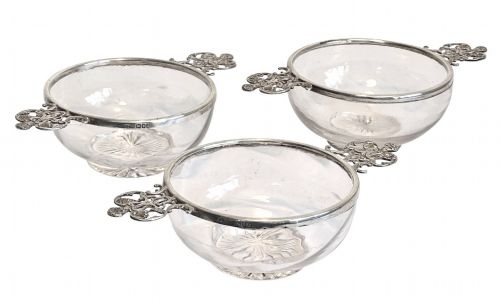
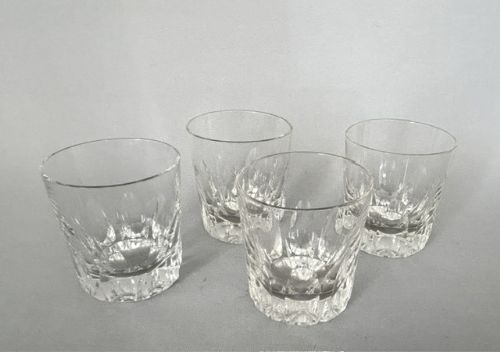
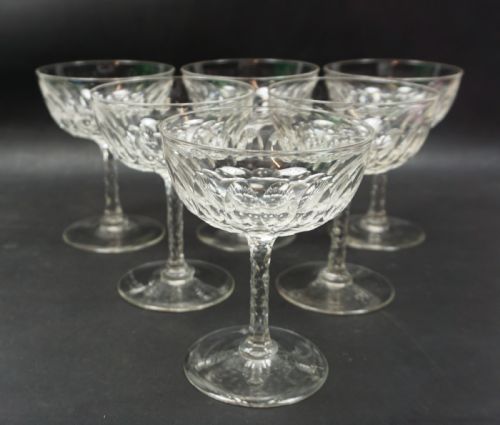
A victorian glassware set gathers matched or assembled drinking vessels, bowls, and serving pieces from the nineteenth century for daily use or display. These groupings range from small clusters of thumb-cut sherry flutes and whisky tumblers to larger services of wine glasses, custard cups, and finger bowls.
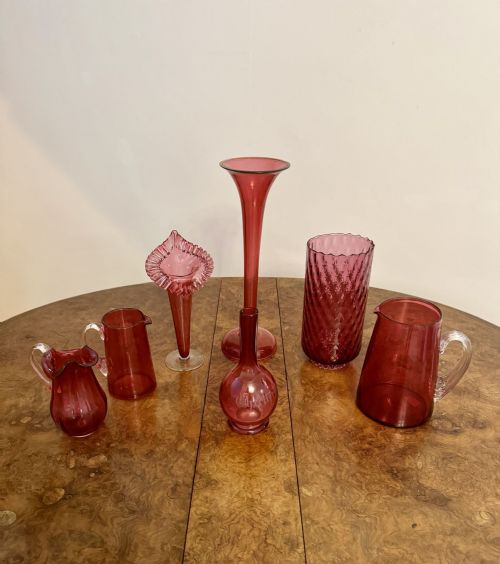
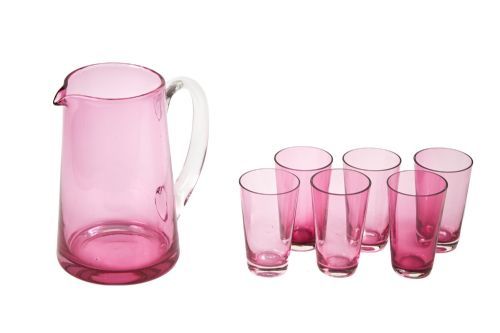
The Cranberry glass variations and deep green Bohemian forms dominate the available groupings, alongside amber pieces and clear lead crystal. Sets appear either fully uniform or as matched harlequin arrangements where form and tone harmonize across the table.
Materials and methods
Makers shaped these vessels using traditional glass-blowing techniques, often free-blowing the bowls and stems before finishing them by hand. Lead crystal and standard glass received surface treatment through wheel-cutting, facet-cutting, and thumb-cuts to catch the light.
Coloured glass achieved its rich hues through mineral oxides added to the molten batch, producing distinct cranberry, emerald green, and amethyst tones. Artisans frequently applied enamel details, gold leaf gilding, or delicate wheel engraving over the finished surfaces.
Victorian Glassware Set Retail Price Guide 2026
Typical asking prices for victorian glassware set among the pieces listed under this phrase on Sellingantiques today, from the lower quarter to the upper quarter. They describe what is for sale here now, not the wider market.
A liquor stand paired with cranberry and frosted glass brings instant Victorian theatre to any sideboard.
Judging the range
Quality rests upon the crispness of the cutting, the uniformity of the glass walls, and the clarity of the material free from heavy internal bubbles. Superior sets maintain consistency across every piece in the grouping, whether handling a small cluster of tumblers or a large service.
The skill involved in surface decoration separates standard vessels from finer examples. Precise wheel engraving, clean enamel work, and well-applied gold leaf indicate a higher level of workshop output during the period.
William Comyns·Moser
The Victorian Glassware Set Glossary
- Thumb-cut
- A decorative pattern of shallow, circular concavities ground into the exterior of glassware. This technique provides a tactile grip and refracts light across the vessel.
- Cranberry glass
- A transparent pinkish-red glass produced by adding gold chloride to the molten batch. It stands as a defining colour of the period.
- Finger bowl
- A small, wide bowl filled with scented water and placed between courses for guests to rinse their fingers. They often feature matching under-plates or etched rims.
- Roemer
- A traditional continental European stemmed drinking glass featuring a large bowl and a cylindrical foot built from wrapped trails of glass. They appear frequently in green glass.
- Lead crystal
- Glass containing a high proportion of lead oxide, which increases weight, brilliance, and the time available for hand-cutting.
Victorian Glassware Set: Frequently Asked Questions
Were these sets originally matched?
Many period groupings began as assembled services or harlequin sets where individual pieces share a colour or form rather than originating from a single factory mould. Other examples were produced as unified services from the outset.
Matching sets often bear uniform hand-cutting or engraving, while assembled collections show subtle variations in height, tone, and stem thickness that reflect individual artisan production.
How can I tell Victorian glass from later copies?
Examine the pontil mark on the base of blown pieces, where the punty rod was snapped off and smoothed down manually. Older glass frequently exhibits slight irregularities and tiny air bubbles trapped within the material.
Inspect the wear patterns on the resting base of the vessels. Centuries of gentle handling create fine, random surface scratches distinct from modern machine production.
Can I use these glasses for modern dining?
These drinking vessels and bowls function effectively for formal dinners and special gatherings. Their substantial weight and tactile cut surfaces offer a distinct tactile experience compared to modern equivalents.
Exercise care with thin-walled wine glasses and pieces featuring gold leaf or enamel decoration by keeping them to hand-washing and gentle use.