


Red Overlay Glass
Red overlay glass brings together layered crystal and rich colour, offering a brilliant decorative presence for the table or cabinet.
Red Overlay Glass
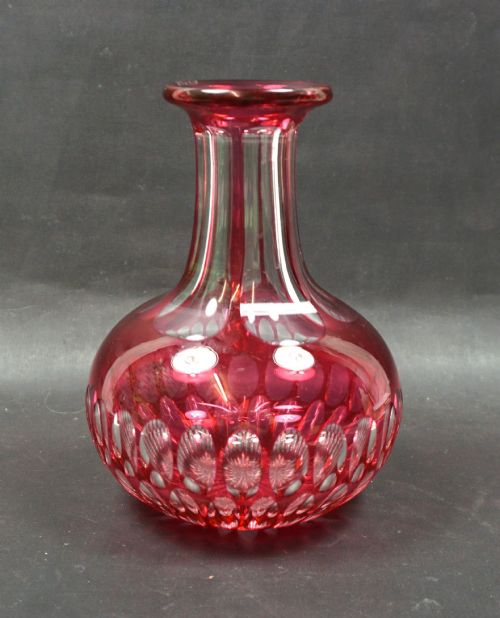
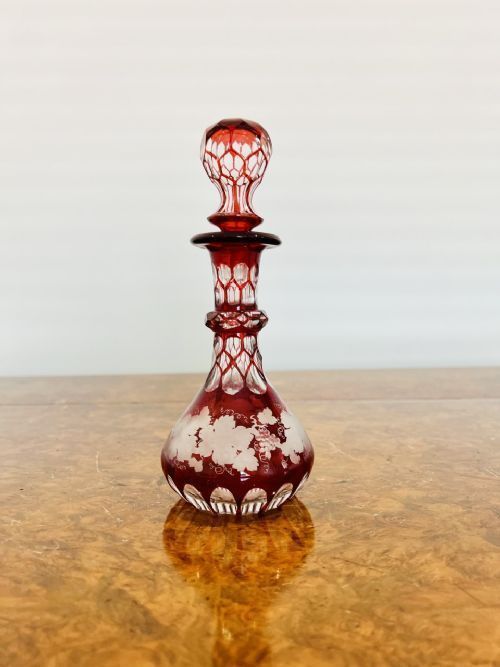
When you search for red overlay glass, you enter a field defined by dual-layer vessels where a vibrant ruby, cranberry, or red casing sits over a clear or contrasting crystal body. The pieces appearing in these listings span from the mid-nineteenth century through the Edwardian era and into the Art Deco period, taking forms such as decanters, scent bottles, vases, and champagne coupes.
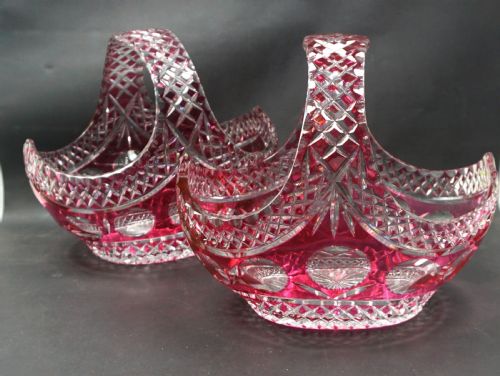
You are most likely to meet Victorian and Bohemian interpretations alongside English and French examples, often characterised by heavy cutting, engraving, or acid etching that reveals the clear glass beneath. These objects range from cabinet pieces like vanity sets and decorative baskets to functional tableware including carafes and wine glasses.
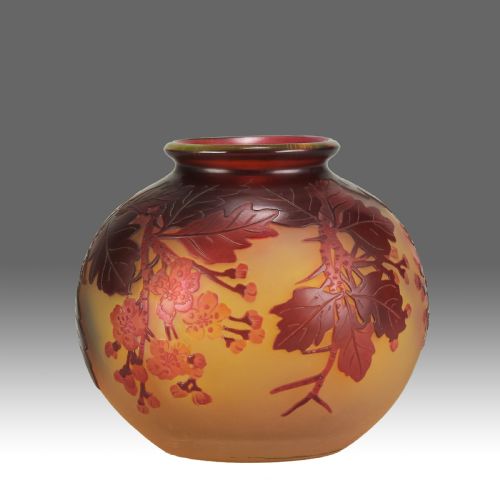
The aesthetic shifts from ornate Victorian and Bohemian floral motifs to the sweeping natural lines of Art Nouveau and the geometric discipline of the 1930s. Each period handles the coloured casing differently, moving from deep wheel-cut panels to delicate cameo acid-etching.
Materials and technique
The foundation of these pieces is lead crystal or heavy clear glass, over which a molten layer of coloured glass is gathered during the blowing process. This double-layered blank provides the depth necessary for subsequent surface manipulation.
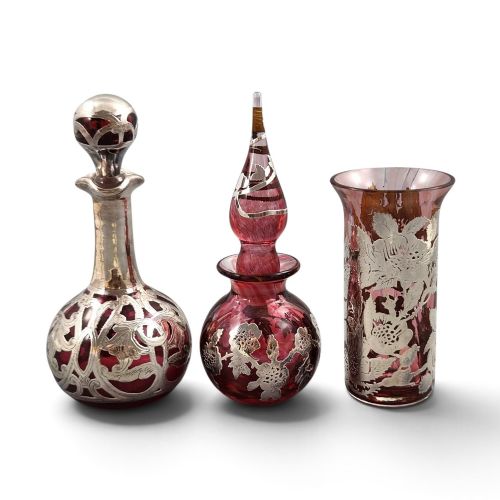
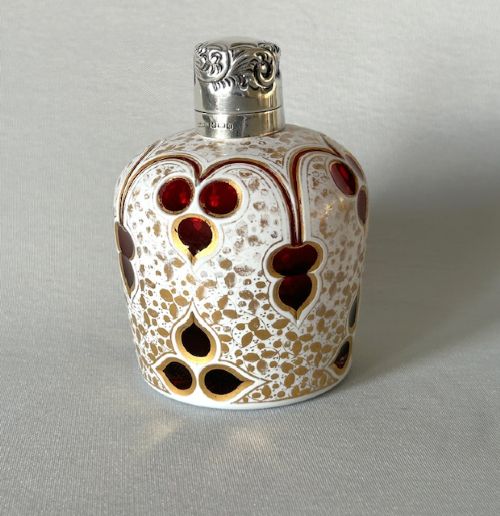
Craftsmen utilised wheel-cutting, cameo carving, and acid-etching to cut through the outer red layer, exposing the clear crystal underneath to create sharp contrast and pattern. Gilding, enamel, and silver mounts were frequently added to complete the decoration.
Several ganging bells chime with Victorian charm, designed to summon servants across grand nineteenth-century dining rooms.
Judging quality in layered glass
Quality rests upon the crispness of the cutting and the depth of the red layer, where superior examples exhibit clean, sharp margins between the coloured casing and the clear crystal beneath. Poor execution results in blurred edges or uneven thickness in the overlay.
The refinement of surface embellishment separates standard production from finer output, with hand-engraved foliage and detailed cameo carving requiring a much higher degree of skill than simple moulded panels. The integration of mounts, such as silver tops or collars, also indicates the tier of the original commission.
Val St Lambert·Gallé·Thomas Webb And Sons·Daum Frères·Baccarat·D Argental
The Red Overlay Glass Glossary
- Overlay
- A technique where a layer of coloured glass is fused over a base of clear or contrasting glass before being cut or etched. This method allows intricate patterns to emerge in two distinct colours.
- Cameo glass
- Glass formed with multiple layers of different colours, carved or acid-etched down to create a raised design resembling a carved stone cameo. It requires immense patience from the artisan.
- Cranberry glass
- A transparent pink-red glass coloured by the addition of gold chloride to the molten batch. It forms the base or overlay of many nineteenth-century tablewares.
- Mercury glass
- Double-walled blown glass with a silvered liquid solution trapped inside, creating a reflective, mirror-like appearance. It is often paired with exterior silver overlay.
- Acid-etched
- A decoration method utilising acid to eat away exposed portions of the glass surface through a protective resist. This technique defined much of the Art Nouveau output.
Red Overlay Glass: Frequently Asked Questions
How do I clean red overlay glass?
Wash these pieces by hand using lukewarm water and mild washing-up liquid, avoiding harsh abrasive sponges or ultrasonic cleaners that can damage the surface or any gilding.
Dry them immediately with a soft lint-free cloth to prevent water spots, and take extra care around applied silver mounts or delicate rims.
Are these pieces safe for daily use?
While many items like decanters, carafes, and champagne coupes were made for dining, antique glass requires gentle handling and is generally unsuited for modern dishwashers.
Hand wash them carefully after use and avoid subjecting them to sudden temperature changes to protect the structural integrity of the layered metal.
How can I tell Victorian from Art Deco pieces?
Victorian and Bohemian items typically feature heavy wheel-cut panels, ornate floral engraving, and rich cranberry hues, often accompanied by polished pontil marks and substantial weight.
Art Deco examples shift towards streamlined geometric forms, minimalist silhouettes, and acid-etched cameo floral motifs typical of the 1930s.
What is the difference between ruby and cranberry glass?
Ruby glass is a deep, intense red achieved through copper or gold compounds, offering a darker and more opaque visual weight.
Cranberry glass possesses a brighter, pinker translucent tone derived specifically from gold chloride, commonly seen in Victorian tablewares and scent bottles.