

Antique Cobalt Jug
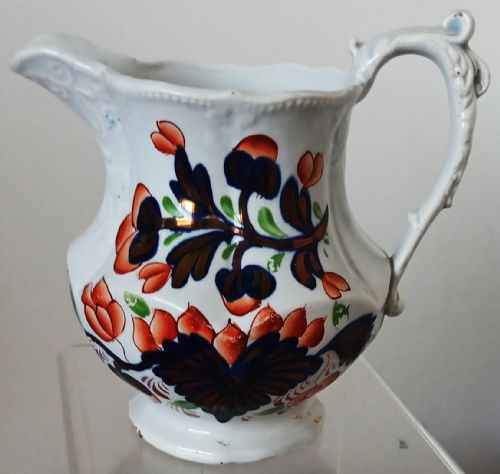
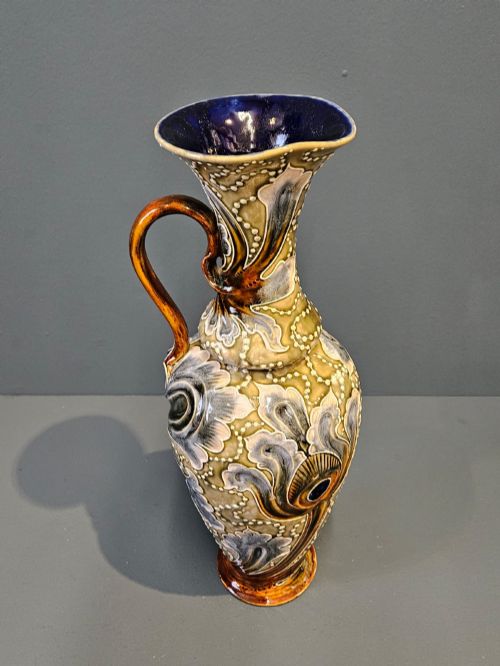
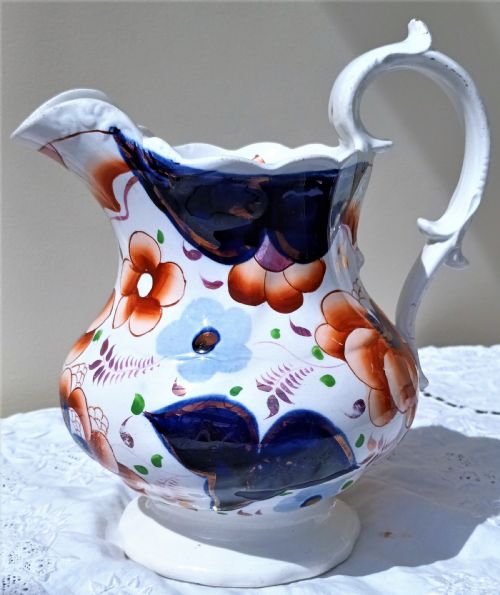
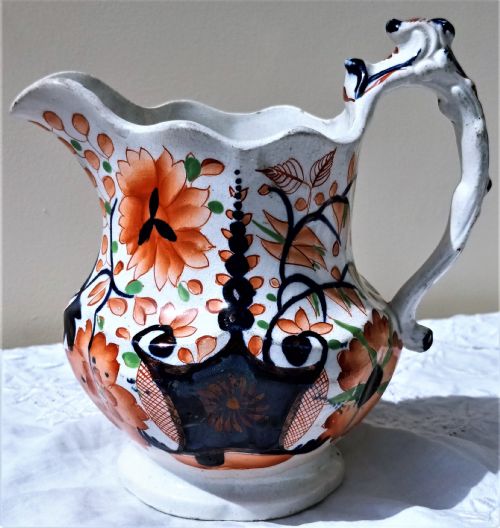
An antique cobalt jug brings deep blue pigment and rich historic character to a table, spanning Georgian ironstone to Victorian stoneware.
Antique Cobalt Jug
When searching for an antique cobalt jug, buyers encounter various ceramic and glass forms spanning the eighteenth and nineteenth centuries. These pieces range from sturdy salt-glazed stoneware pitchers originating in Germany to refined English ironstone and porcelain vessels decorated with transfer prints or hand-painted cobalt patterns.
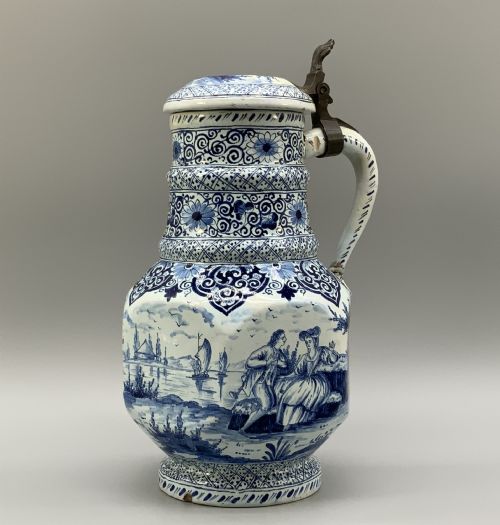
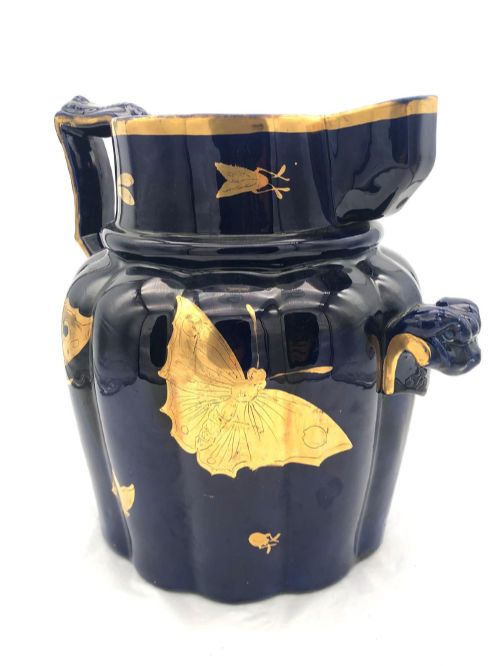
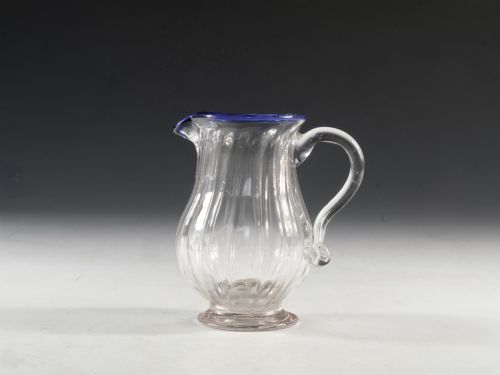
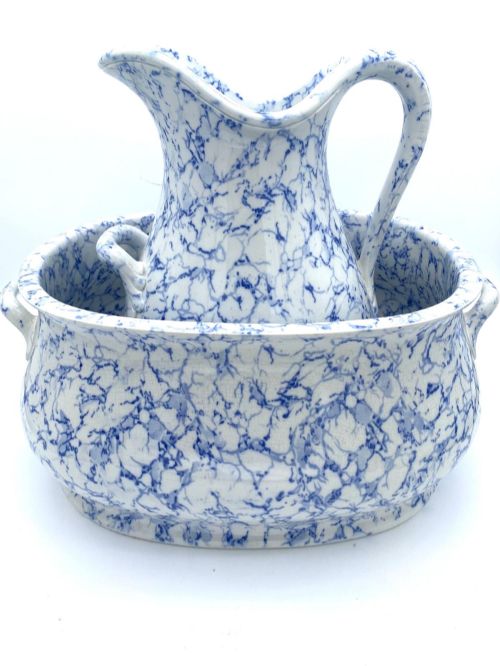
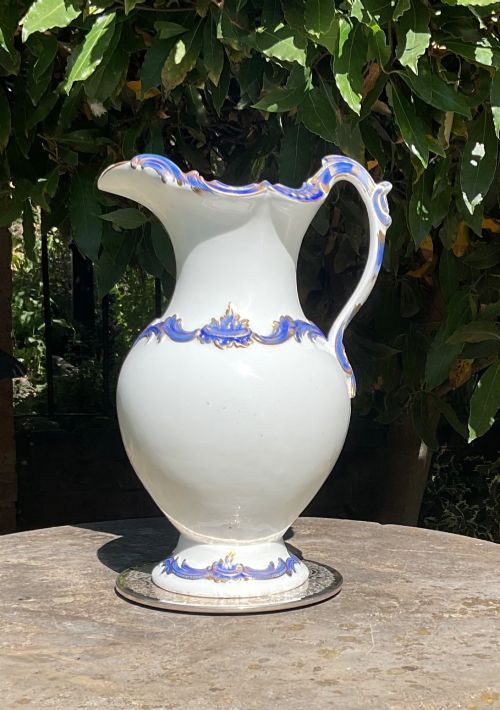
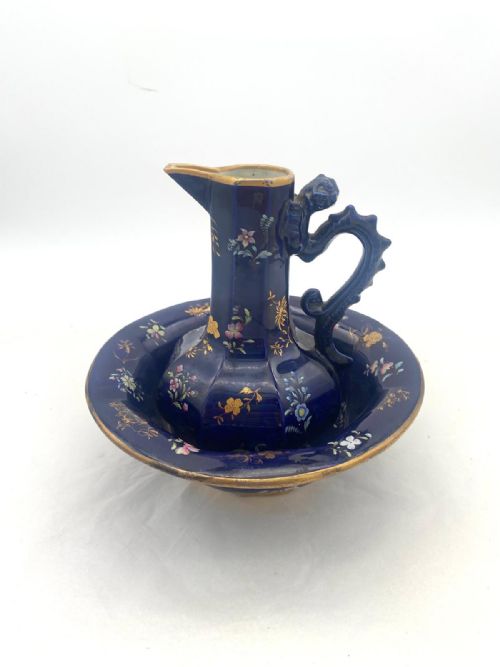
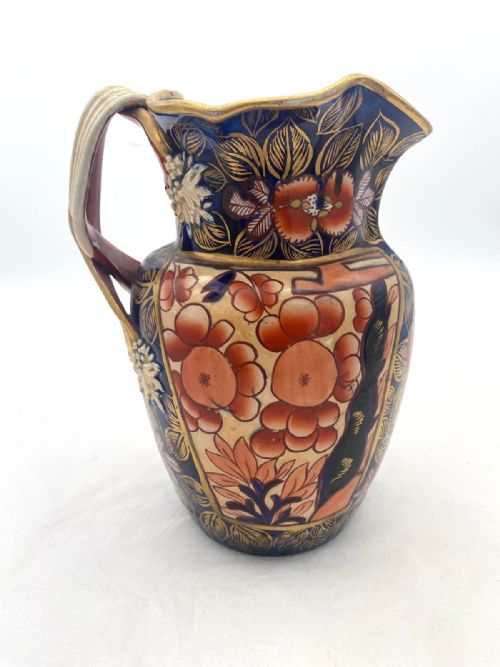
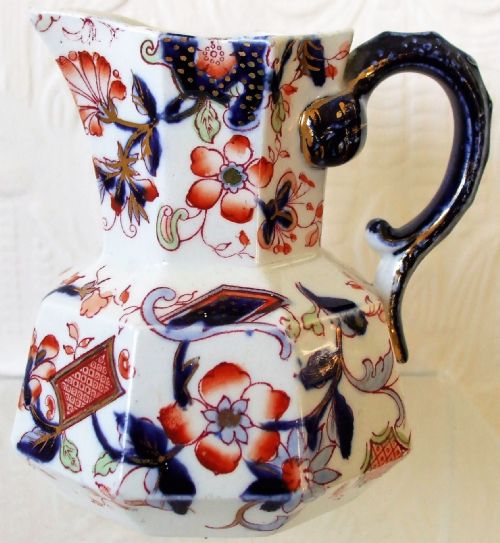
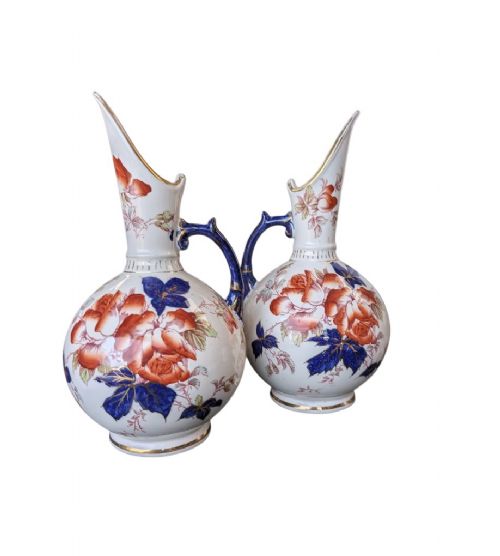
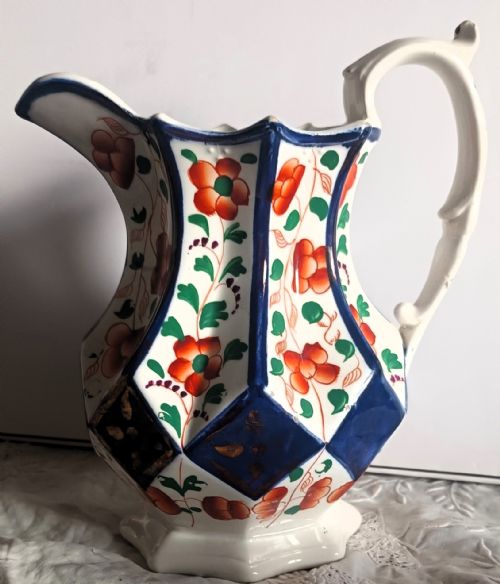
The most common versions on this page include nineteenth-century ironstone and earthenware jugs featuring deep blue decorative motifs, alongside Georgian glass cream jugs and larger Victorian ewers. Forms vary from simple domestic creamers to elaborate octagonal pitchers and wash set ewers designed for bedroom basins.
Origins stretch across English potteries, Dutch delftware workshops, and continental stoneware centres, reflecting diverse regional manufacturing traditions. Each period contributes distinct shapes, such as the classical hydra handle on early ironstone pieces or the robust pewter-lidded profile of Dutch delftware.
Materials and construction methods
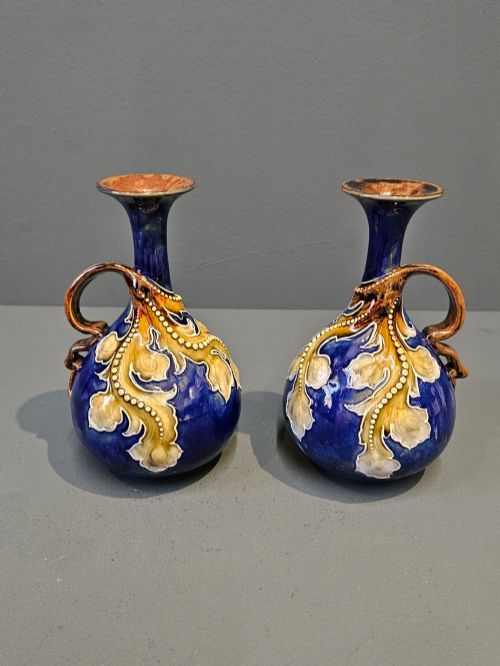
Potters utilised durable earthenware, ironstone, and porcelain bodies as foundations for these vessels, applying cobalt oxide under the glaze before high-temperature firing to achieve the characteristic deep blue coloration. Stoneware examples relied on salt glazing, where salt thrown into the kiln during firing reacted with the silica to produce a textured, pebbled surface.
Moulding and throwing formed the primary shaping techniques, with many ironstone and earthenware jugs shaped in multi-part moulds to create complex geometrical facets or classical serpent handles. Artisans frequently added hand-painted details or transferred printed cobalt designs onto the clay body before sealing the surface with a clear glaze.
Listings feature eighteenth-century Dutch delftware alongside nineteenth-century ironstone, earthenware, and salt-glazed stoneware.
Evaluating craftsmanship and detail
The clarity and depth of the cobalt pigment separate standard domestic ware from finer examples, with superior pieces showing intense, even coloration without bleeding or pooling in the glaze. Precision in transfer printing and crispness in moulded details, such as leaf motifs or handle contours, indicate superior workshop standards.
The integrity of the form and the skill involved in balancing complex shapes, such as octagonal bodies or applied mask heads, determine the overall accomplishment of the piece. Well-executed handles and well-fitted pewter lids on continental stoneware show a higher degree of initial craftsmanship.
Minton·Masons Ironstone·Doulton Lambeth·Simon Peter Gerz·Caughley Coalport
The Antique Cobalt Jug Glossary
- Ironstone
- A dense, heavy type of earthenware patented in the early nineteenth century that mimics porcelain durability. It provides a sturdy base for rich cobalt transfer patterns.
- Salt glaze
- A vitreous coating formed by throwing salt into the kiln at the peak firing temperature. This process creates an orange-peel texture on stoneware jugs.
- Hydra jug
- A pitcher style featuring a flared rim, moulded spout, and a serpent-shaped handle. This neoclassical form appears frequently in early nineteenth-century English ceramics.
- Transfer printing
- A method of applying pre-printed paper designs onto ceramic surfaces using copper plates and cobalt ink. It allowed factories to produce intricate patterns consistently.
- Delftware
- Tin-glazed earthenware produced in the Netherlands and England, typically decorated with blue designs inspired by imported Chinese porcelain.
Antique Cobalt Jug: Frequently Asked Questions
How were these jugs used?
Historic households utilised smaller vessels for serving cream or milk at tea tables, while larger ewers served washing functions alongside matching basins.
Many heavier stoneware pitchers also served for storing liquids or fermented beverages in domestic settings.
How do I date a jug?
Dating relies on identifying the material body, such as heavy ironstone versus salt-glazed stoneware, and recognising distinct period styles like Georgian transfer prints or Victorian moulded reliefs.
Maker marks, registration numbers, and stylistic markers such as hydra handles provide further chronological clues.
How do I care for antique ceramics?
Display these pieces away from direct sunlight and extreme temperature fluctuations to protect the glaze and body from stress. Gentle dusting or careful hand washing with mild soap preserves the historic surface.
Avoid abrasive scrubbers that might scratch the glaze or dull the cobalt decoration.