



Blue Ironstone Pitcher
These blue ironstone pitcher examples offer durable utility and striking cobalt patterns for domestic display.
Blue Ironstone Pitcher
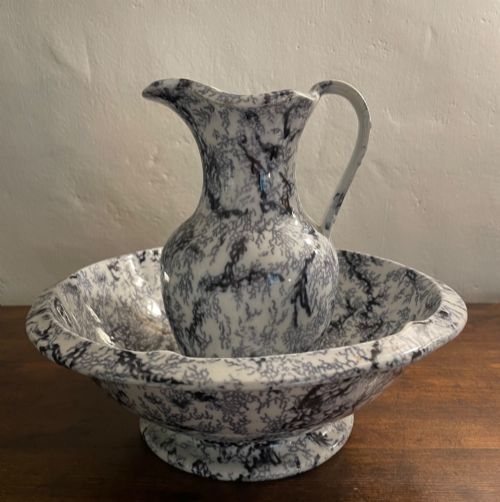
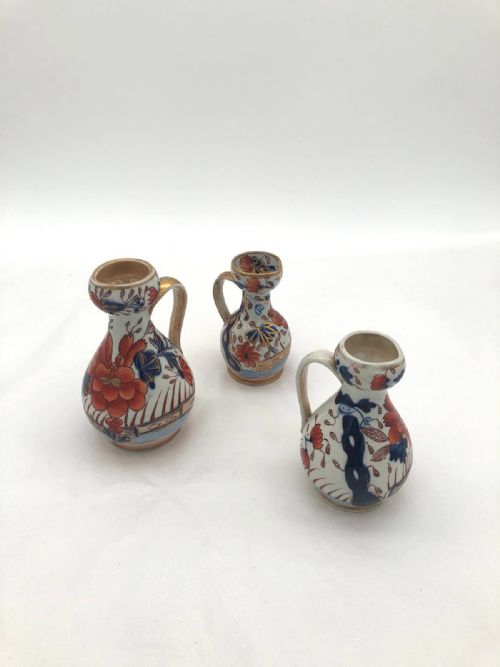
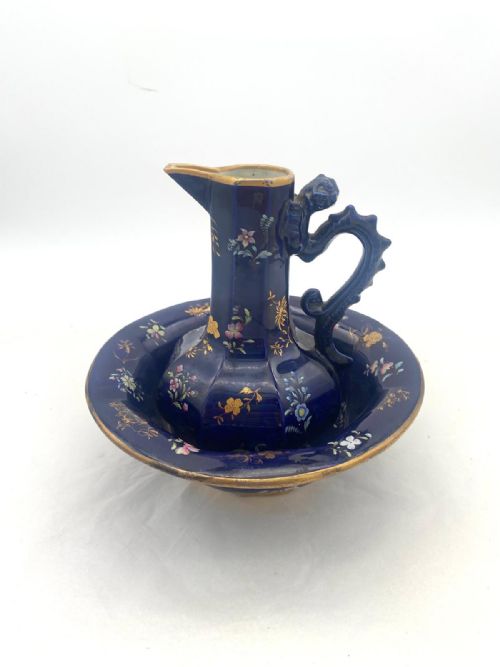
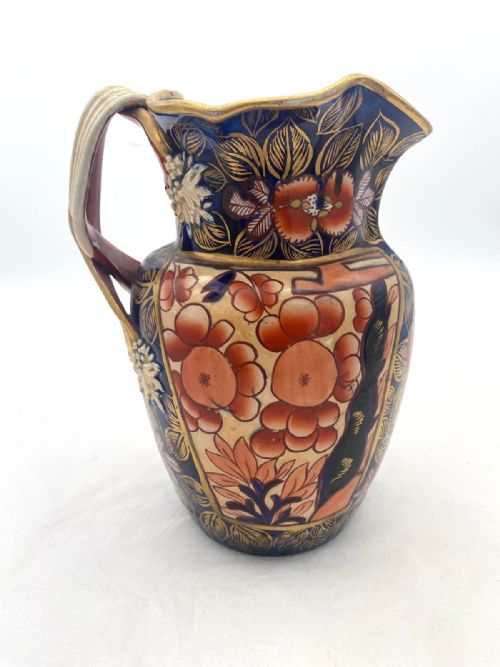
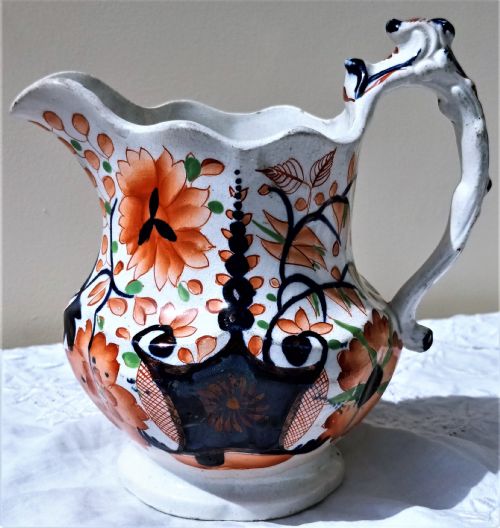
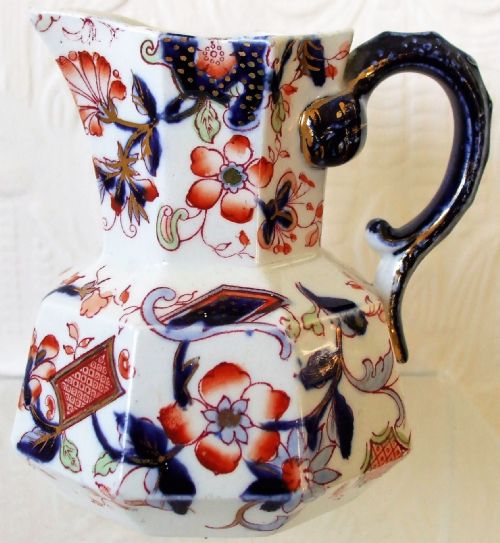
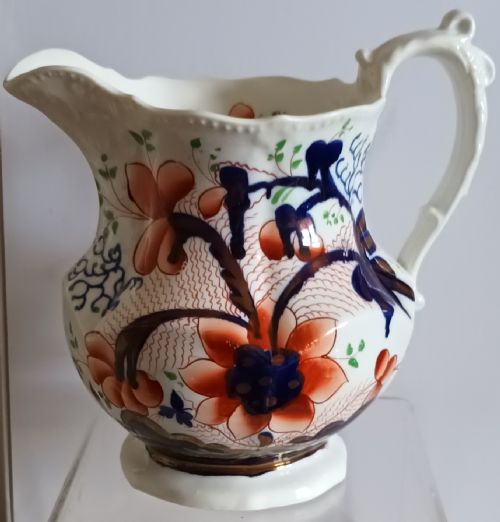
A blue ironstone pitcher is a sturdy ceramic vessel designed for pouring liquids, appearing across the Georgian and Victorian periods in various forms such as basins, ewers, and octagonal jugs. Buyers searching this phrase encounter substantial earthenware pieces decorated with cobalt transfer print designs, often featuring motifs like Chinoiserie, Gaudy Welsh patterns, or the distinctive serpent-handled Hydra shape.
The selection on this page centres on nineteenth-century British production, spanning from early Georgian examples to later Victorian items dated around eighteen-eighty and nineteen-ten. Common configurations include individual jugs alongside matched sets, jug and basin combinations, and graduated suites intended for washstands or decorative display.
How they were made
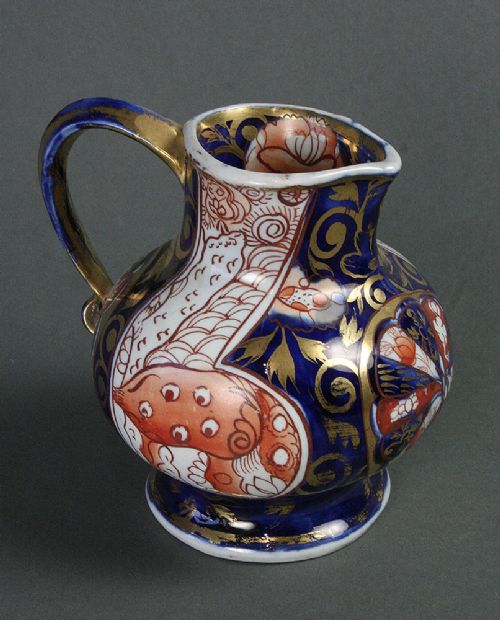
Potters formed these items using durable ironstone and earthenware ceramic bodies, applying glaze to create a smooth, vitreous surface that resisted liquid absorption. Decoration relied on cobalt blue pigments, sometimes enhanced with enamel colours and gold leaf or gilt highlights applied over the fired glaze.
Moulding and casting techniques allowed workshops to produce complex shapes, from octagonal sides to serpent-form handles and grotesque motifs. Firing in kilns transformed the heavy clay body into a robust utilitarian ware capable of enduring daily household use.
Listings feature ironstone, ceramic, earthenware, and glaze materials, decorated with cobalt blue, enamel, and gold leaf.
What varies in quality
Quality in a blue ironstone pitcher depends on the crispness of the transfer-printed cobalt design and the precision of the moulding. Superior examples exhibit deep, even blue tones without smudging, alongside cleanly articulated relief details on handles and body panels.
The sophistication of the pattern layout and the presence of supplementary hand-painted enamel or gold leaf embellishments distinguish standard utilitarian vessels from high-status decorative pieces.
Mason's Ironstone·Keeling and Co·Davenport
The Blue Ironstone Pitcher Glossary
- Ironstone
- A dense, durable type of heavy earthenware patented in the nineteenth century to imitate porcelain. It provides a strong body for large jugs and pitchers.
- Hydra jug
- A specific vessel shape characterised by a serpent-form handle, commonly produced by English potteries during the Georgian and Victorian eras.
- Flow blue
- A ceramic decorating technique where cobalt blue pigment blurred intentionally during the kiln firing, creating a misty, atmospheric effect across the white earthenware surface.
- Chinoiserie
- A decorative style reflecting European interpretations of Chinese artistic motifs. It frequently appears in cobalt blue on nineteenth-century ceramic jugs.
- Gilt
- A thin layer of gold applied to the surface of ceramic pieces as a decorative highlight. It is often found accentuating rims, handles, and painted pattern borders.
Blue Ironstone Pitcher: Frequently Asked Questions
What is ironstone?
Ironstone is a heavy, durable type of earthenware developed in the nineteenth century as a tougher alternative to porcelain. It combines clay, feldspar, and slag to create a robust body suitable for everyday utility vessels.
This material allowed potteries to produce thick, resilient pitchers and jugs that resisted chipping while holding liquids safely.
How were these pitchers used?
These vessels served practical functions in nineteenth-century households for pouring water, milk, or other liquids at the table or washstand. Jug and basin sets were standard bedroom equipment for washing before indoor plumbing became widespread.
Many examples also functioned as decorative centrepieces on sideboards, displaying vibrant cobalt patterns when not in active service.
What is a Hydra jug?
A Hydra jug is a distinctive vessel design featuring a scrolled handle shaped like a serpent or mythical beast, paired with a flared rim and octagonal or rounded body. English potteries produced these popular forms throughout the Georgian and Victorian periods.
The shape draws classical inspiration while utilising the strong ironstone body to support the projecting handle structure.
How do I date an ironstone pitcher?
Dating relies on stylistic markers, pottery marks stamped on the base, and manufacturing techniques recorded across the nineteenth century. Georgian pieces often display different handle configurations and pattern styles compared to later Victorian or eighteen-eighty productions.
Comparing the cobalt transfer print style and the presence of hand-applied gilt highlights also helps narrow down the period of manufacture.