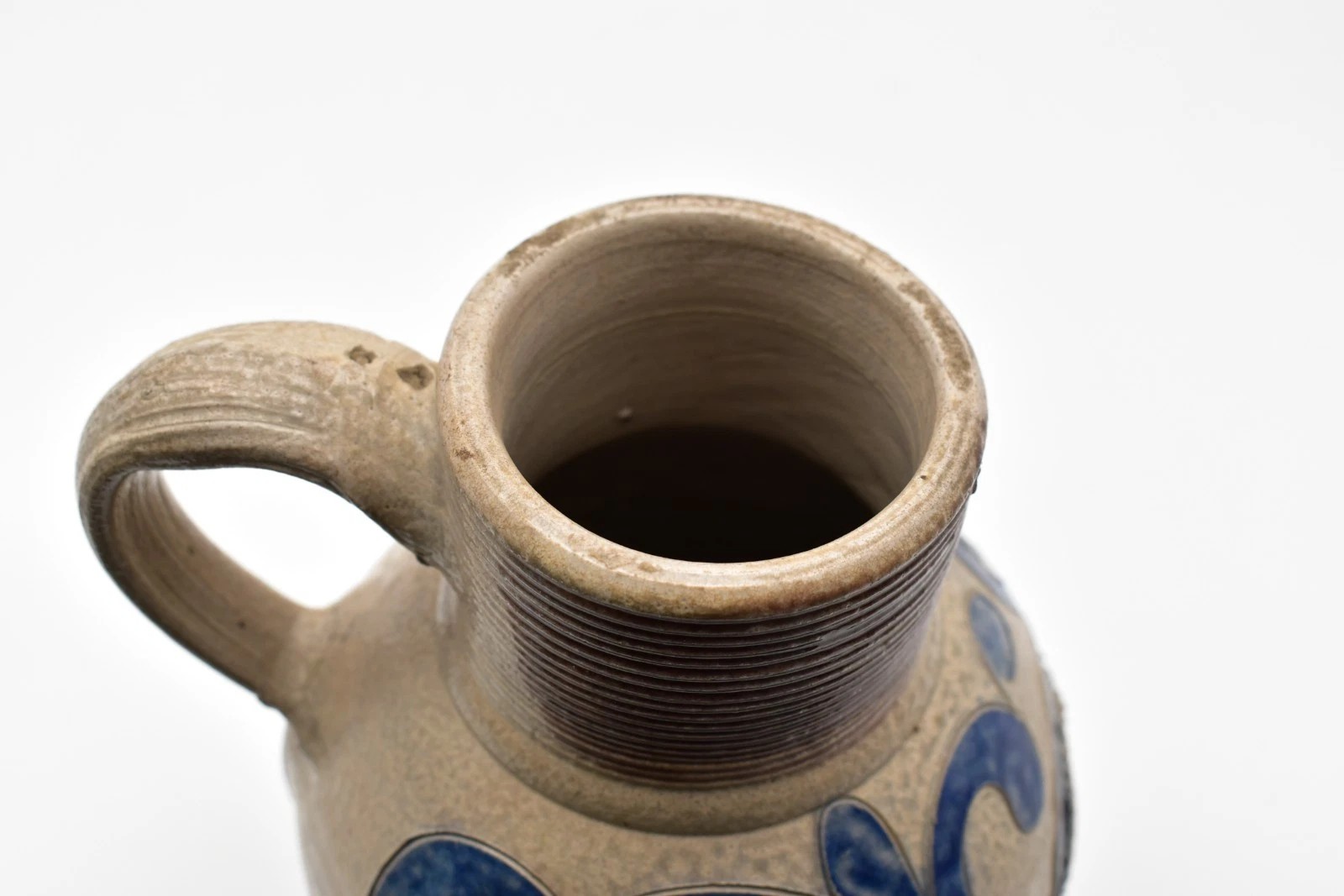
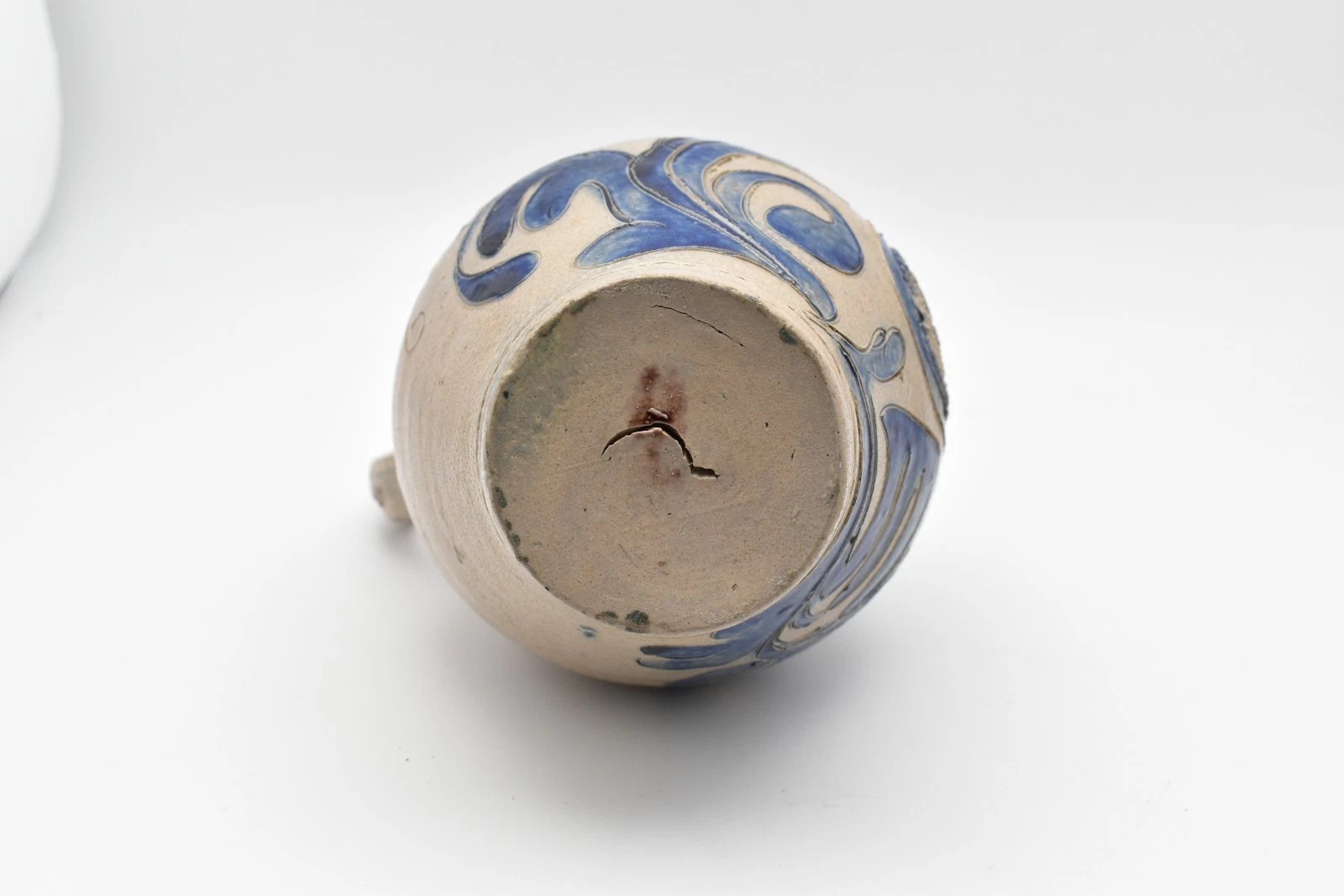
Bushells Antiques has dated this Westerwald Salt Glaze Jug to the 18th Century.
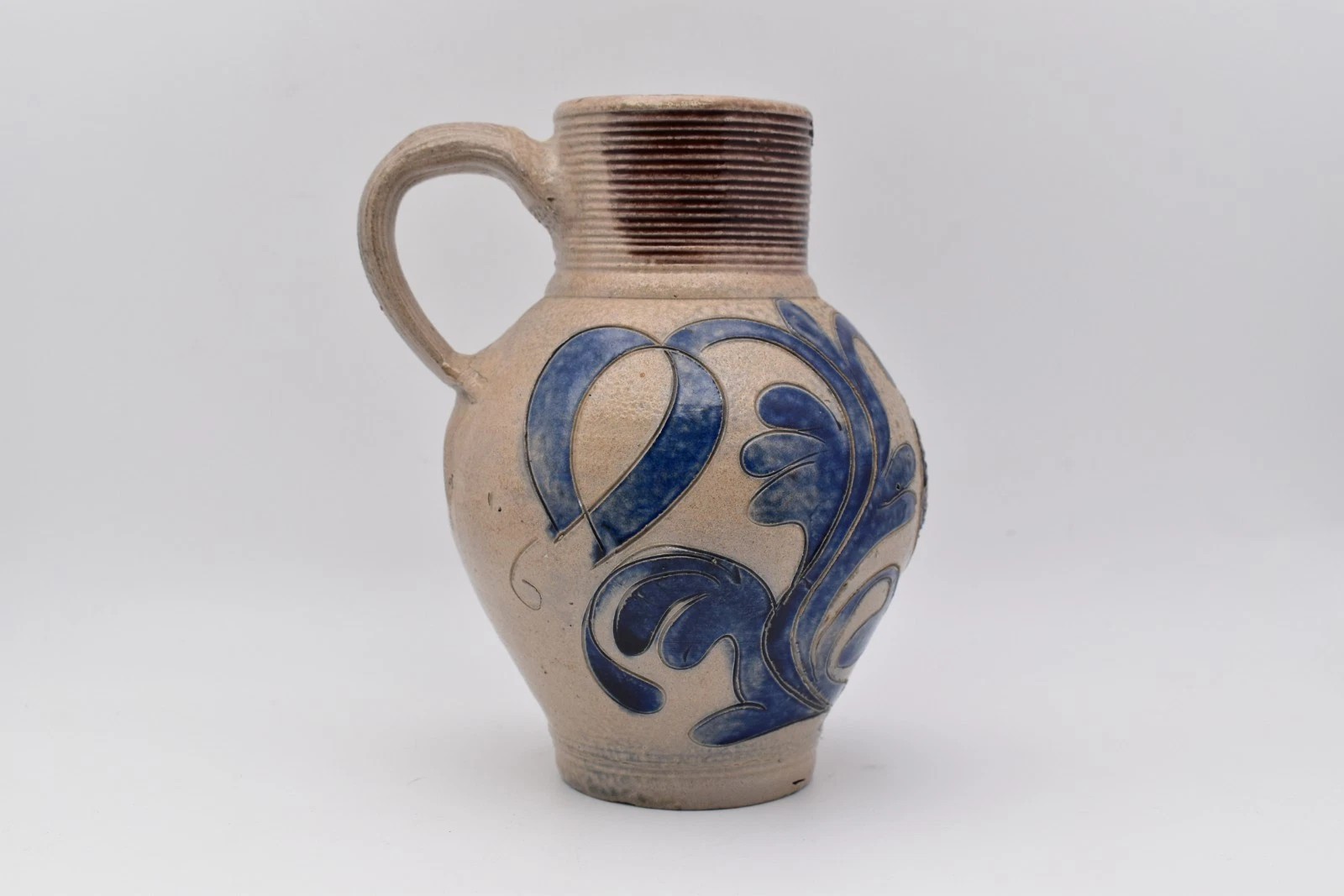
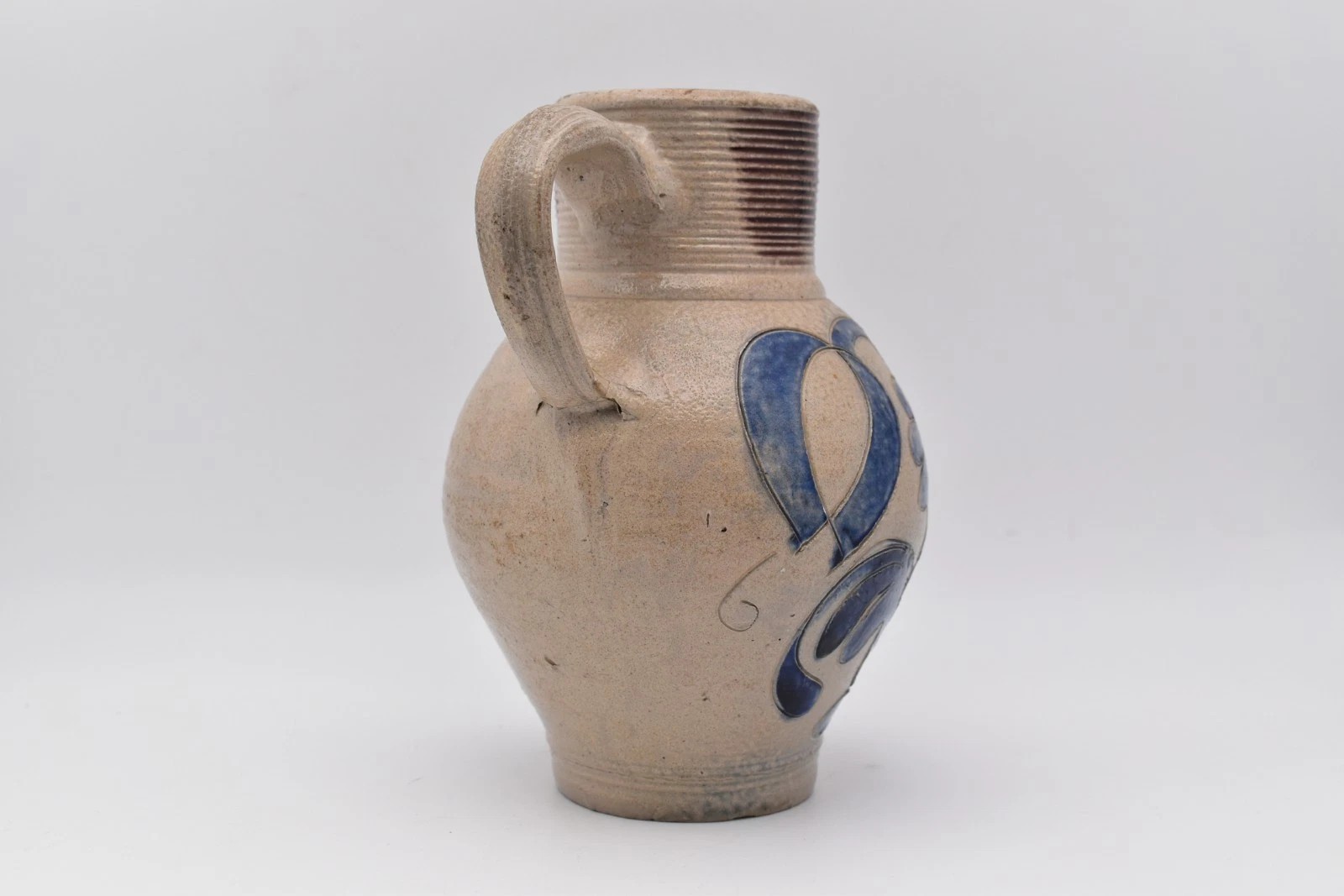
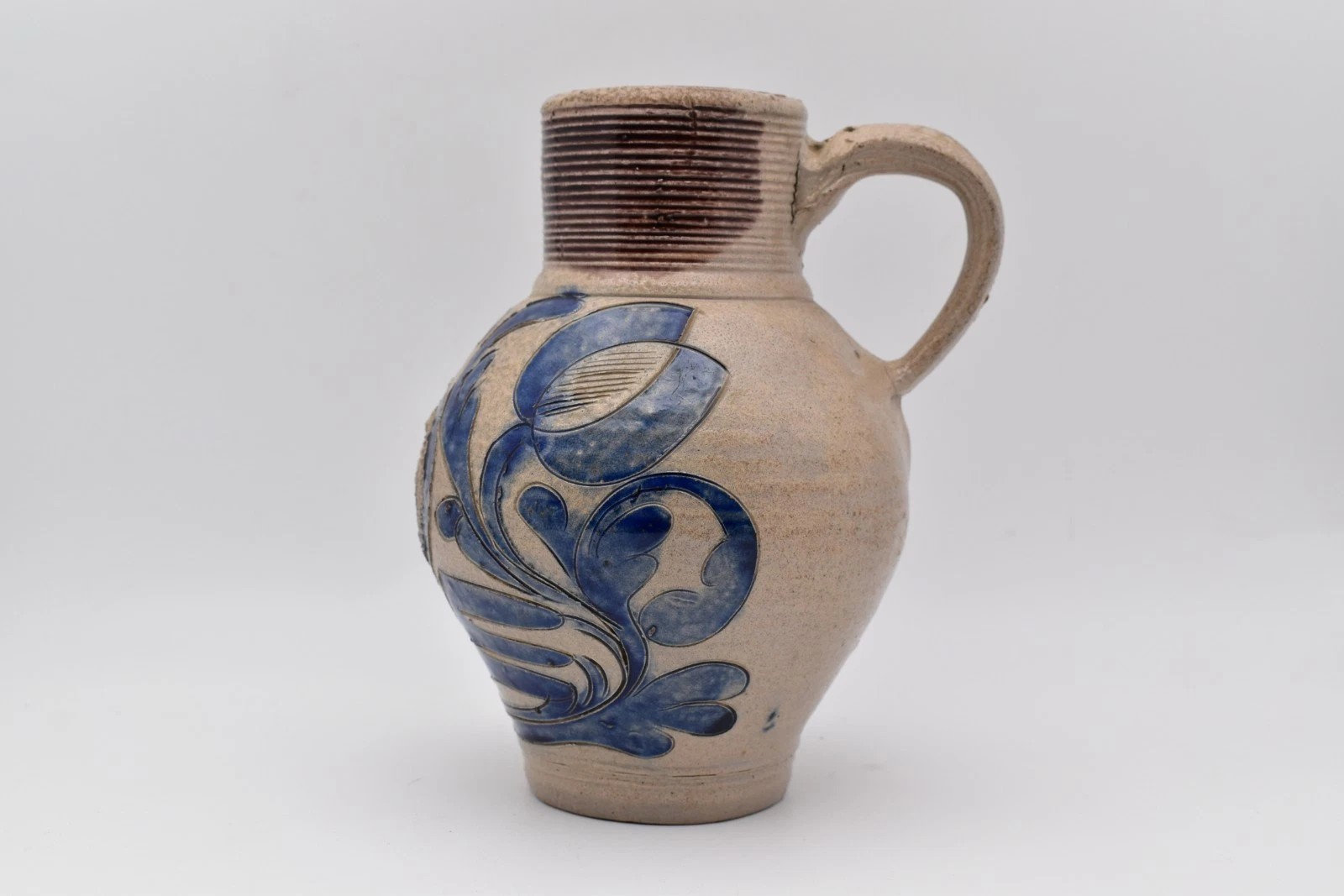
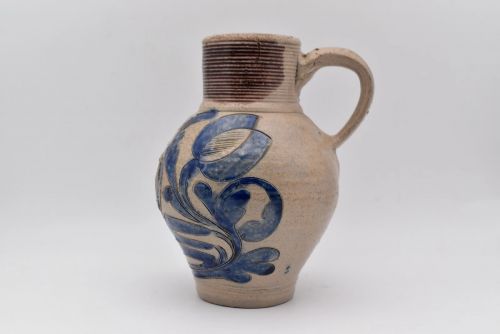
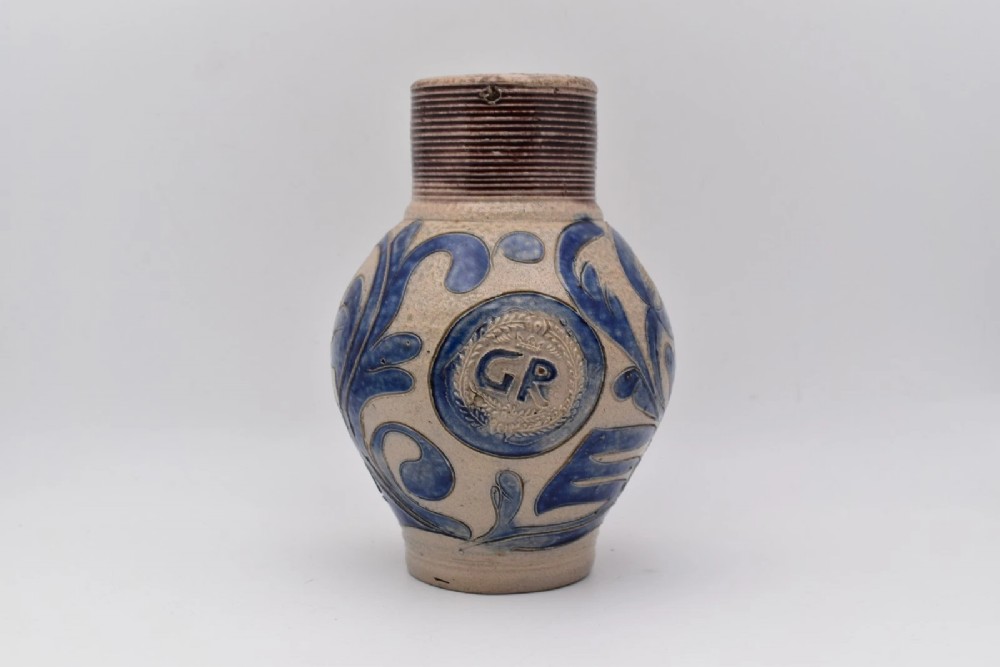
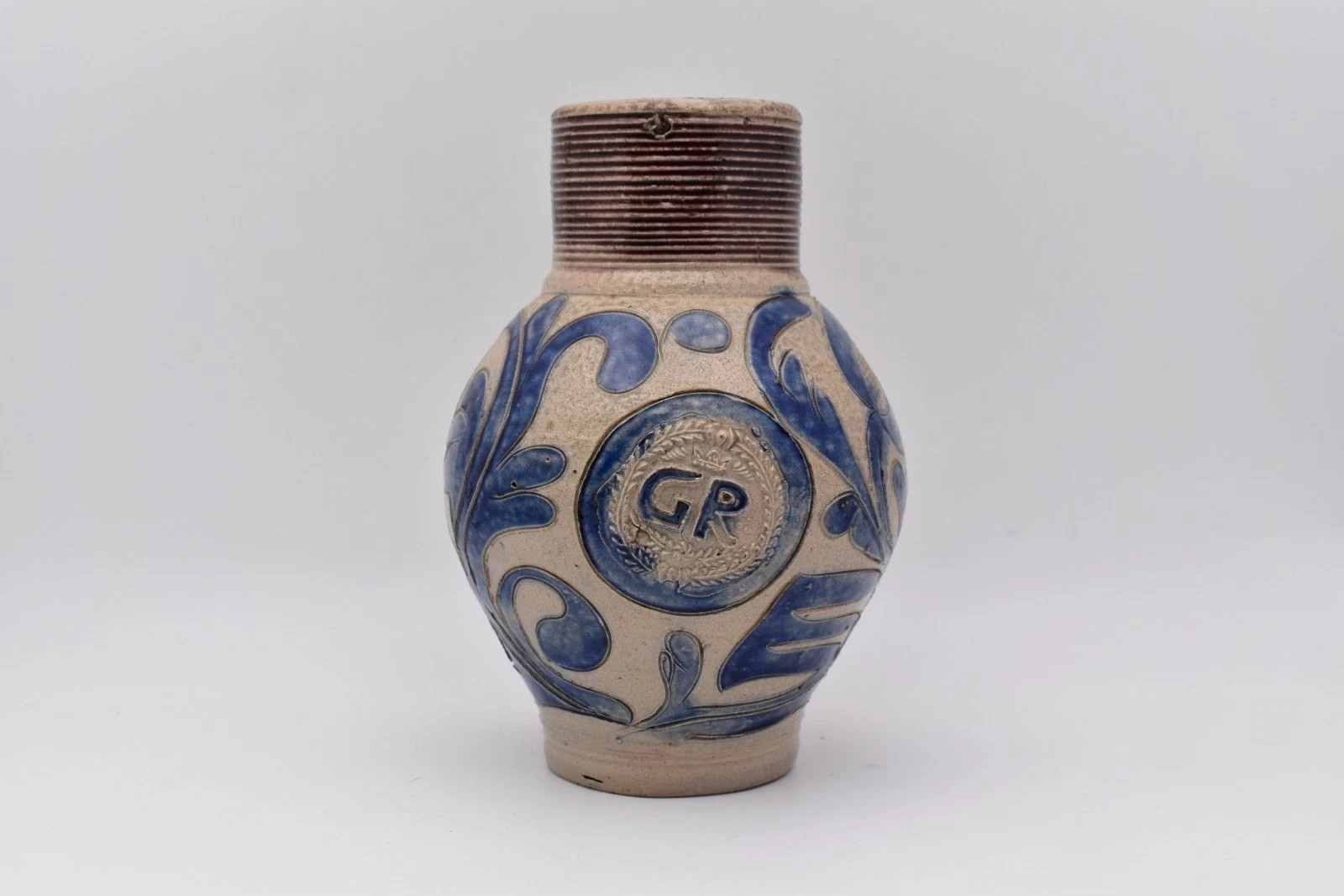
An early 18th-century German Westerwald salt-glazed stoneware jug decorated with cobalt blue foliate ornament surrounding an applied royal cipher medallion bearing the initials “GR” (Georgius Rex) beneath a crown.
The surface is covered in a traditional salt glaze, producing the characteristic subtly textured “orange-peel” surface associated with Westerwald production of the period.
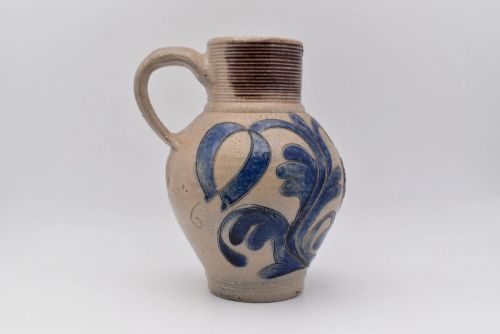
Centrally positioned on the body is a moulded circular medallion containing the crowned GR royal monogram, framed within a radiating sunburst border. The medallion is flanked by hand-incised scrolling foliage enriched with cobalt blue oxide, a decorative scheme typical of Westerwald stoneware produced for the British export market during the early Hanoverian period.
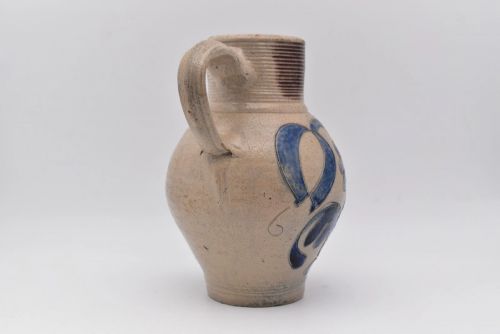
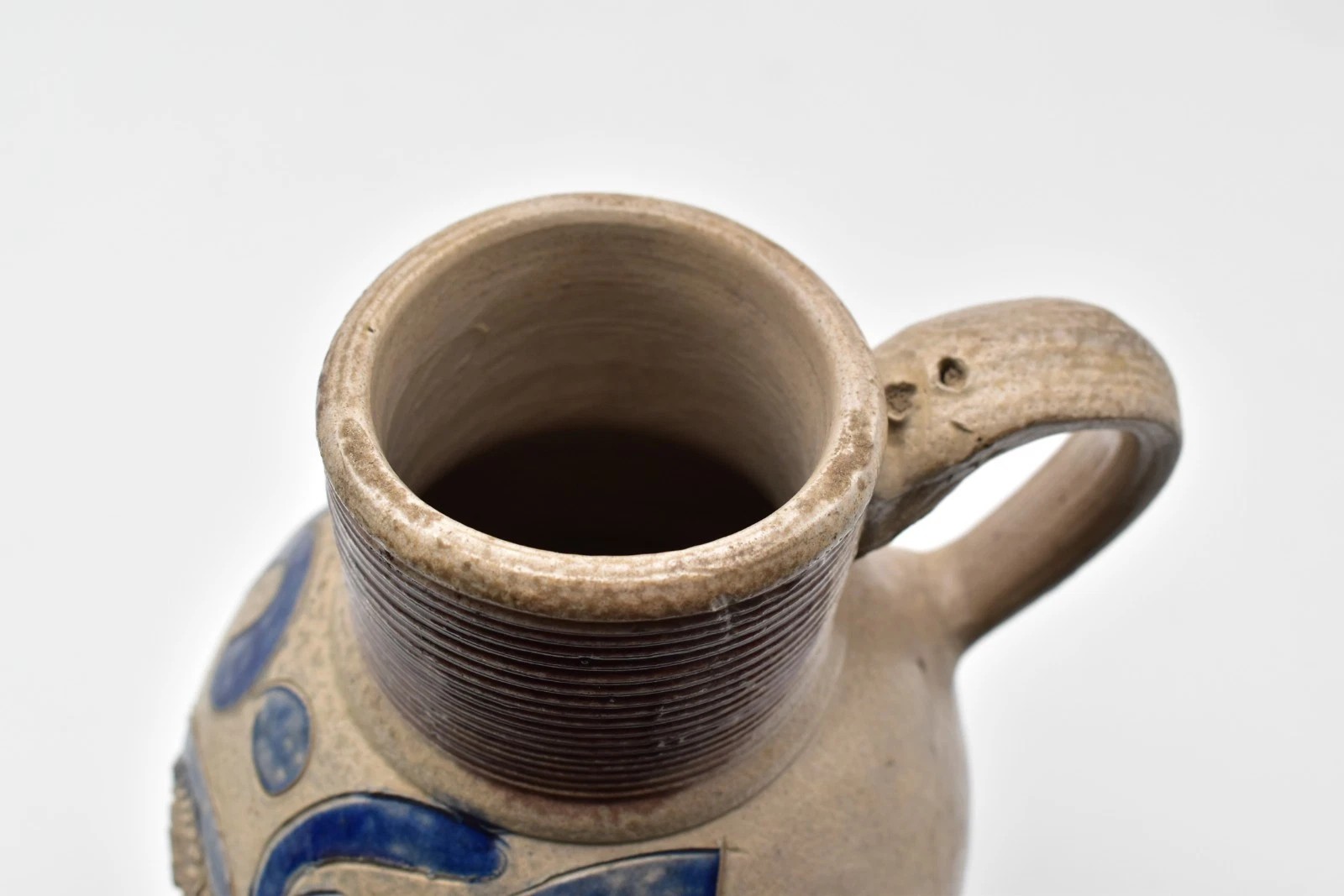
The interior remains unglazed and reveals the original potter’s throwing rings, while a single applied loop handle is attached to the rear.
Stoneware vessels of this type were manufactured in the Westerwald region of Germany during the early 18th century and were widely exported to Britain to commemorate the reign of the Hanoverian monarchs George I and George II.
⸻
Origin: Westerwald, Germany
Date: Circa 1714–1760
Material: Salt-glazed stoneware with cobalt decoration
Decoration: Applied royal cipher medallion “GR” beneath crown
Height: 16 cm (6.3 in.)
Body Diameter: 10 cm (3.9 in.)
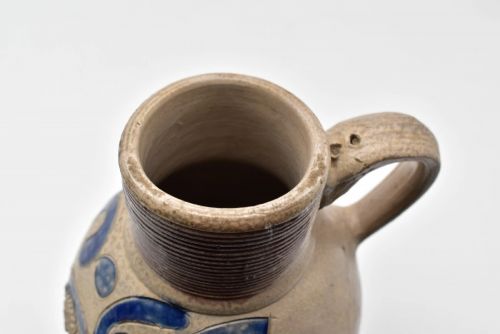
Rim Diameter: 6 cm (2.4 in.)
Weight: 515 grams
Condition:
Good antique condition consistent with age and use. Minor firing irregularities and surface variations inherent to early salt-glazed stoneware production.
Bushells Antiques has dated this Westerwald Salt Glaze Jug to the 18th Century.
Fine art, porcelain, jewellery, silver, clocks, pictures, oriental objects d’art and furniture
You can view the stock and full dealer information on the Bushells Antiques Profile Page
Rare Antique 18thc Westerwald Stoneware Jug Gr Royal Cipher Salt Glaze Germany