


Salt Glazed Stoneware Pitcher
A salt glazed stoneware pitcher brings dense clay, salt glaze, and cobalt colour to the table from periods spanning the 16th century to the Victorian era.
Salt Glazed Stoneware Pitcher
A salt glazed stoneware pitcher is a ceramic vessel designed for liquids, encountered in forms such as jugs, ewers, flagons, and puzzle jugs. The pieces originate from periods including the 17th century, 18th century, and Victorian era, alongside specific dates from the 16th century to 1900. English and continental workshops produced these items for domestic use and display.
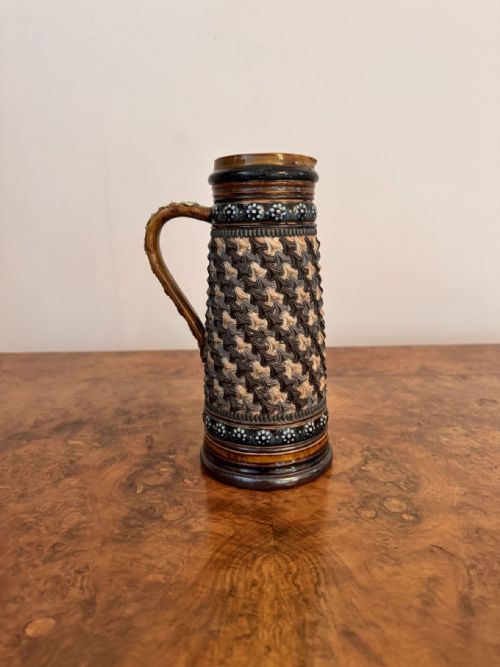
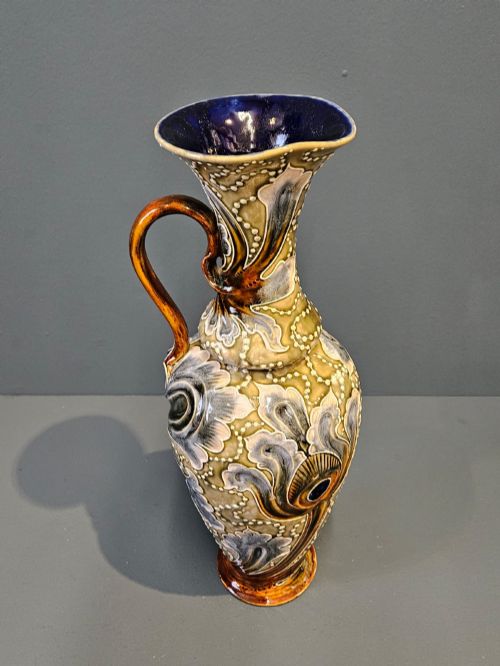
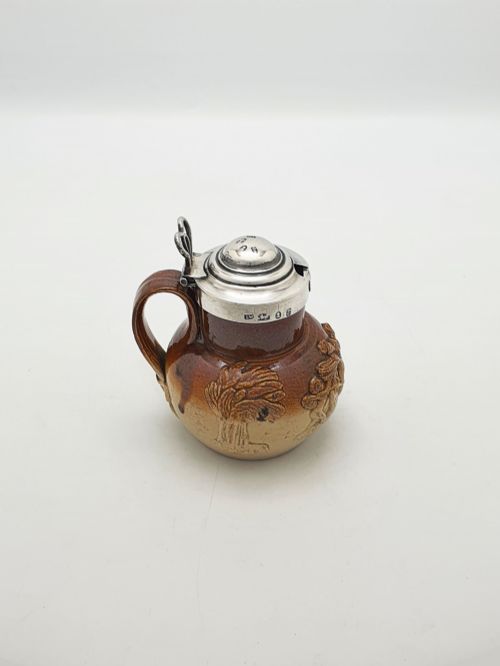
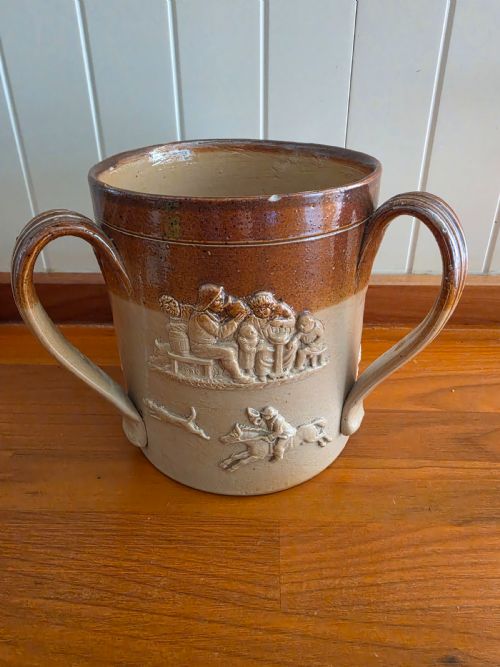
Victorian examples, particularly from Doulton Lambeth, dominate the current selection alongside German Westerwald wares. These items feature stoneware bodies finished with salt glaze, sometimes incorporating sterling silver collars or hinged lids. Forms range from harvest jugs and tea sets to large exhibition pieces.
Materials and Techniques
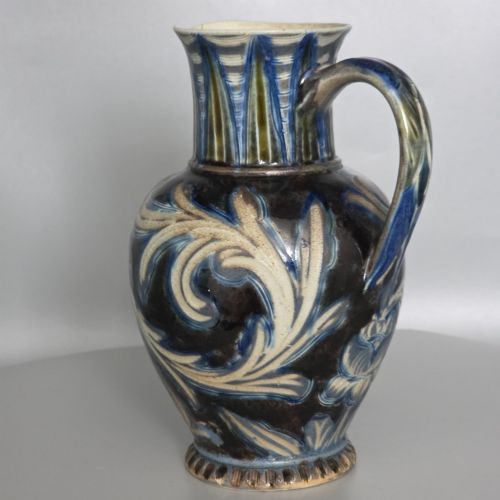
Potters shaped dense clay into jugs and pitchers, applying salt during the kiln firing to create a characteristic pitted glaze texture. Cobalt blue decoration often highlights incised or sprigged relief patterns on the stoneware body. Artisans completed certain pieces with silver rims, silver-plated lids, or sterling silver collars.
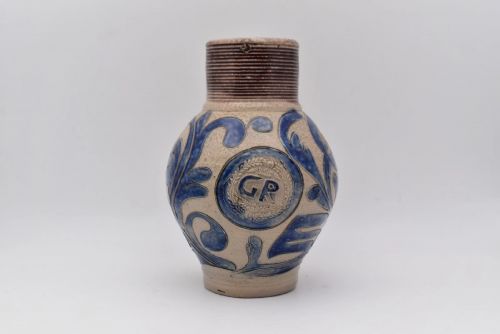
German Westerwald production relied on salt glaze over grey clay, enriched with cobalt blue pigments. English makers utilised similar stoneware methods, adding cream sprigged ornaments or harvest designs to the finished pottery vessels.
Listings feature stoneware, ceramic, and salt glaze materials across 17th-century, 18th-century, and Victorian periods.
Standards of Quality
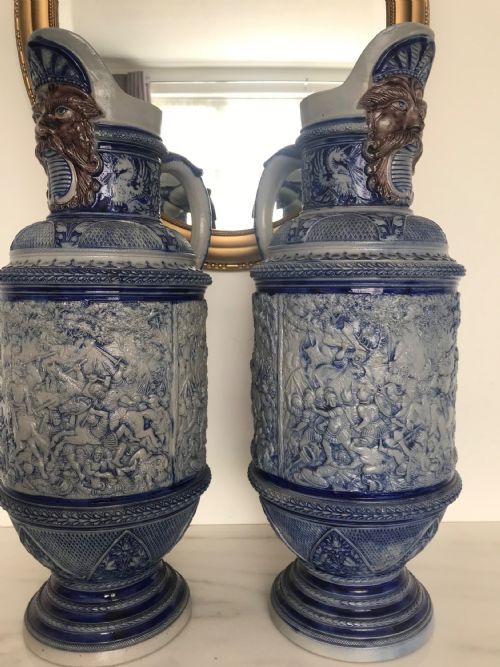
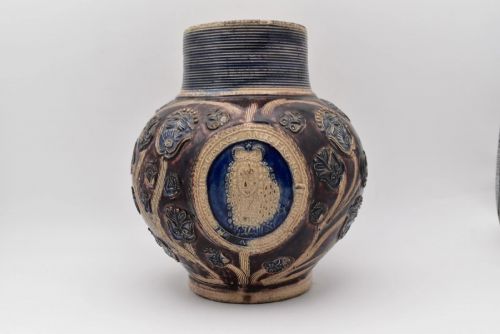
The clarity of incised or sprigged ornamentation distinguishes standard utilitarian vessels from exhibition pieces. Elaborate decorative programmes, such as royal portraits or Roman battle scenes, indicate a higher grade of craftsmanship.
The addition of hallmarked sterling silver collars, rims, and hinged lids alters the character and status of a salt glazed stoneware pitcher. The precision of the salt glaze finish and the depth of cobalt coloration mark the distinction between ordinary production and works by named makers.
Doulton Lambeth·Simon Peter Gerz·Emma Shute·Royal Doulton
The Salt Glazed Stoneware Pitcher Glossary
- Salt glaze
- A glassy, textured coating formed by throwing common salt into the kiln at the height of firing. The sodium reacts with the silica in the clay body.
- Stoneware
- A heavy, dense ceramic fired at high temperatures until vitrified. It holds liquids without porosity even without interior glazing.
- Cobalt
- A blue metallic oxide pigment used under the glaze to paint details and scenes. It withstands the extreme heat of salt-glaze kilns.
- Sprigging
- The technique of moulding small clay reliefs separately and applying them to the vessel body before firing. These sprigs often depict heraldic or floral motifs.
- Bartmann jug
- A German stoneware jug featuring a bearded mask applied to the neck. These vessels date from the 16th century onwards.
Salt Glazed Stoneware Pitcher: Frequently Asked Questions
What is a salt glazed stoneware pitcher?
It is a heavy ceramic vessel fired at high temperatures with salt introduced to the kiln. This process creates a distinctive textured surface on the stoneware body.
Such vessels served practical purposes for ale, water, and household liquids across centuries of European pottery production.
How do you date an old stoneware jug?
Dating relies on stylistic markers, historical ciphers, and manufacturing traits recorded across periods like the Victorian era or the 17th century. Maker stamps and applied portraits provide specific chronological clues.
English and German pieces often carry specific decorative idioms unique to their decade of origin.
What are puzzle jugs used for?
Puzzle jugs are historical drinking vessels featuring pierced necks that prevent normal drinking. Users had to solve the puzzle of covering concealed holes to imbibe the contents.
These items functioned as tavern novelties and conversation pieces during social gatherings.
Did these pitchers have lids?
Many examples include fitted lids or collars made from sterling silver or silver plating. Hinge mechanisms attached these metal mounts securely to the stoneware rim.
Not all vessels possessed lids, as standard jugs and harvest pitchers remained open at the top.