
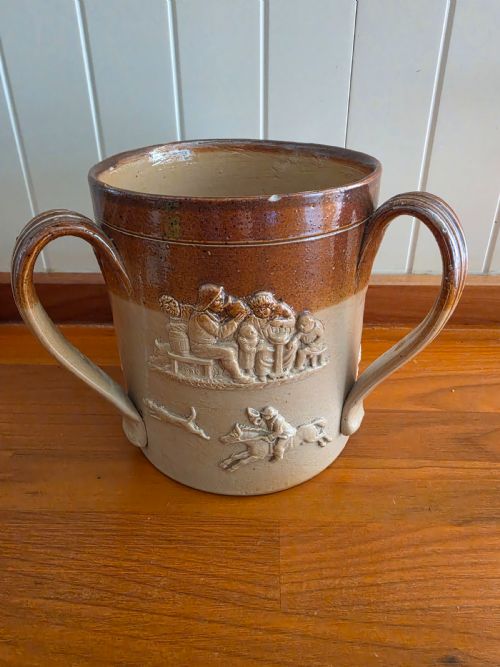
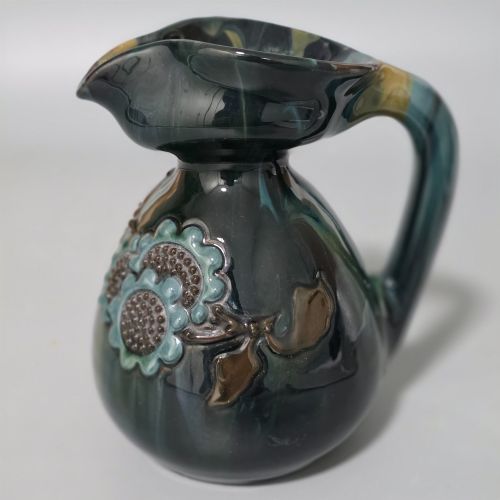


Antique Stoneware Pitcher
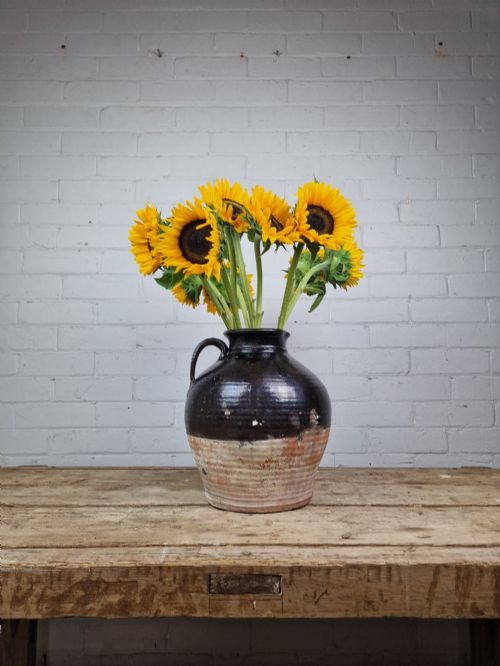
An antique stoneware pitcher brings tactile weight and historic utility to a room, offering robust clay forms shaped centuries ago for daily service.
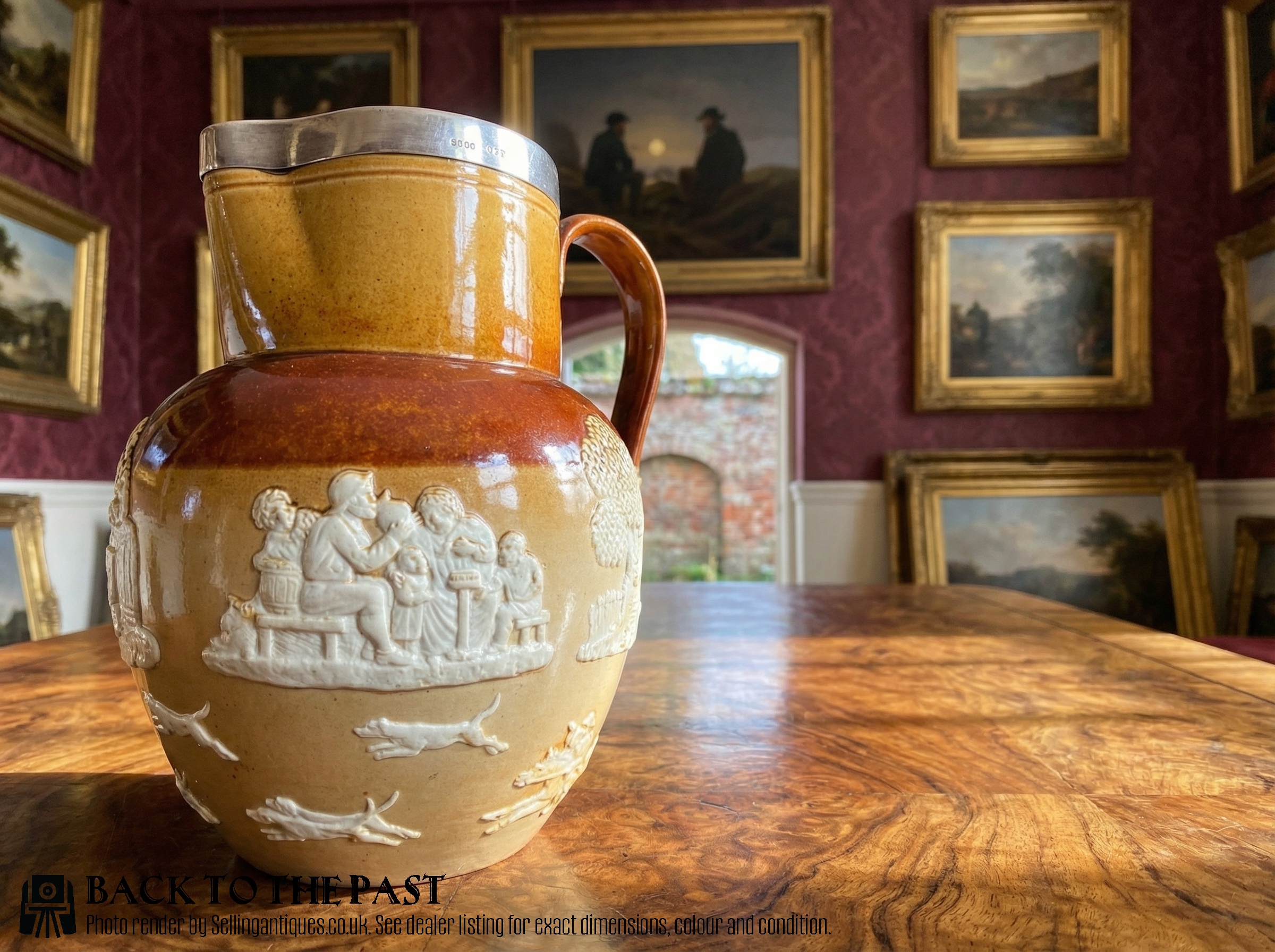
Antique Stoneware Pitcher
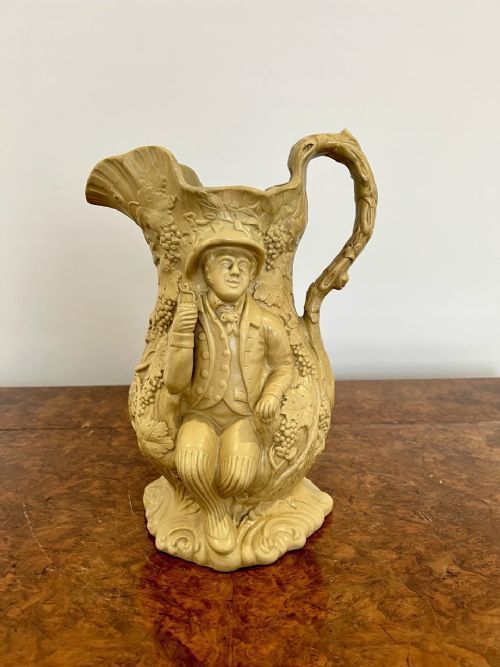
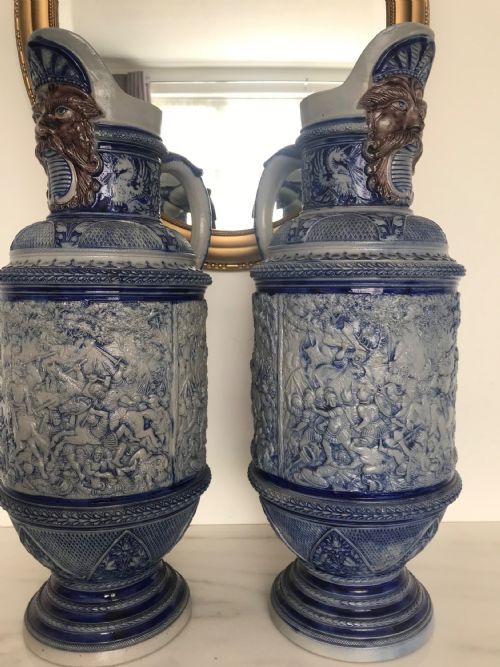
An antique stoneware pitcher represents a durable vessel designed primarily for holding liquids like ale, water, or wine, emerging frequently from nineteenth-century production centres in England and Germany. These utilitarian yet decorative objects span periods from the seventeenth century through the Victorian era, displaying considerable variety in scale and ornamentation.
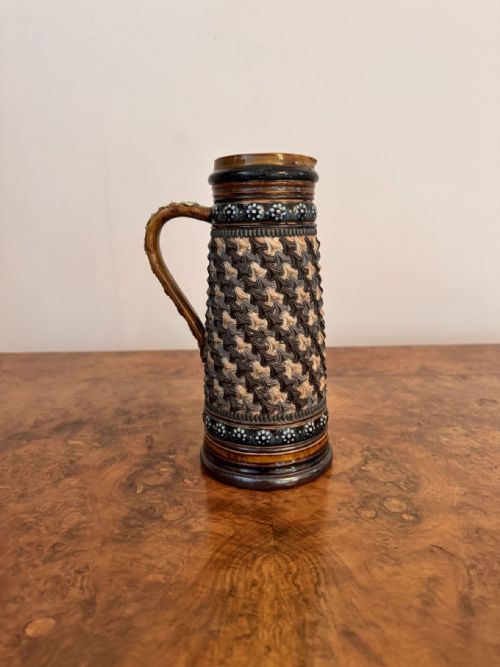
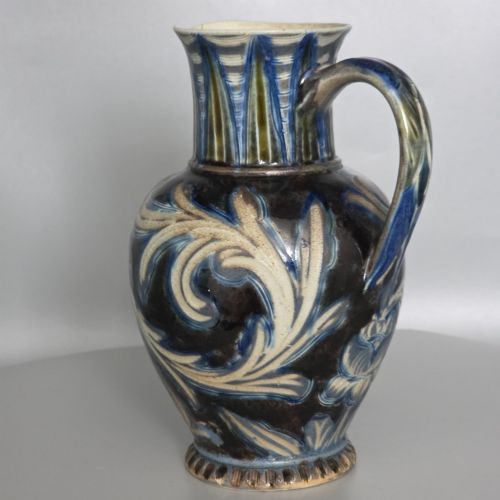
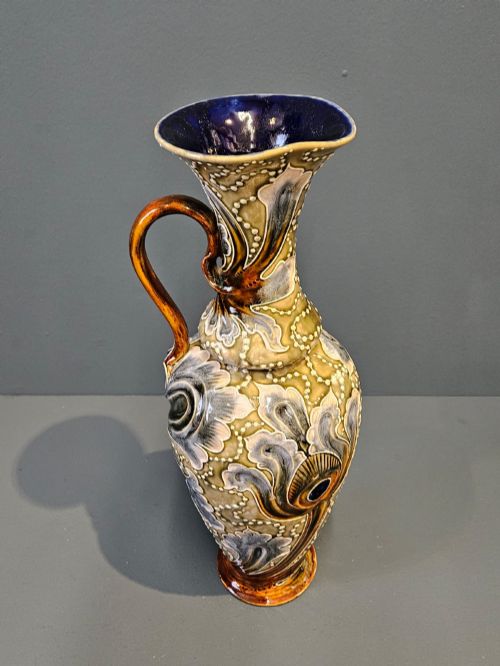
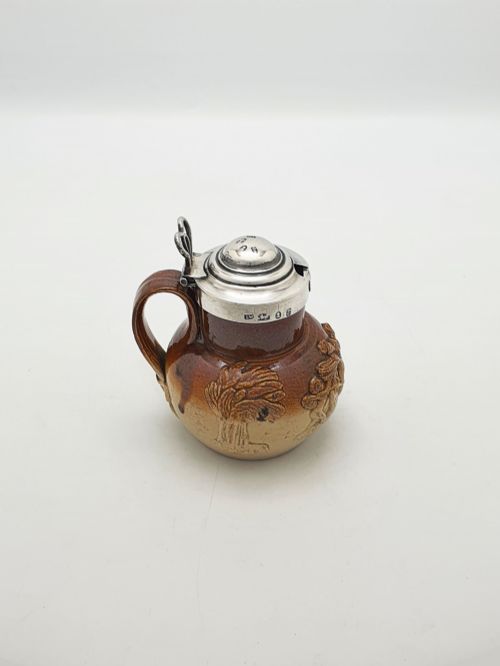
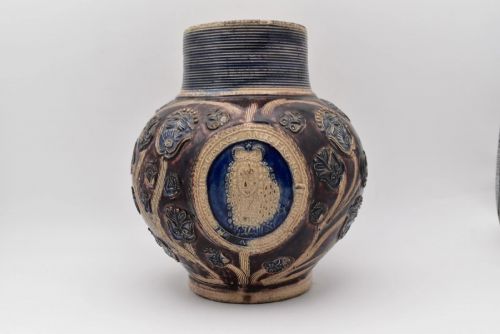
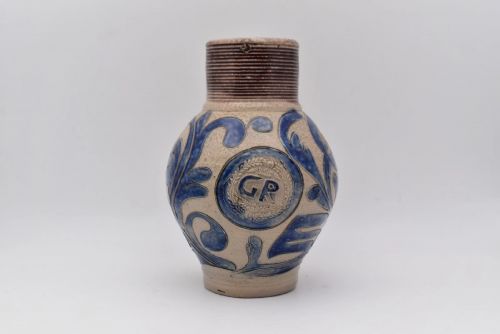
The specimens you encounter most often on this page date from the Victorian period, showcasing salt-glazed finishes, relief moulding, or intricate slipware decoration. Collectors also find specialised forms such as puzzle jugs, harvest jugs with sterling silver or plated collars, and exhibition pieces carrying royal ciphers.
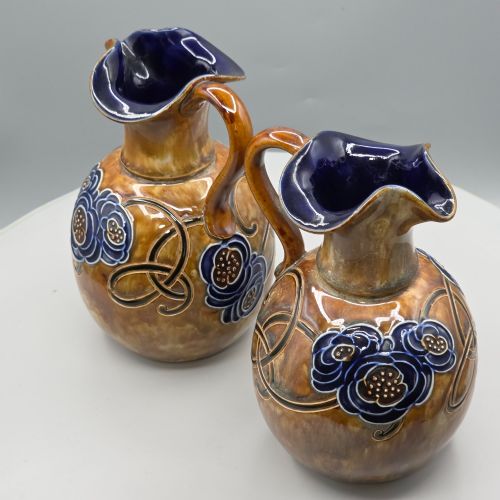
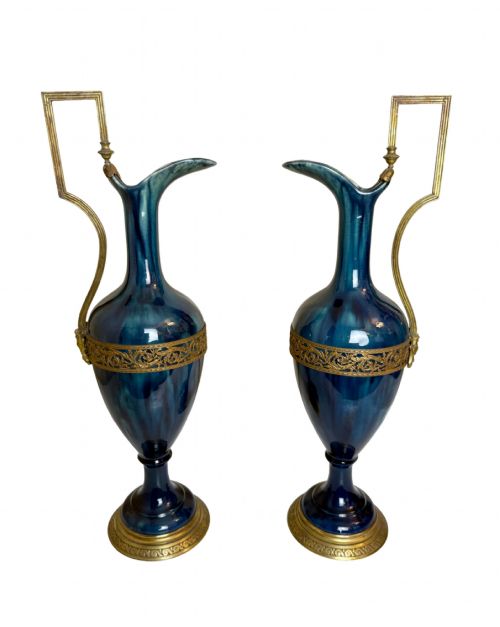
Makers ranged from large industrial potteries to individual studio artists, producing forms that transition from plain tavern service gear to elaborate Art Nouveau and Arts and Crafts display pieces. Each piece reflects the functional requirements and aesthetic tastes of its specific decade of manufacture.
Materials and methods of production
Makers utilised dense, vitrified clay bodies fired at high temperatures to achieve the impervious quality characteristic of true stoneware. This dense material resisted moisture absorption without requiring internal lead glazing, making it ideal for holding beverages.
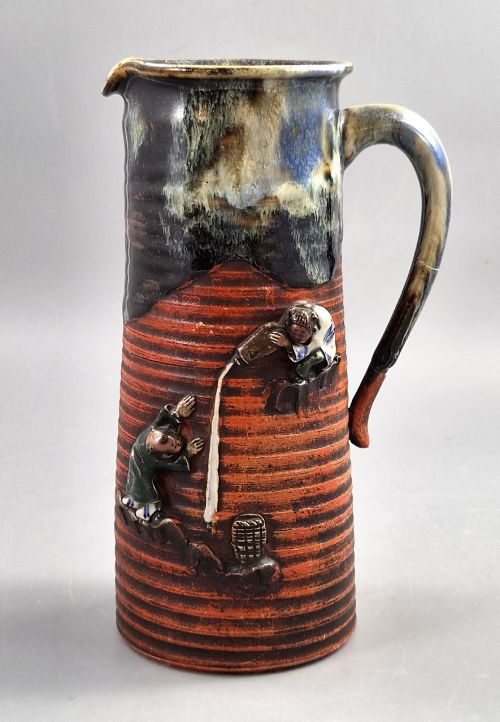
Surface decoration frequently involved salt glazing, where salt introduced into the kiln during firing produced a characteristic textured orange-peel skin. Alternatively, artisans applied sprigged reliefs, cobalt blue pigments, or relief moulding techniques to build intricate figurative scenes directly onto the body.
Antique Stoneware Pitcher Retail Price Guide 2026
Typical asking prices for stoneware pitcher among the pieces listed under this phrase on Sellingantiques today, from the lower quarter to the upper quarter. They describe what is for sale here now, not the wider market.
Materials range from raw terracotta and clay through to refined stoneware, porcelain, and applied salt glaze finishes.
Determining quality in historical stoneware
Quality rests significantly on the crispness of the moulded relief work and the depth of the salt glaze texture. Pieces featuring sharp, well-defined mythological or historical scenes demonstrate superior tool work and careful kiln management.
The addition of precious metal mounts, such as hallmarked sterling silver collars or hinged lids, elevates the status of a vessel from plain tavern ware to a domestic luxury. Furthermore, skilled hand-finishing and signed attribution by notable artists distinguish exceptional studio outputs from standard factory editions.
Doulton Lambeth·Royal Doulton·Simon Peter Gerz·Sir Edmund Elton·Charles Meigh·Dr Christopher Dresser·Minton·Emma Shute
The Antique Stoneware Pitcher Glossary
- Stoneware
- A heavy, opaque ceramic fired at high temperatures until vitrified and rendered non-porous. It provides a sturdy canvas for salt glazes and deep relief carving.
- Salt glaze
- A vitreous coating formed on pottery by throwing common salt into the kiln during high-temperature firing. This chemical reaction creates a distinctive pitted texture resembling an orange peel.
- Relief moulded
- A decorative technique where vessels are shaped in moulds that impart raised ornamental patterns or figurer scenes onto the exterior wall. This method allowed for consistent production of complex pictorial designs during the nineteenth century.
- Puzzle jug
- An ingenious drinking vessel featuring pierced necks and multiple spouts designed to confound the drinker. Fluid must be sucked through a specific hidden tube to avoid spilling.
- Tyg
- A large drinking vessel featuring three or more handles designed for passing among guests at communal gatherings. They frequently appear in seventeenth and eighteenth-century contexts.
Antique Stoneware Pitcher: Frequently Asked Questions
What were antique stoneware pitchers used for?
These vessels served primarily for storing, pouring, and serving beverages such as ale, cider, and water at the table or in public taverns. Their dense, non-porous walls kept liquids cool and protected contents from contamination.
Larger exhibition pieces and highly decorated jugs also functioned as display items, commemorating royal events or showcasing the technical skill of the pottery.
How can I date an antique stoneware pitcher?
Dating relies on examining the manufacturing style, decorative motifs, and any factory marks or royal ciphers stamped into the clay. For instance, pieces bearing specific monarchs' ciphers or characteristic Victorian aesthetic patterns point clearly to their era of origin.
Metal mounts like silver collars with legible hallmarked dates provide a precise point of reference for the vessel's assembly.
Can I use an antique stoneware pitcher for serving drinks today?
Many historic stoneware pitchers remain structurally sound and capable of holding liquids safely for modern use. However, collectors often prefer to exhibit them as decorative objects to preserve their historical integrity and any delicate silver mounts.
Careful hand washing without harsh detergents is essential if you choose to utilise them.