




Relief Moulded Jug
A relief moulded jug brings tactile nineteenth-century design to a table, offering rich historical detail through pressed ceramic decoration.
What a relief moulded jug is
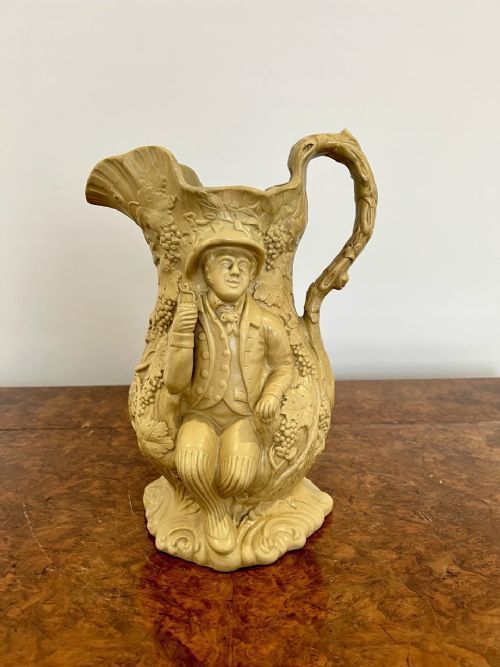
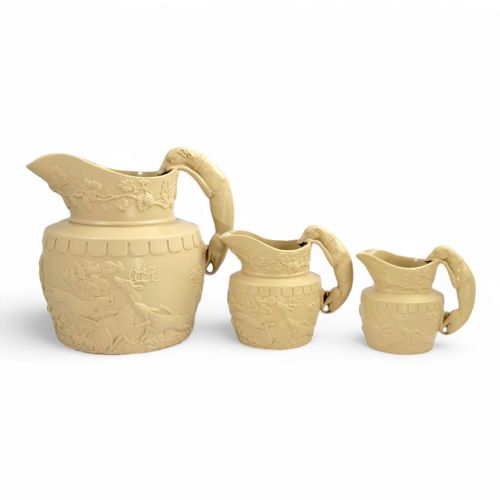
A relief moulded jug presents raised figurative, floral or architectural ornament pressed directly into the body during production. These pieces date across the nineteenth century, spanning the Victorian and Edwardian eras.
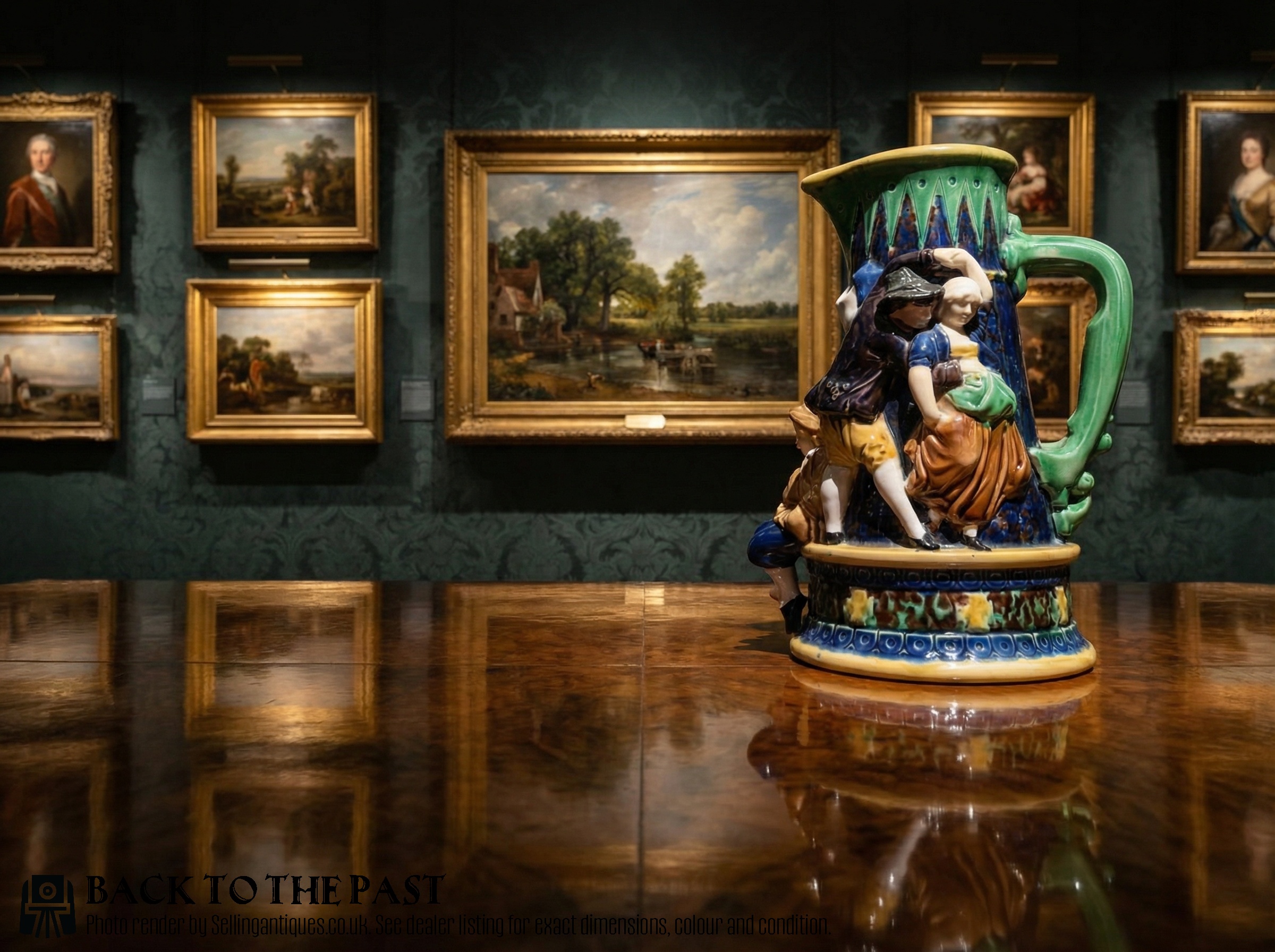
The most common examples on this page are earthenware and stoneware pitchers from the mid to late nineteenth century. Makers applied varied glaze finishes, including coloured majolica palettes and classic white surfaces.
Forms range from standard domestic pitchers to large capacity vessels and decorative display pieces. Collectors encounter both utilitarian containers and highly artistic exhibition designs.
How they were made
Potters utilised specialised metal moulds to press decorative patterns into soft clay bodies. This technique allowed workshops to produce complex sculptural scenes with sharp, consistent detail across multiple examples.
Makers finished the pieces using earthenware, stoneware, or white stoneware bodies, often adding coloured glazes or pewter mounts. Firing in traditional kilns fixed the ceramic body and set the surface glaze.
Retail Price Guide 2026
Typical UK retail prices for relief moulded jug, calculated from the Sellingantiques database of over a million retail prices indexed since 2003. This retail price guide relies exclusively on Sellingantiques data; no external sources or auction records are used, so the figures do not describe the wider market.
Victorian households regularly poured everyday beverages from jugs depicting wild bacchanalian dances.
What varies in quality
The crispness of the moulded relief dictates visual clarity, separating sharp, deeply articulated scenes from softened impressions. Master modellers achieved dynamic depth that lesser workshops failed to capture.
Glaze application and palette control determine the aesthetic success of coloured pieces, particularly within majolica examples. Rich, even coverage enhances the underlying sculptural detail without obscuring the form.
Charles Meigh·Jones And Walley·Minton·Samuel Alcock·George Jones
The Relief Moulded Jug Glossary
- Relief moulding
- A ceramic manufacturing technique where designs are pressed in raised form against the vessel wall using a multi-part mould. This method defined Victorian tableware production.
- Majolica
- A colourful, lead-glazed earthenware style popular during the Victorian period, known for vibrant tones and botanical or figurative motifs. It creates a glossy, decorative surface.
- Stoneware
- A dense, impermeable ceramic fired at high temperatures, often utilised for durable pitchers and large utility vessels. White stoneware offers a clean, uniform ground for moulded details.
- Earthenware
- A porous ceramic body fired at lower temperatures, requiring a glaze to achieve watertight functionality. It forms the basis of many nineteenth-century decorative jugs.
Frequently Asked Questions
How do I date a relief moulded jug?
Dating relies on stylistic clues, registered design marks, and the specific ceramic body used by the pottery. Victorian examples often display standard registry diamonds or specific maker stamps on the base.
Changes in glaze style and the evolution of nineteenth-century decorative motifs also help narrow down the production decade. Comparing known manufacturer archives provides further chronological certainty.
Were these jugs used daily?
Many nineteenth-century vessels served practical roles on the dining table for pouring water, milk, or beer. Stoneware versions handled heavier daily utility.
Other larger or brightly coloured majolica examples functioned primarily as decorative display items in Victorian homes. Their survival often depends on whether they saw heavy service or gentle use.
What is the difference between earthenware and stoneware?
Earthenware is fired at lower temperatures and requires a vitreous glaze to hold liquids securely. It allows for bright colour absorption, particularly in majolica wares.
Stoneware fires much hotter, resulting in a dense, vitrified body that remains watertight without a glaze. This material suited robust, heavy-duty pitchers and large capacity jugs.
How should I display my jug?
Placing pieces on stable, level shelving away from direct sunlight protects both the ceramic body and coloured glazes. Adequate spacing allows the raised sculptural details to catch ambient light.
Avoid high-traffic areas where accidental knocks might damage the handle or spout. Proper placement highlights the intricate nineteenth-century moulding safely.