
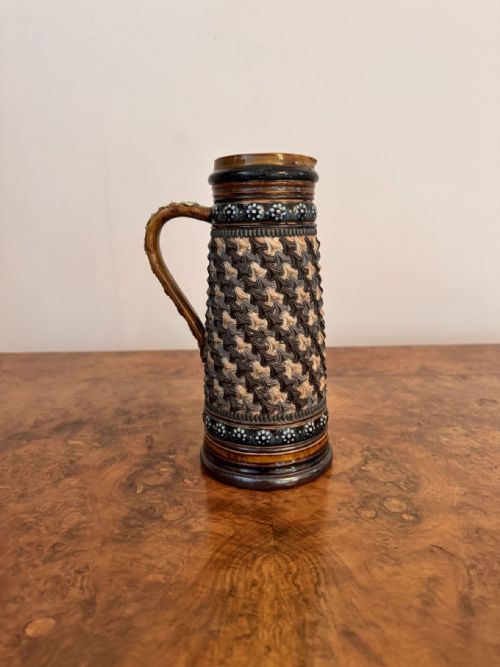
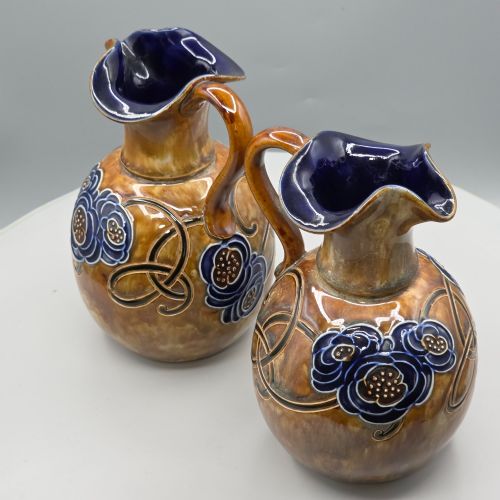
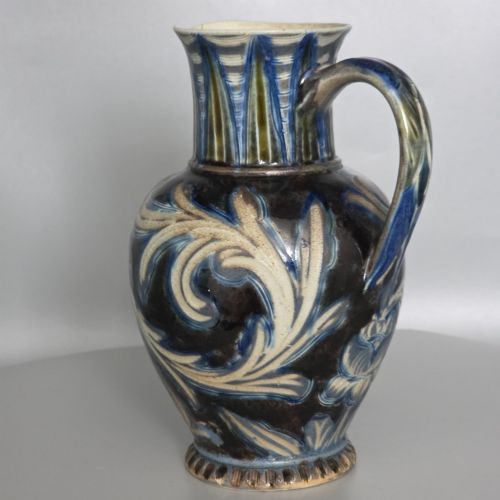
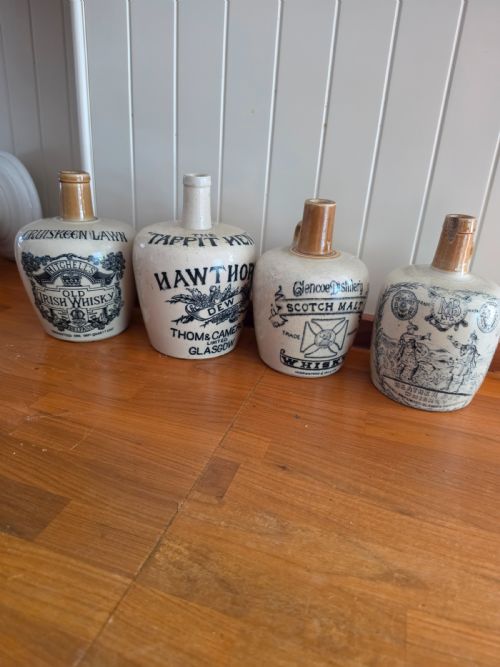


Brown Stoneware Jug
These heavy brown stoneware jugs bring tactile weight and utilitarian craft into modern spaces, offering robust historic utility.
Brown Stoneware Jug
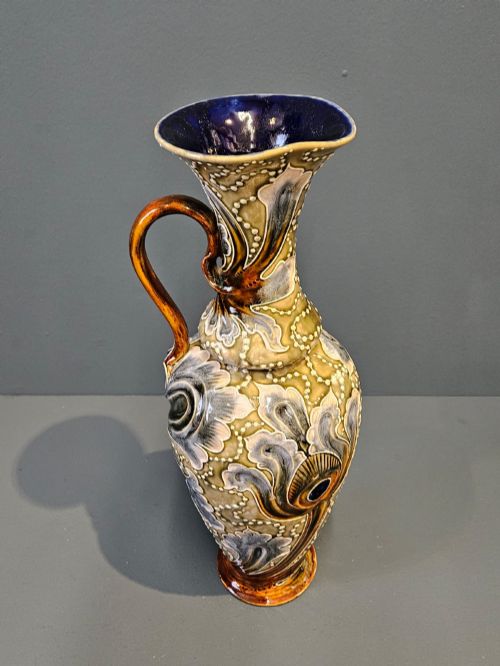
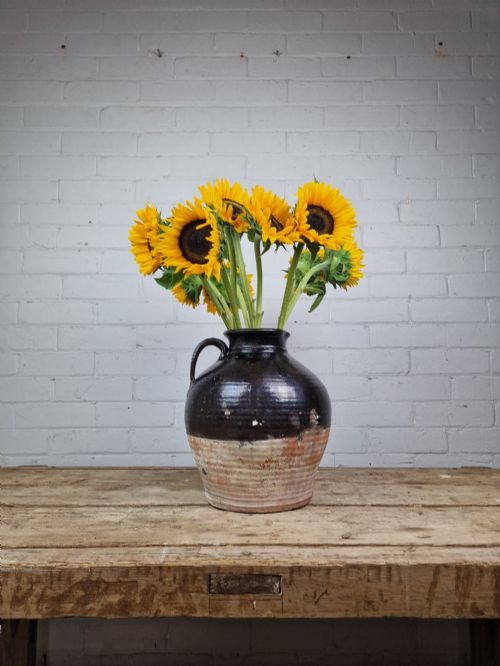
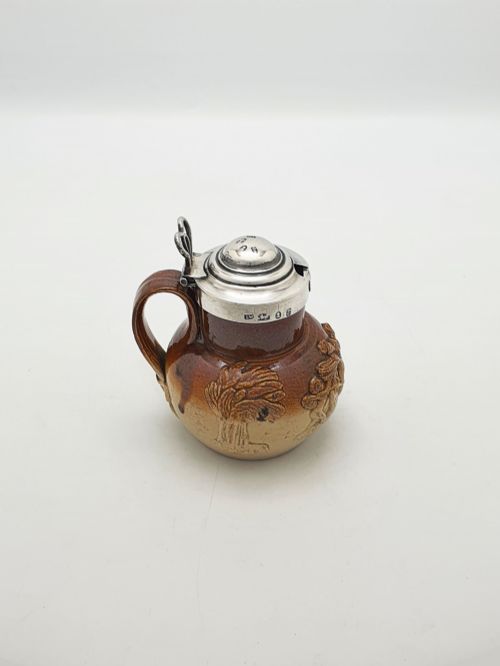
A brown stoneware jug is a utilitarian vessel shaped from dense clay, fired to vitrification, and frequently finished with a salt glaze or rich brown glaze. You will encounter various forms here, ranging from 18th-century German wine bottles and Georgian vessels with sterling silver collars to Victorian Doulton Lambeth harvest jugs and 19th-century advertising flasks.
The selection spans centuries of ceramic history, with pieces originating from English potteries, continental makers, and French workshops. Forms vary from simple loop-handled oil bottles and puzzle jugs to large ewers, whisky flasks, and decorative art pottery pieces designed for display or service.
Materials and Techniques
Potters built these vessels using dense clay and ceramic bodies capable of holding liquids securely without porous leakage. The application of salt glaze during the kiln firing created the distinctive textured, orange-peel surface seen on many traditional salt-glazed jugs and flagons.
Many examples incorporate secondary materials like sterling silver collars, hinged lids, and silver-plated mounts fitted to the ceramic rims. Decoration techniques include incised patterns, moulded harvest motifs, and applied slipware or specialised brown glazes.
Brown Stoneware Jug Retail Price Guide 2026
Typical asking prices for brown stoneware jug among the pieces listed under this phrase on Sellingantiques today, from the lower quarter to the upper quarter. They describe what is for sale here now, not the wider market.
The selection includes utilitarian whisky flasks, decorative bottles, puzzle jugs, and tea sets alongside fitted sterling silver collars.
Assessing Quality and Execution
Quality rests in the crispness of the incised or moulded decoration and the uniformity of the salt glaze or brown glaze across the ceramic body. Pieces produced by notable workshops exhibit superior definition in relief motifs and balanced proportions.
The addition of hallmarked sterling silver rims or hinged lids elevates the status of a vessel from a purely utilitarian container to a finished decorative object. The survival of fragile elements like loop handles and puzzle spouts in intact condition also dictates the standing of an individual piece.
Doulton Lambeth·Royal Doulton·Emma Shute·Copeland Spode·Mortlake
The Brown Stoneware Jug Glossary
- Stoneware
- A dense, vitreous ceramic fired at high temperatures until the clay body is non-porous and impervious to liquids. It forms the heavy, durable foundation for these historic jugs and flagons.
- Salt Glaze
- A glossy, slightly textured finish achieved by throwing common salt into the kiln during high-temperature firing, creating a chemical reaction on the clay surface. This technique produces the characteristic orange-peel texture found on traditional vessels.
- Slipware
- Pottery decorated with slip, which is a liquefied suspension of clay and water applied to the unfired body before glazing. It permits fluid linear patterns and contrasting colour effects.
- Puzzle Jug
- A vessel featuring a pierced neck and multiple spouts that challenges the drinker to consume the contents without spilling. These interactive items were popular in taverns and social gatherings.
- Ewer
- A large jug with a wide spout and substantial handle, traditionally used for pouring water or wine at table. They often feature decorative bodies and refined handles.
Brown Stoneware Jug: Frequently Asked Questions
What were brown stoneware jugs used for?
These vessels served primarily practical storage and serving functions in homes, taverns, and commercial trade. They held liquids such as wine, oil, ale, and whisky safely.
Over time, many shifted into decorative roles or served as advertising flasks and commemorative pieces for historical events.
How do I clean an antique jug?
Dust gently with a dry, soft cloth to maintain the historic glaze and ceramic surface. Avoid abrasive cleaners or harsh scrubbing that might damage salt glazes or silver collars.
Keep them away from excessive moisture if the interior clay body is porous or unglazed.
How do I date a stoneware jug?
Examine the manufacturing style, glazing technique, and any stamped maker marks or hallmarks on attached silver rims. Georgian and 18th-century pieces often display heavier potting and simpler form than Victorian art pottery.
Stylistic shifts, such as the introduction of Art Nouveau motifs or specific maker ciphers, help narrow the period of origin.
Are silver rims original to the jugs?
Many jugs received silver collars, rims, and hinged lids during the Georgian and Victorian eras to reinforce vulnerable spouts or upgrade utilitarian vessels for formal dining. Hallmarks on the sterling silver or silver plate help date these metal additions accurately.
Such mounts were frequently added by retailers or owners upon purchase.