


Doulton Lambeth Pitcher
These doulton lambeth pitcher pieces bring Victorian Arts & Crafts and Art Nouveau character to a room.
What these pieces are
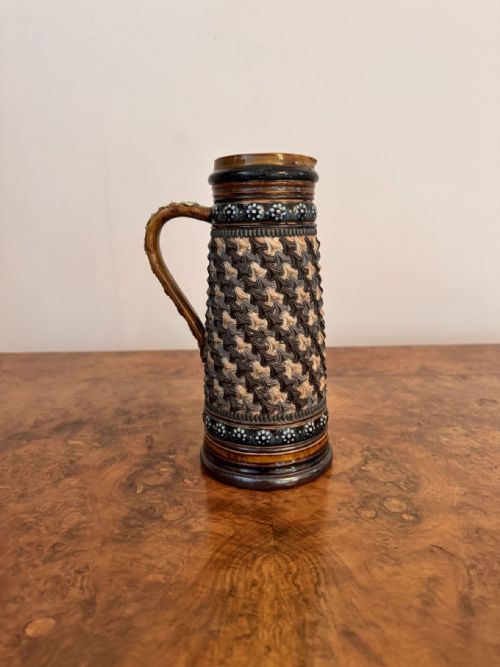
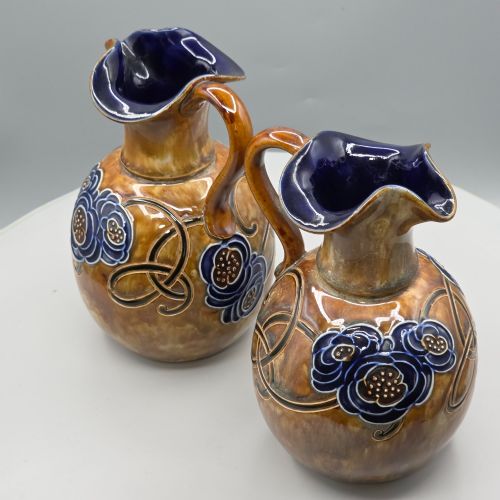
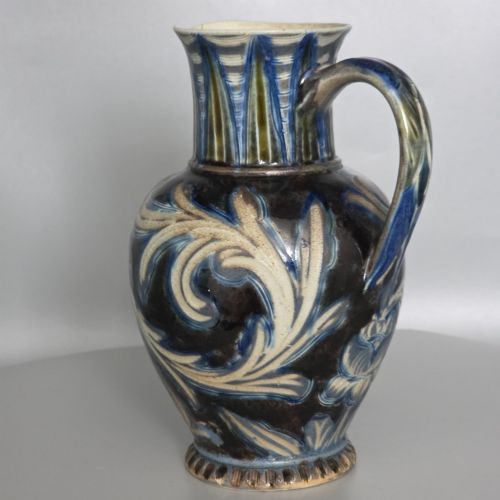
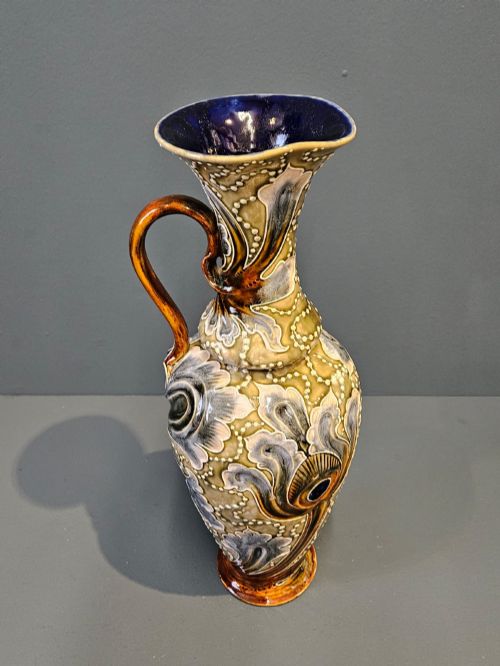
When you search for a doulton lambeth pitcher, you are looking at jugs and pitchers originating from the late nineteenth century. The examples on this page date from 1880 to the 1890s, capturing the shift from Victorian Arts & Crafts to Art Nouveau design.
These items function primarily as decorative jugs and pitchers fashioned from durable ceramic materials. Collectors encounter salt glaze finishes alongside standard glaze applications across the available forms.
How they were made
The makers utilised stoneware as the primary body for these vessels, ensuring a robust and heavy structure. Artisans then applied salt glaze and traditional glaze techniques to finish the exterior surfaces.
Production methods rely on traditional pottery shaping, resulting in distinct forms that span the Victorian Arts & Crafts and Art Nouveau periods. The handling of the ceramic material defines the distinct texture of each piece.
Listings on this site span the 1880s and 1890s, featuring stoneware materials with salt glaze and standard glaze finishes across jugs and pitchers.
What varies in quality
Quality in these items rests upon the crispness of the applied decoration and the evenness of the salt glaze or smooth glaze finish. Superior examples display sharper detail in their sporting or stylistic motifs.
The transition between the Victorian Arts & Crafts aesthetic and the fluid lines of Art Nouveau dictates the visual sophistication of the pitcher. Better execution of these design movements elevates the standing of the piece.
The Doulton Lambeth Pitcher Glossary
- Stoneware
- A type of pottery fired at a high temperature until vitrified and impermeable to water. It provides a heavy, durable body for decorative vessels.
- Salt glaze
- A finish achieved by throwing common salt into the kiln during high-temperature firing, creating a distinctive pebbled texture. This technique produces a durable surface characteristic of many nineteenth-century jugs.
- Art Nouveau
- A stylistic movement prominent in the late nineteenth century featuring organic, sinuous lines and natural motifs. This aesthetic succeeds earlier Victorian Arts & Crafts designs.
- Victorian Arts & Crafts
- A design movement valuing handcraftsmanship and traditional materials during the reign of Queen Victoria. Pieces from this period emphasise utility combined with artistic expression.
Frequently Asked Questions
What is a doulton lambeth pitcher?
A doulton lambeth pitcher is a ceramic jug produced during the late nineteenth century in England. These items utilise stoneware and feature distinctive salt glaze or smooth glaze finishes.
They represent the Victorian Arts & Crafts and Art Nouveau styles. Collectors prize them for their period-specific design and durable ceramic construction.
How old are these pitchers?
The available pieces date from the late nineteenth century, specifically around 1880 and the 1890s. This places them firmly within the Victorian era.
They bridge the transition from Victorian Arts & Crafts to early Art Nouveau aesthetics.
What materials are used?
These pitchers are made from stoneware ceramic. Artisans finished them using salt glaze or standard glaze techniques.
This combination creates a sturdy body with a textured or glossy surface.
How do I identify the style?
Style identification relies on examining the decorative motifs and forms of the jug. Pieces from 1880 typically reflect Victorian Arts & Crafts principles.
Items from the 1890s incorporate Art Nouveau elements such as sporting themes and flowing lines.