


Relief Decorated Ceramic Pitcher
A relief decorated ceramic pitcher brings tactile richness to a room, offering moulded patterns that reward a closer look.
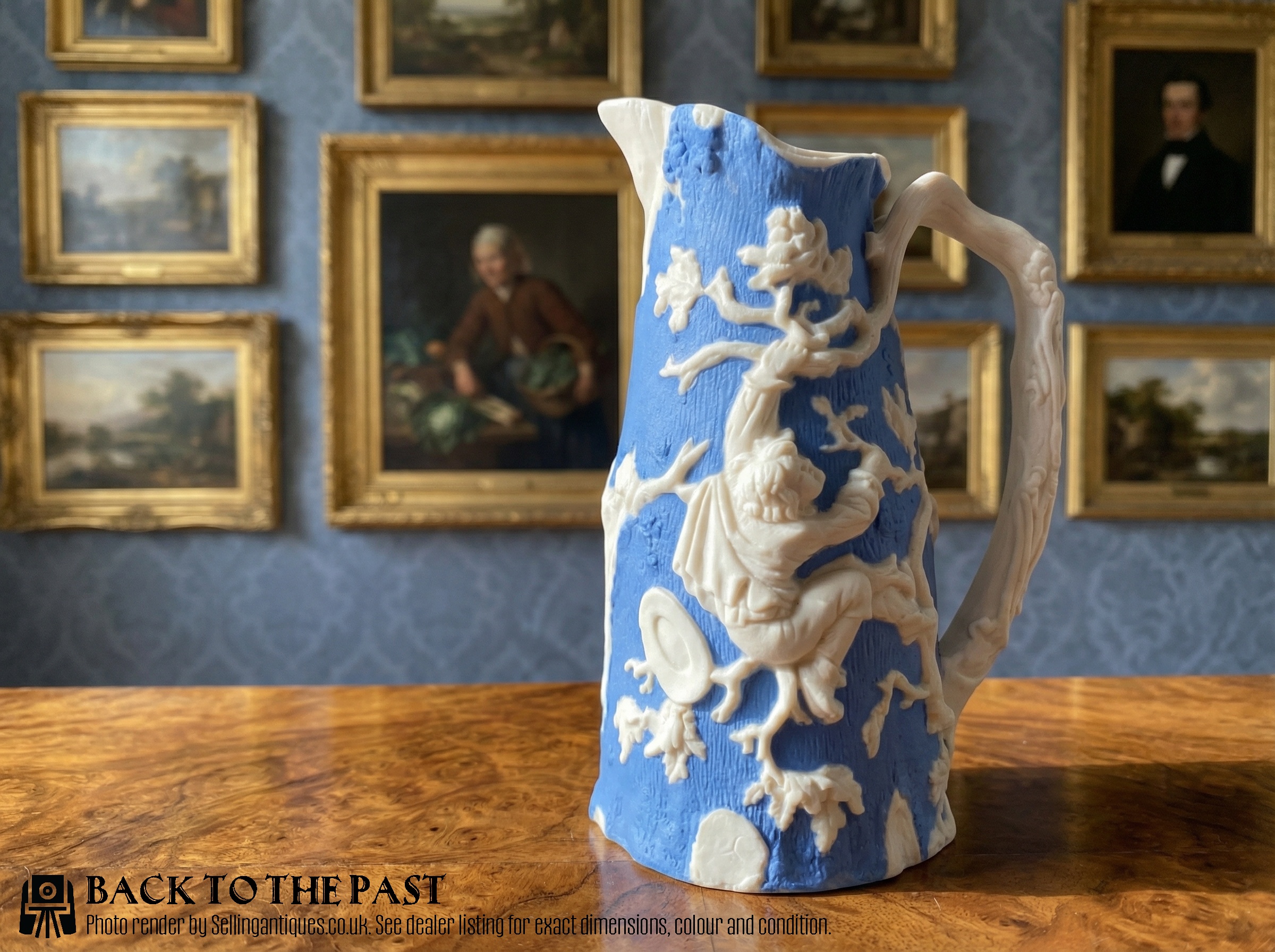
Relief Decorated Ceramic Pitcher
A relief decorated ceramic pitcher is a practical pouring vessel carrying raised surface ornament, shaped from clay during the nineteenth century. These items include Victorian harvest jugs, puzzle jugs, and basin sets produced across various decades.
Makers shaped these pieces from stoneware, salt-glazed stoneware, and bisque porcelain, employing distinct moulding techniques. The most likely version a buyer encounters on this page is a nineteenth-century stoneware jug featuring sprigged or moulded decoration.
Originating predominantly from English potteries, these jugs reflect Victorian, Art Nouveau, and folk art traditions. Their forms range from tall display pieces to functional vessels with silver rims or matching bowls.
How they were made
Potters shaped these vessels from clay, utilising stoneware and bisque porcelain bodies to ensure durability and a fine surface finish. Salt-glazed surfaces and coloured glazes were applied to seal the ceramic and create textural depth.
Relief details were achieved through sprigged ornamentation, where separately moulded motifs were applied to the wet body before firing. Skilled hands also carved patterns directly into the damp clay or utilised metal moulds for precise Victorian designs.
Puzzle jugs invite bemused guests to solve hidden liquid pathways before taking a cautious sip without soaking their waistcoats.
What varies in quality
The distinction between standard output and finer examples rests in the crispness of the moulded relief and the skill of the hand application. Superior pieces display sharply defined sprigged motifs and balanced proportions.
Artistic collaboration elevates certain pieces, particularly when named artists contribute to the decoration of the stoneware body. The presence of integrated elements, such as fitted silver rims, further separates workshop standards.
Emma Shute·Doulton Lambeth·Copeland Spode
The Relief Decorated Ceramic Pitcher Glossary
- Stoneware
- A robust ceramic fired at high temperatures until vitrified, making it impermeable to liquids even without glaze. This dense material forms the heavy body of many nineteenth-century jugs.
- Sprigged
- A decorative technique where separate moulded clay details are applied to the surface of a vessel before firing. These raised motifs create the characteristic relief patterns on salt-glazed pitchers.
- Salt Glaze
- A glossy, slightly textured finish achieved by throwing common salt into the kiln during high-temperature firing. The vaporised salt reacts with the silica in the clay body to form a durable coating.
- Bisque Porcelain
- Unglazed white porcelain fired to a porous state, often known as Parian ware in nineteenth-century English production. It possesses a smooth, marble-like texture ideal for detailed figurative relief.
- Puzzle Jug
- A traditional drinking vessel featuring perforated necks and misleading spouts that challenge the drinker to imbibe without spilling. These clever ceramic pieces test dexterity and amuse company.
Relief Decorated Ceramic Pitcher: Frequently Asked Questions
What is a relief decorated ceramic pitcher?
A relief decorated ceramic pitcher is a pouring vessel featuring raised patterns moulded or applied directly onto the clay body. These nineteenth-century pieces combine utility with sculptural surface ornamentation.
Potters created these designs using techniques like sprigging and salt glazing to achieve tactile, decorative finishes. They served as both functional household items and ornamental display pieces.
How were salt-glazed stoneware jugs used?
These robust jugs were primarily utilised for serving liquids such as beer, water, or cider at the nineteenth-century table. Their impermeable stoneware bodies kept contents cool and secure.
Due to their durable nature, they also functioned as everyday kitchen storage vessels. Their decorative relief designs meant they were frequently displayed on sideboards when not in active use.
How do I date a Victorian ceramic pitcher?
Dating relies on stylistic clues, material types, and specific manufacturing marks stamped into the ceramic base. Victorian examples often incorporate nineteenth-century historicism, folk motifs, or early Art Nouveau curves.
Comparing the glaze type, such as salt glaze versus coloured glazes, helps narrow the production window. Examination of applied hardware, like silver rims, also provides contextual chronological markers.
How do I clean and care for antique ceramics?
Antique ceramics require gentle maintenance using warm water and a mild detergent applied with a soft cloth. Harsh scrubbing agents and modern dishwashers must be strictly avoided to protect historic glazes.
Careful handling prevents chipping on raised relief sections and delicate handles. Ensuring pieces are thoroughly dried protects any aged internal surfaces or applied metal elements.