


Blue Stoneware Pitcher
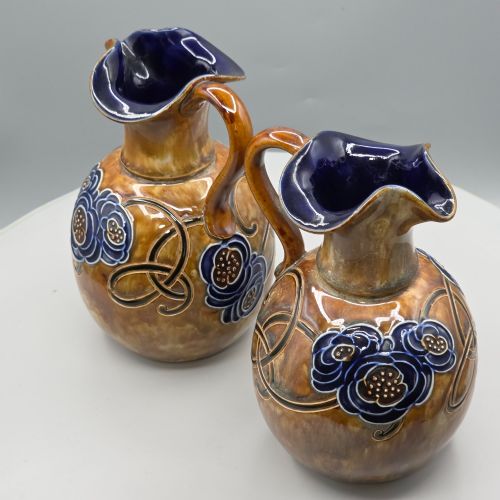
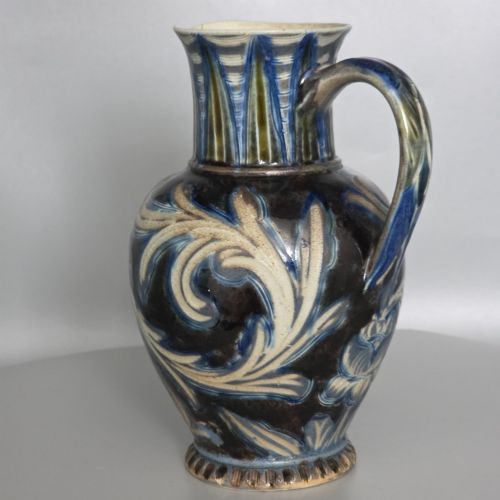
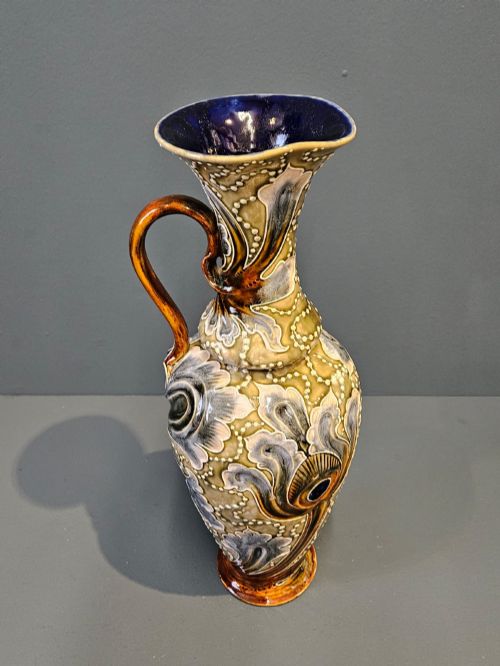
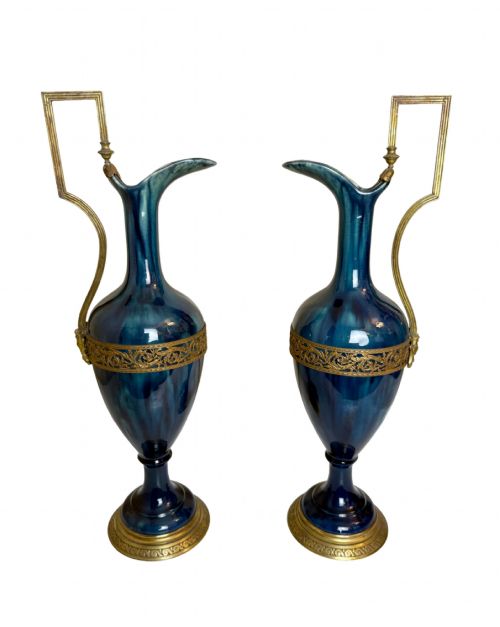
These blue stoneware pitcher examples bring robust utility and rich salt-glazed textures from the seventeenth century to the twentieth.
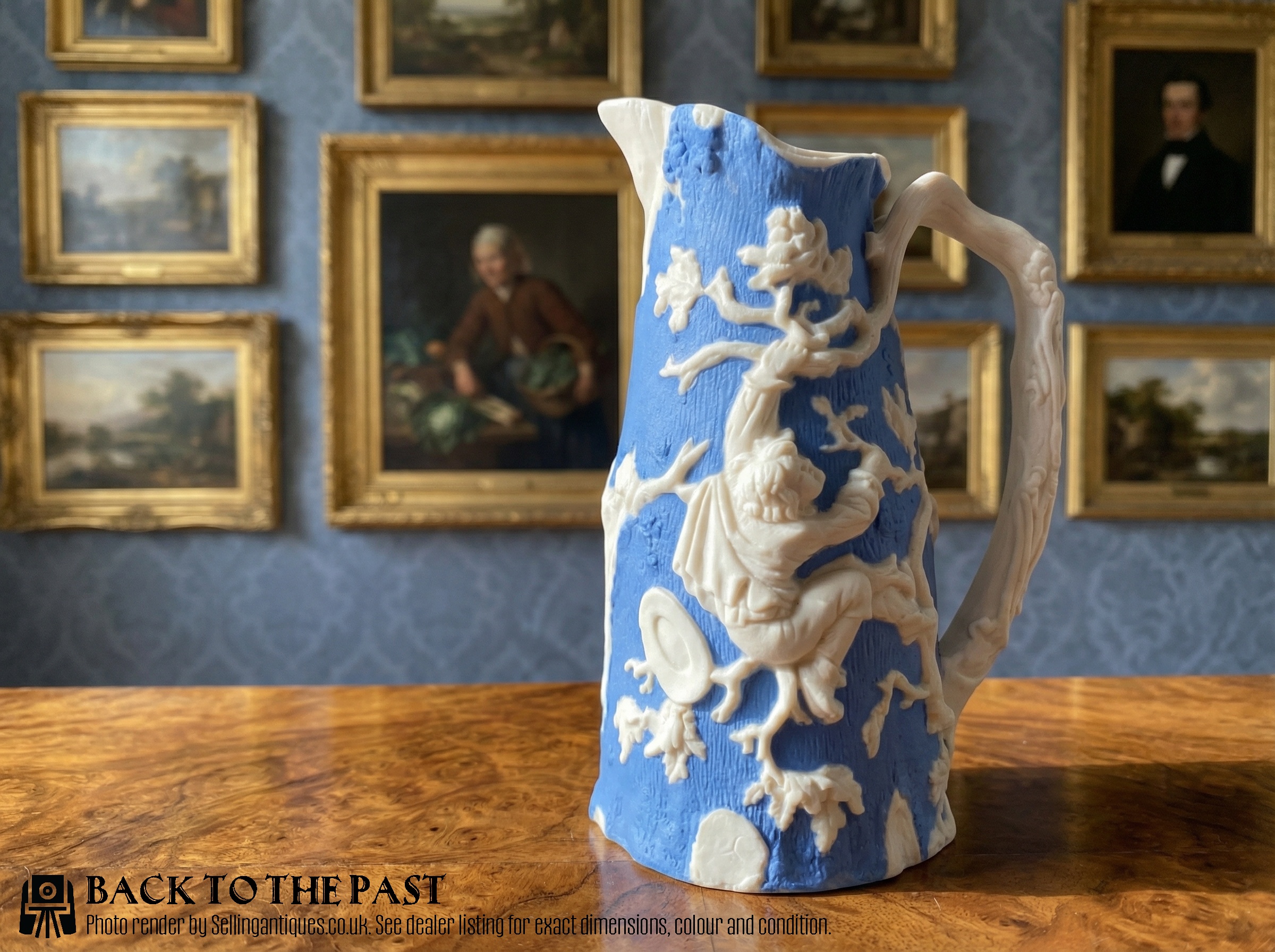
Blue Stoneware Pitcher
A blue stoneware pitcher combines dense, vitrified ceramic bodies with salt glazing and cobalt decoration, serving both utilitarian and decorative roles across centuries. When exploring this selection, buyers encounter robust vessels originating primarily from British potteries like Doulton Lambeth alongside historical German Westerwald imports.
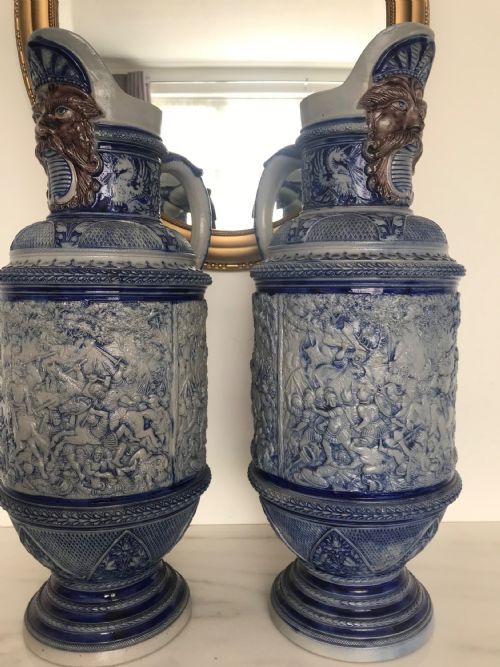
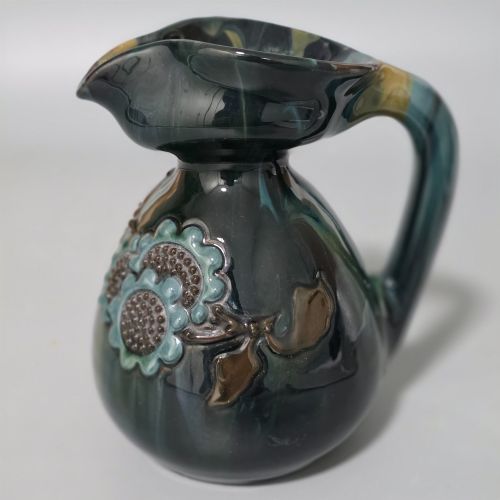
The forms span large water jugs, ewers, and smaller pouring vessels reflecting periods from the seventeenth-century William III era through Victorian Arts and Crafts movements. Most pieces on this page lean towards late nineteenth-century British art pottery and salt-glazed containers adorned with incised or moulded blue detailing.
Makers utilised durable stoneware clay that required high-firing temperatures, ensuring the resulting pitchers resisted liquids completely without needing interior lead glazes. Collectors value these items for their combination of functional heft and the distinct mottled surface textures created by salt thrown into the kiln during firing.

Materials and production methods
Potters shaped dense clay on the wheel or pressed it into moulds, building vessels designed to withstand high kiln temperatures. Stoneware differs from earthenware through its vitrified, non-porous body achieved by firing at extreme heat until the clay fuses.
During the peak heat of the kiln, common salt was introduced to create a chemical reaction with the silica in the clay, producing a characteristic orange-peel texture. Cobalt oxide provided the vibrant blue pigmentation, applied either in sweeping brush strokes or intricate incised patterns before firing.
Listings feature salt-glazed stoneware, earthenware, and parian porcelain spanning the seventeenth century through the Victorian era and into the early twentieth century.
Determining quality in salt-glazed vessels
The crispness of the incised or moulded decoration dictates much of the visual distinction between standard production items and studio pieces. Sharp detailing in floral motifs, crests, or battle scenes demonstrates superior craftsmanship by the potter or decorator.
Evenness in the salt glaze application and the richness of the cobalt blue colouring separate exceptional examples from ordinary wares. Pieces bearing specific artist signatures or workshop stamps show individual artistic intent beyond mass-produced factory output.
Royal Doulton·Doulton Lambeth·Simon Peter Gerz·Sir Edmund Elton·Emma Shute·Minton
The Blue Stoneware Pitcher Glossary
- Stoneware
- A heavy, dense type of pottery fired at high temperatures until semi-vitrified and completely waterproof. It resists chipping far better than standard earthenware.
- Salt Glaze
- A glossy, slightly textured finish achieved by throwing common salt into the hot kiln, causing sodium to react with the clay body. This creates a distinctive orange-peel surface.
- Cobalt Blue
- A stable metallic oxide pigment used under the glaze to impart a deep, vibrant blue colour that survives intense kiln heat without fading. It forms the primary decorative hue on Westerwald and Doulton vessels.
- Ewer
- A large jug with a wide spout and elaborate handle, traditionally used for holding water or wine at the table. Many decorative examples appear in nineteenth-century ceramic collections.
- Incised
- A technique where patterns or lettering are carved directly into the damp clay body before glazing and firing. This method allows for sharp, permanent surface decoration.
Blue Stoneware Pitcher: Frequently Asked Questions
What is salt-glazed stoneware?
Salt-glazed stoneware is a sturdy ceramic material created when salt is introduced into a high-temperature kiln, fusing with the clay to form a durable, glossy surface with a texture similar to an orange peel.
This chemical reaction produces a watertight vessel that required no internal lead glaze, making these pitchers safe for holding liquids and resistant to wear over centuries.
How do I date a Westerwald jug?
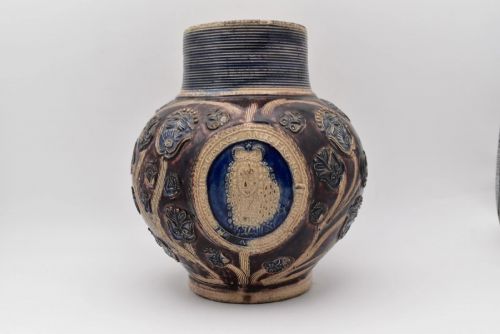
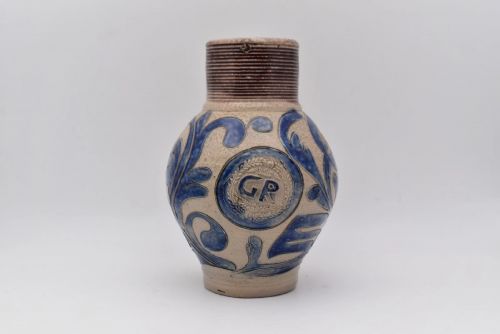
Westerwald jugs from Germany are often dated through historical royal ciphers, coats of arms, or moulded portraits such as those from the William III period or under the reign of Queen Anne.
Examining the depth of the cobalt blue coloration and the style of the stamped salt-glazed reliefs helps narrow down whether a piece originates from the seventeenth or eighteenth century.
Were these pitchers used for water?
Many of these large vessels functioned as water jugs, ewers, or table pitchers used for serving beverages during meals or washing hands at a basin.
Others served decorative purposes within Victorian interiors, particularly the ornate art pottery pieces produced by studios during the Arts and Crafts movement.
How should I display my pitcher?
These pitchers display well on sturdy wooden surfaces, sideboards, or open shelving where their heavy stoneware bodies and blue salt-glazed patterns catch natural light.
Keep them away from areas prone to heavy vibrations, and ensure they rest on flat, stable planes that can support the considerable weight of dense ceramic art pottery.