


Antique Doulton Jug
These antique doulton jug examples bring Victorian and Edwardian craftsmanship into modern spaces with their distinct salt glazes and hand-decorated surfaces.

Antique Doulton Jug
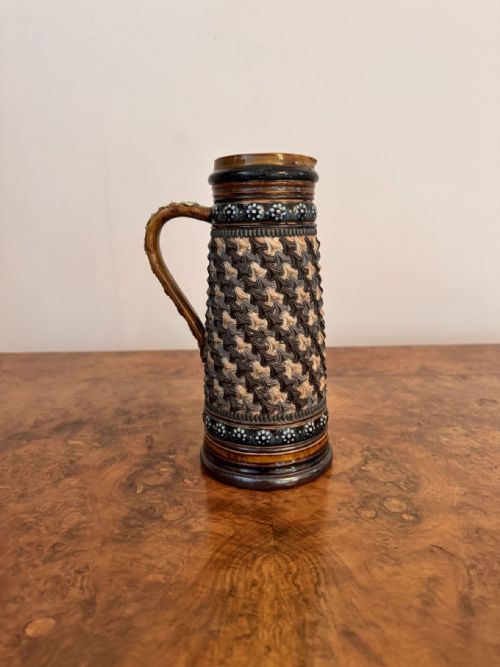
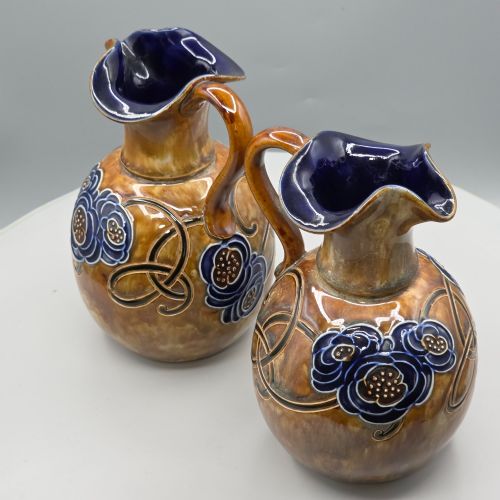
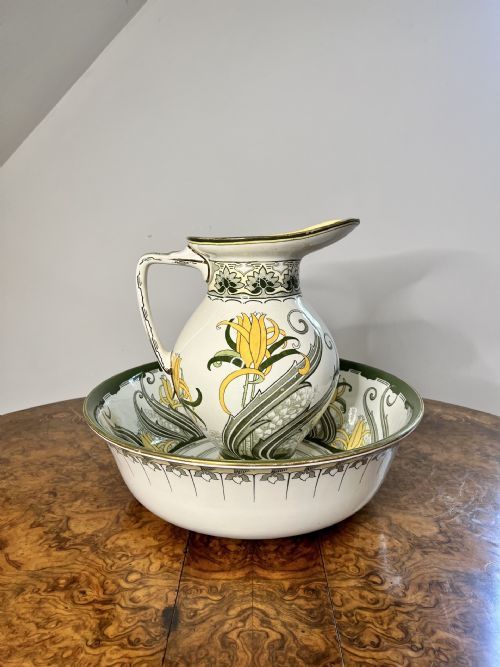
When you search for an antique doulton jug, you encounter robust stoneware and refined ceramic vessels produced across the nineteenth and early twentieth centuries. These pieces encompass utilitarian harvest jugs with textured sprigged decoration, alongside domestic water jugs and washbasin sets.
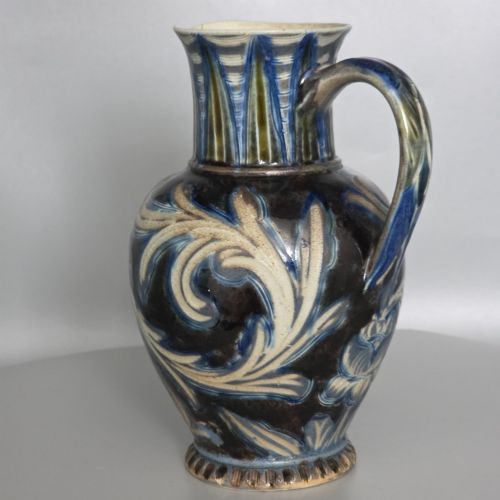
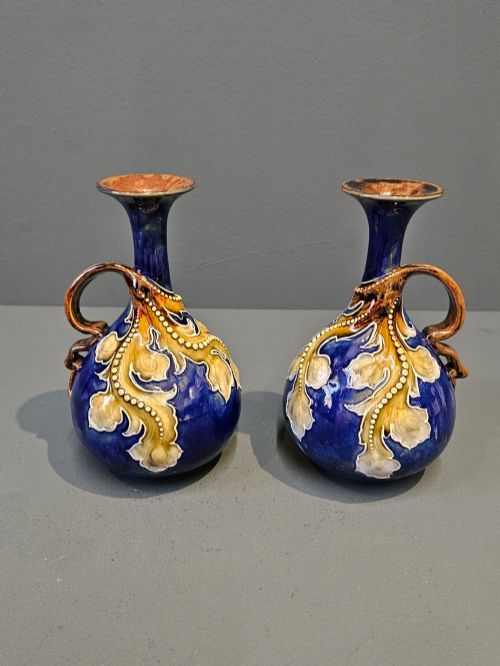
The version you are most likely to meet on this page is a salt-glazed Doulton Lambeth creation from the Victorian era. These items frequently display brown or blue glazes, often complemented by silver rims or detailed sporting and jubilee motifs.
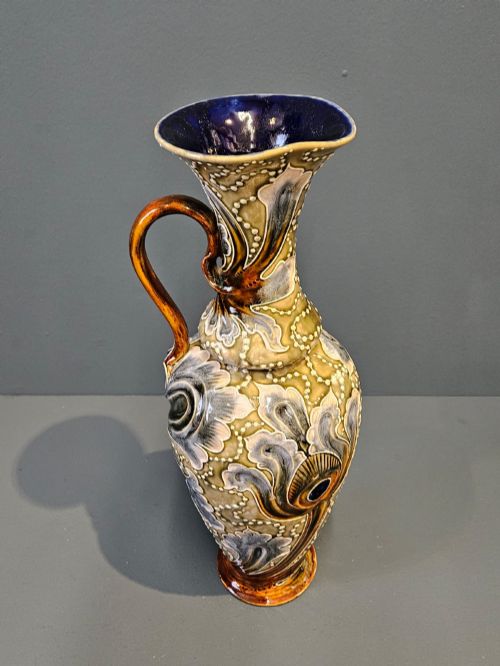
Beyond standard pouring vessels, the selection extends to elaborate ewers and specialised whisky flasks bearing golf or literary themes. The forms range from small cabinet pieces to large exhibition jugs created during the height of the Arts and Crafts movement.
How they were made
Makers utilised durable stoneware and earthenware bodies, shaping them on the potter's wheel or moulding them into specific forms. Salt glazing involved throwing common salt into the kiln during high-temperature firing, producing a distinctive pitted texture akin to orange peel.
Decoration relied heavily on applied sprigs, hand-painted pigments, and specialised surface treatments like Slater's patent lace patterns. Many stonewares incorporated rich brown glazes, while lighter bodies at Burslem accommodated delicate blue and white transfers or enamel work.
Golf enthusiasts can pour their drams from a stoneware flask that immortalises early twentieth-century sporting greens.
What varies in quality
The standard of a piece rests largely on the crispness of the modelled relief work and the depth of the glaze. Earlier exhibition pieces often display sharper detail in their sprigged ornamentation and more deliberate control over multi-toned coloration.
Named artists and specific design patents elevate individual examples, particularly when paired with high-grade silver rims. The finesse of hand-painted motifs and the overall balance of the form dictate whether a vessel was intended for everyday utility or display.
Emma Shute·Royal Doulton·Walker and Hall
The Antique Doulton Jug Glossary
- Stoneware
- A heavy, impermeable ceramic fired at high temperatures until vitrified. It resists liquids naturally without requiring a traditional interior glaze.
- Salt Glaze
- A glossy, slightly textured finish achieved by throwing common salt into the kiln at peak heat. The sodium reacts with the clay body to create a durable surface.
- Sprigged
- A technique where moulded clay reliefs are applied to the surface of an unfired vessel using slip as an adhesive. It creates tactile ornamentation across harvest jugs.
- Puzzle Jug
- A traditional drinking vessel featuring a pierced neck and multiple spouts that challenge the user to drink without spilling. Doulton produced these playful forms in salt-glazed stoneware.
- Ewer
- A large, decorative pitcher with a wide spout and sweeping handle, often used for display rather than pouring.
Antique Doulton Jug: Frequently Asked Questions
How do I identify a Doulton Lambeth piece?
Doulton Lambeth pieces typically feature firm stoneware bodies combined with salt glazes, incised floral patterns, and applied sprigged decoration. Look for factory stamps on the base that indicate the London pottery.
These items often reflect Victorian Arts and Crafts or Aesthetic Movement styles, utilising earthy brown and blue tones.
Are these jugs waterproof for daily use?
Most antique Doulton stoneware and ceramic jugs remain entirely water-tight due to the vitrified nature of the fired clay. Salt-glazed surfaces provide a natural barrier against liquid seepage.
However, pieces featuring delicate enamel work or silver-plated attachments benefit from hand washing rather than immersion.
What is a harvest jug?
A harvest jug is a traditional stoneware vessel traditionally filled with ale during agricultural celebrations. They are characterised by stout bodies and rich brown salt glazes.
Decoration on these forms frequently includes sprigged hunting scenes, windmills, and rustic drinking verses.
How do I date an antique Doulton piece?
Dating relies on factory mark variations, stylistic shifts between Victorian Gothic revival and Art Nouveau, and recorded patent dates. Pieces marked Doulton Lambeth generally precede the broader adoption of the Royal Doulton title.
Associated ceramic bodies like earthenware from Burslem also help narrow the production window to specific decades.