


Relief Decorated Stoneware Jug
These relief decorated stoneware jugs bring tactile nineteenth-century craftsmanship directly to your table, offering robust utility and intricate historical pattern.

Relief Decorated Stoneware Jug
When you search for a relief decorated stoneware jug, you are looking at nineteenth-century vessels defined by moulded surface decoration and durable vitrified bodies. These pieces range from utilitarian drinking vessels to ornamental jugs and bowl sets designed for display and daily use.
The versions you are most likely to meet on this page hail from the Victorian period, frequently bearing the distinctive output of English potteries like Doulton Lambeth. They span simple salt-glazed harvest jugs to complex Art Nouveau sporting designs and crisp Parian ware.
The form itself adapts to various domestic settings, functioning as a flower pitcher, a water jug, or a standalone decorative object. Each piece carries the distinct imprint of late nineteenth-century ceramic design, moving from rustic folk art styles to refined exhibition pieces.
How they were made
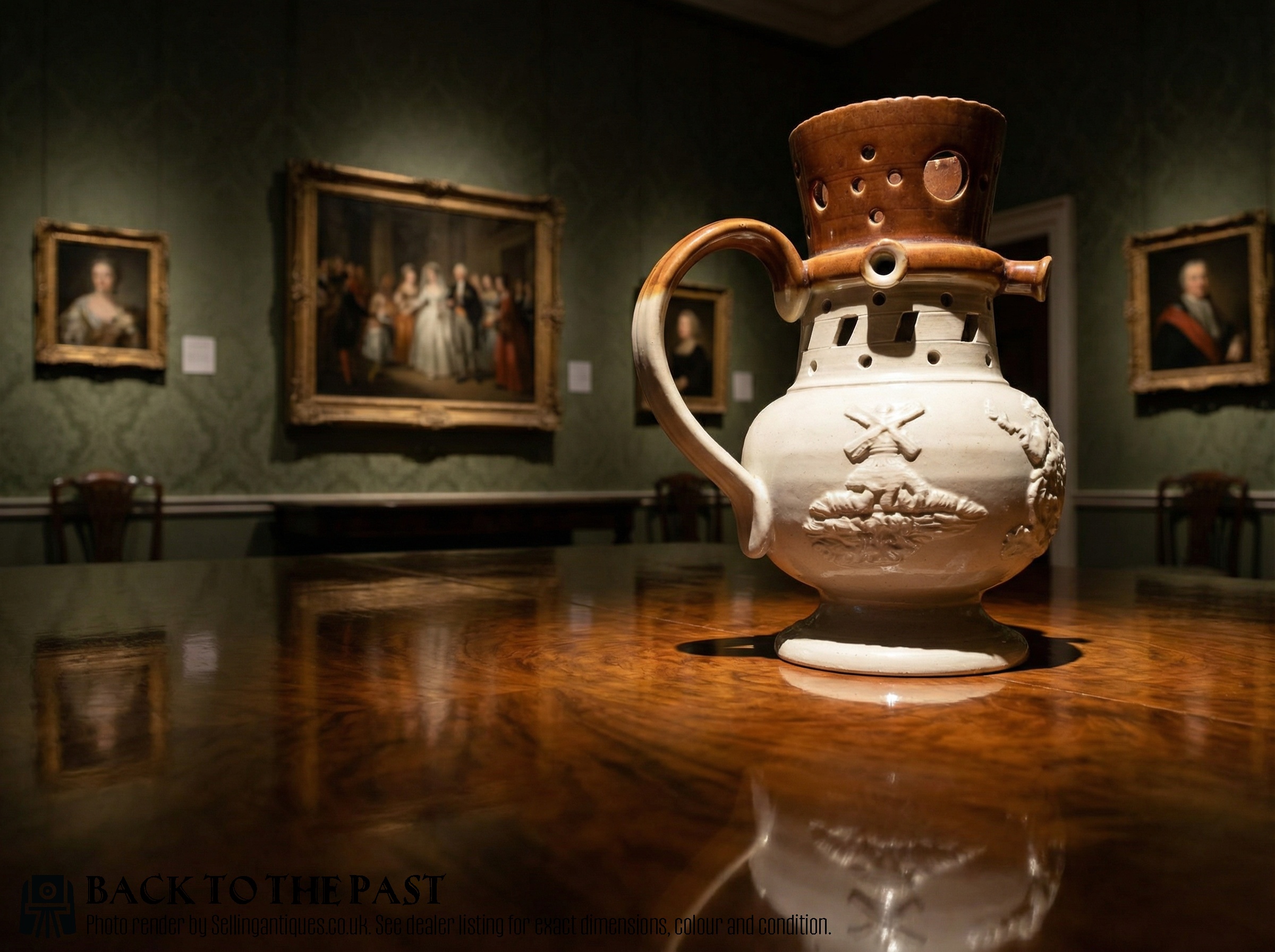
Potters shaped these vessels from heavy clay bodies before applying intricate sprigged motifs, which were moulded separately and pressed onto the damp surface by hand. This layered technique creates the signature three-dimensional relief that characterises the category.
Many of these jugs underwent salt glazing, where salt thrown into the kiln during firing reacted with the silica in the clay to produce an orange-peel texture. Others received smooth coloured glazes or remained as unglazed bisque porcelain known as Parian ware.
Finishing touches often included applied silver rims or hand-tooled details that completed the vessel before its final high-temperature kiln firing.
The available inventory spans Victorian folk art, Arts and Crafts, and Art Nouveau styles.
What varies in quality
The crispness of the moulded relief dictates much of the visual success, where sharply defined sprigged figures and botanical motifs stand distinctly from the body. Softer, blurred moulding indicates worn moulds or hurried production.
Proportion and scale also separate standard domestic vessels from ambitious exhibition pieces, with larger or more complex forms requiring greater technical mastery during the drying and firing stages to prevent warping. The addition of hallmarked silver mounts or named artist signatures elevates the status of the piece within the historical range.
Doulton Lambeth·Emma Shute·Copeland Spode
The Relief Decorated Stoneware Jug Glossary
- Stoneware
- A dense, vitrified ceramic fired at high temperatures until non-porous. It resists liquids completely without needing an internal glaze.
- Salt Glaze
- A glossy, slightly textured finish achieved by throwing common salt into the kiln at peak temperature. The vapours react with the clay body to form a durable coating.
- Sprigging
- A technique where separate moulded clay ornaments are applied to the wet surface of a vessel using slip as an adhesive. This creates the raised relief decoration.
- Parian Ware
- A fine white bisque porcelain resembling carved marble, developed in the nineteenth century for classical figures and decorative jugs. It matures at a lower temperature than hard-paste porcelain.
- Puzzle Jug
- A traditional vessel featuring a perforated neck and false spouts designed to trick the drinker into spilling its contents unless they discover the hidden secret passage of liquid.
Relief Decorated Stoneware Jug: Frequently Asked Questions
What were relief decorated stoneware jugs used for?
These vessels originally served practical domestic purposes such as pouring beer, cider, water, or milk at the nineteenth-century table. Harvest jugs specifically held ale during agricultural celebrations and social gatherings.
Over time, many transitioned into decorative display items, valued for their sculptural relief work and detailed historical ornamentation.
How can I tell the Victorian pieces apart?
Victorian examples often display specific stylistic markers, shifting from earthy salt-glazed harvest scenes in the mid-century to flowing botanical lines and sporting motifs by the late eighteen-eighties and nineties. Factory marks, stamps, and artist signatures stamped into the base provide the most reliable chronological clues.
Materials also help distinguish the era, ranging from heavy brown salt-glazed clay to refined white Parian ware and multi-toned Art Nouveau glazes.
Are these jugs safe for daily use?
While vitreous stoneware is inherently durable and non-porous, antique pieces often carry hairline fractures or historical repairs that make them vulnerable to thermal shock and liquid leakage. It is generally wiser to treat them as decorative objects or dry pitchers rather than subjecting them to hot liquids.
Displaying them away from high-traffic table edges protects the raised sprigged decoration from accidental chips.