


Salt Glazed Pottery Jug
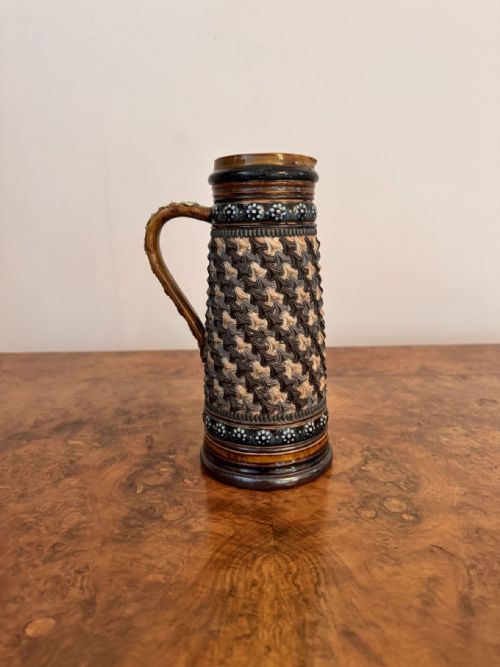
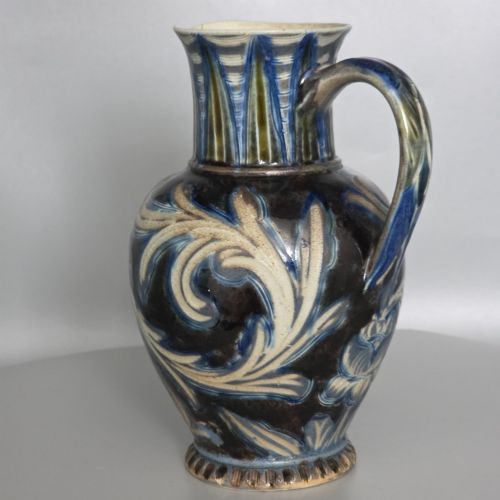
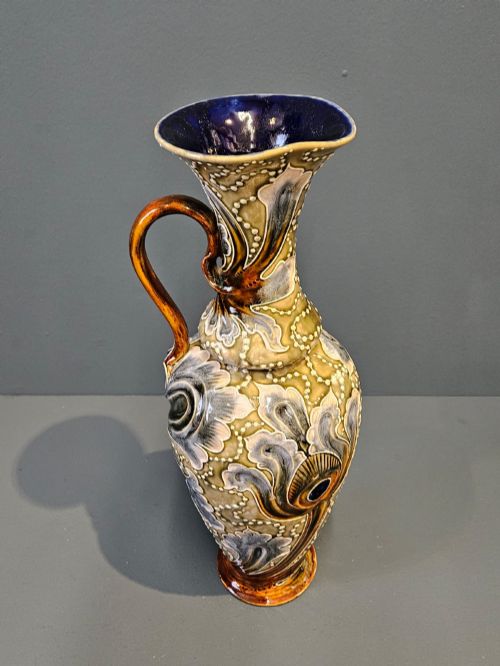
These salt glazed pottery jug examples range from sixteenth century German stoneware to Victorian Doulton Lambeth pieces, offering robust utility and distinctive textured surfaces for any interior.
Salt Glazed Pottery Jug
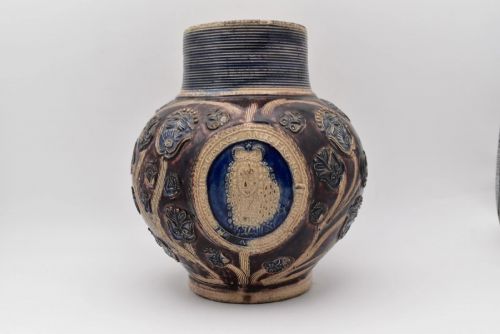
A salt glazed pottery jug is a durable ceramic vessel created for holding liquids such as water, wine, oil, or ale. When exploring this selection, buyers frequently encounter Victorian examples alongside earlier continental German flagons.
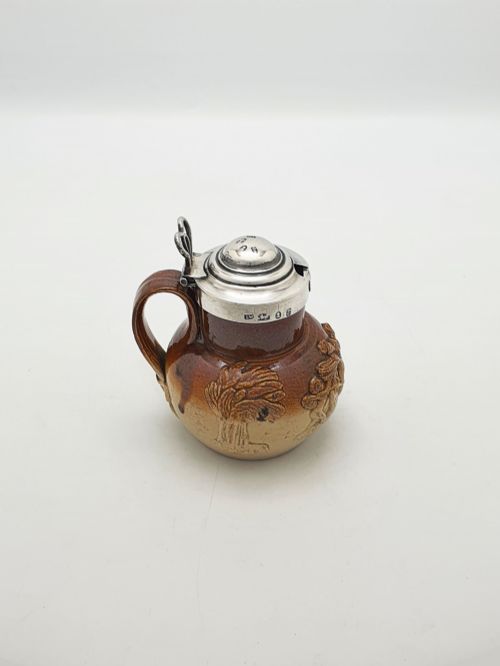
The assortment spans diverse forms including harvest jugs, puzzle jugs, ewers, and large pitchers. Many domestic vessels feature fitted sterling silver collars or hinged lids added during the Georgian and Victorian periods.
Originating from British potteries like Doulton Lambeth and Mortlake, alongside historic European centres such as Westerwald, Siegburg, and Raeren, these items reflect centuries of utilitarian and decorative ceramic production.
How they were made
Potters shaped dense clay into functional forms before introducing common salt into the kiln during high-temperature firing. This chemical reaction produced a distinctive, pitted orange peel texture across the ceramic surface.
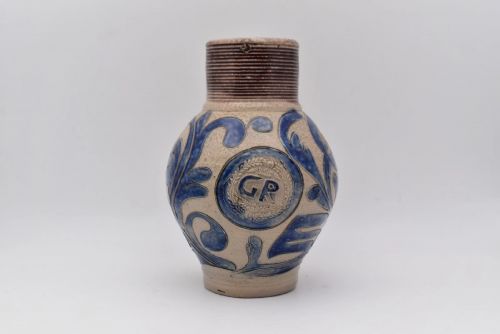
Decoration often involved cobalt blue pigment applied beneath the glaze, alongside sprigged relief ornaments or incised patterns. Certain vessels integrated precious metals, combining ceramic bodies with sterling silver or silver plated mounts.
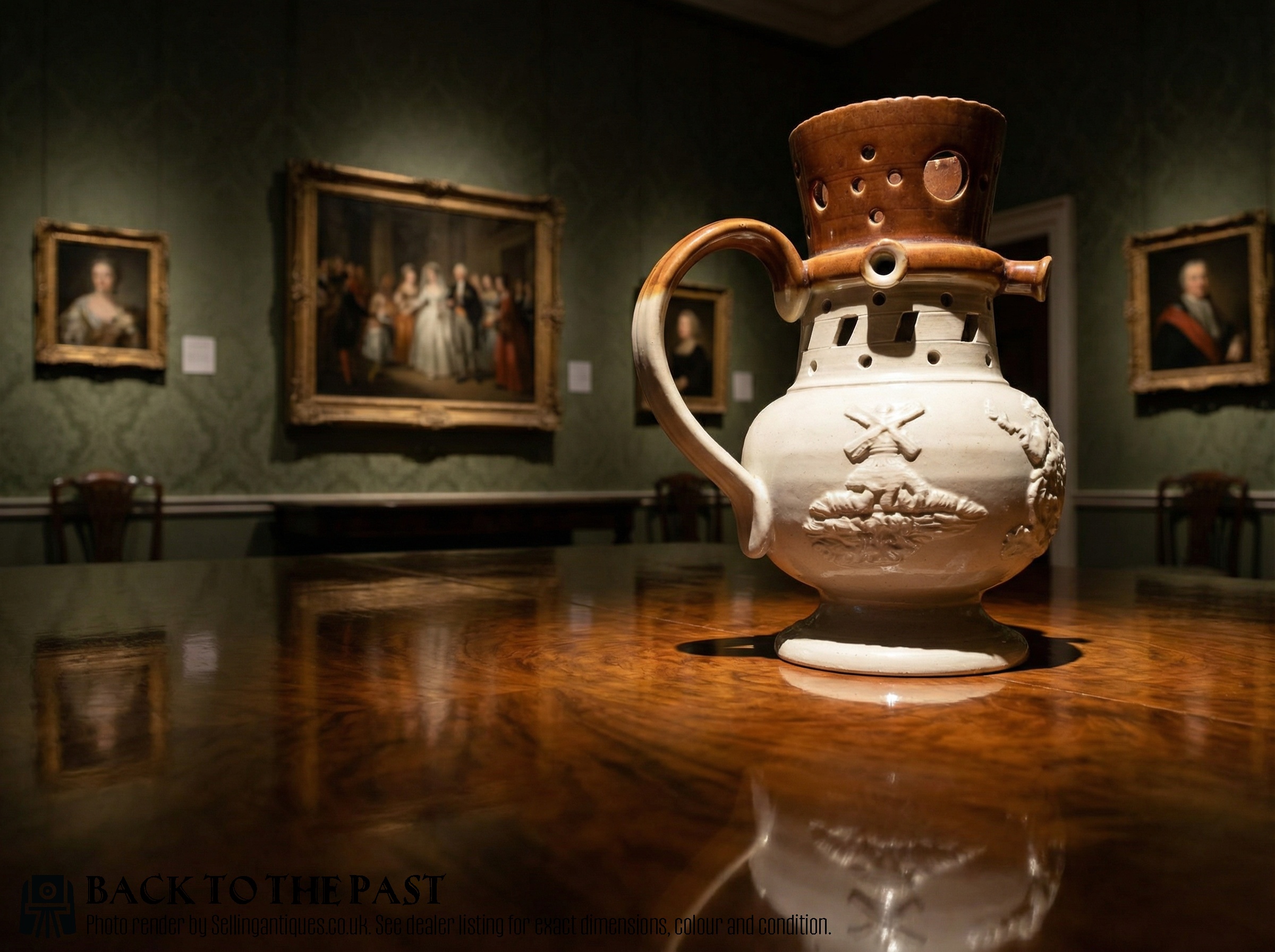
Puzzle jugs challenge drinkers to figure out the hidden channels without spilling their ale.
What varies in quality
Quality depends upon the clarity and crispness of the moulded or incised decoration upon the stoneware body. Pieces featuring detailed royal ciphers, portraits, or intricate floral motifs demonstrate superior artistry.
The presence of hallmarked sterling silver rims, collars, or hinged lids elevates a vessel's status. Furthermore, works bearing specific workshop stamps or artist signatures achieve greater distinction within the range.
Doulton Lambeth·Royal Doulton·Emma Shute
The Salt Glazed Pottery Jug Glossary
- Stoneware
- A robust, vitrified ceramic fired at high temperatures until non-porous. It provides exceptional strength and resistance to liquids.
- Salt Glaze
- A glossy, slightly textured finish achieved by throwing common salt into the kiln during firing. The sodium reacts with the clay body to form a durable glassy coating.
- Cobalt
- A metallic oxide pigment utilised to create deep blue designs under the glaze. It remains stable at high kiln temperatures.
- Sprigged
- A decorative technique where moulded clay reliefs are applied to the surface of an unfired vessel. These raised motifs add texture and detail.
- Puzzle Jug
- An interactive ceramic vessel featuring perforations in the neck that prevent normal drinking, requiring the user to sip through a specific hidden spout.
Salt Glazed Pottery Jug: Frequently Asked Questions
What is a salt glazed pottery jug?
A salt glazed pottery jug is a heavy ceramic container fired at high temperatures with salt introduced to create a pitted, durable finish. These vessels were historically used for storing and pouring liquids like ale, wine, and water.
Today, collectors value them for their historical significance, varied European and British origins, and distinct textured surfaces that suit traditional and eclectic interiors alike.
How do I identify a German stoneware jug?
Early continental pieces often display grey or brown stoneware bodies adorned with cobalt blue painted details and incised floral patterns. Many incorporate mask decorations or royal ciphers characteristic of seventeenth and eighteenth-century German production.
Examining the handle placement, base construction, and specific salt glaze texture helps differentiate these continental flagons from later British Victorian wares.
Were these jugs used for daily dining?
Historical examples served primarily practical domestic functions, including holding water, wine, oil, and ale in homes and taverns. Sturdy stoneware construction made them ideal for everyday containment of liquids.
Over time, many acquired metal collars or lids made of sterling silver, transitioning from simple kitchenware to more decorative table pieces or display objects.