


Brown Stoneware Pitcher
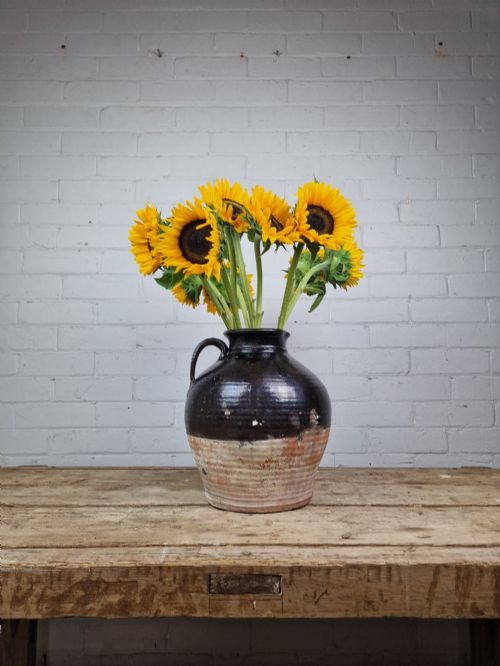
A brown stoneware pitcher brings dense clay and salt glazes to the table, offering a sturdy vessel built for heavy daily service.
Brown Stoneware Pitcher
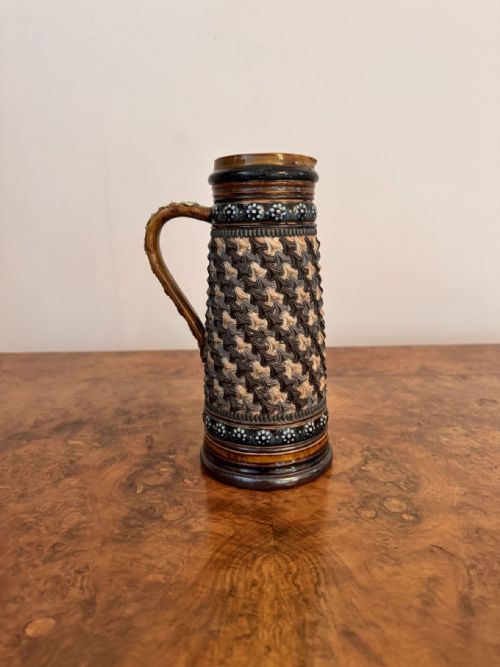
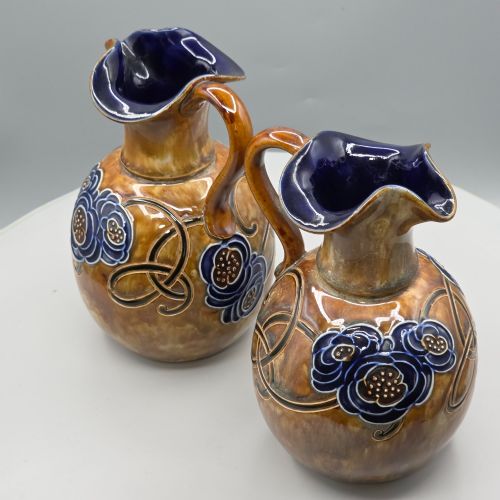
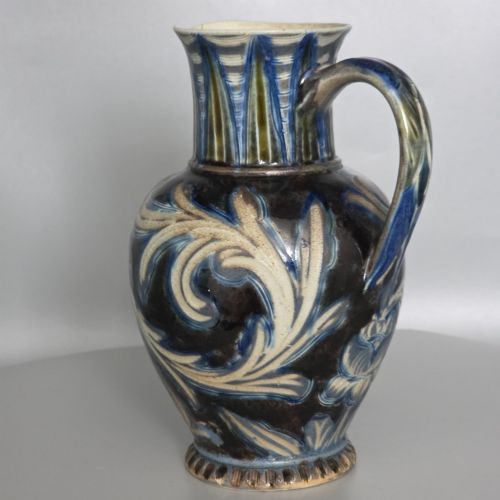
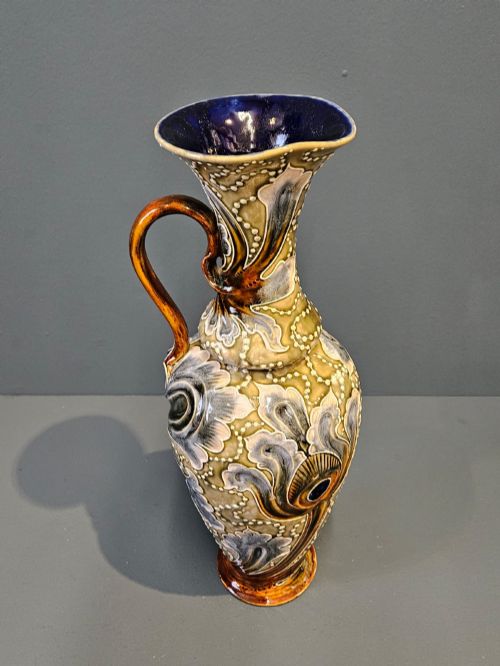
A brown stoneware pitcher represents a durable pottery vessel shaped primarily in the nineteenth century, with Victorian examples dominating current selections alongside earlier Georgian pieces. These jugs and ewers appear in forms ranging from salt-glazed tavern vessels to decorative Art Nouveau pitchers and harvest jugs.
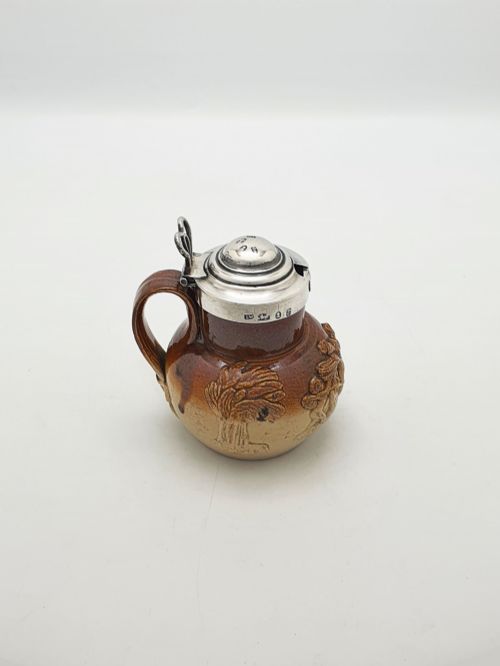
Makers utilised dense, vitrified clay bodies capable of holding liquids securely without porous leaks. Many of these pieces incorporate fitted metal collars, silver rims, or hinged lids made of sterling silver and silver plate.
The assortment on this page spans utilitarian vessels like ale pitchers and multi-handled tygs alongside ornamental art pottery and matching bowl sets. Collectors encounter works originating from English potteries such as Doulton Lambeth as well as continental workshops.
How they were made
Potters shaped these vessels from heavy clay bodies fired at high temperatures until the material vitrified into dense, impervious stoneware. Salt glazing was frequently applied during the firing process, throwing salt into the kiln to produce a characteristic textured, pebbled surface.
Makers often decorated the bodies using incised patterns, applied sprigged reliefs, or slipware trails before glazing. Workshops then mounted functional additions such as sterling silver rims, collars, and hinged lids to reinforce vulnerable spouts and rims.
Listings feature stoneware pieces spanning from the 17th century through the Victorian era, utilising salt glaze, lead glaze, and sterling silver mounts.
What varies in quality
The distinction between standard utility vessels and superior items rests upon the crispness of the incised ornament and the artistic ambition of the studio. Pieces bearing named makers or distinct stamps display finer detail work in sprigged reliefs and modelled masks.
The inclusion of precious metal mounts, such as hallmarked sterling silver collars and hinged lids, elevates the status of a pitcher from a simple tavern tool to a finished parlour piece. Condition of the dense stoneware body and the uniformity of the salt glaze further divide common examples from exceptional survivals.
Doulton Lambeth·Royal Doulton·Emma Shute·Copeland Spode
The Brown Stoneware Pitcher Glossary
- Stoneware
- A dense, hard pottery fired at high temperatures until the clay body vitrifies and becomes non-porous. This material requires no internal glaze to hold liquids safely.
- Salt Glaze
- A glossy, slightly pitted texture created by throwing common salt into the kiln during high-temperature firing. The sodium reacts with the silica in the clay body to form a durable glassy coating.
- Tyg
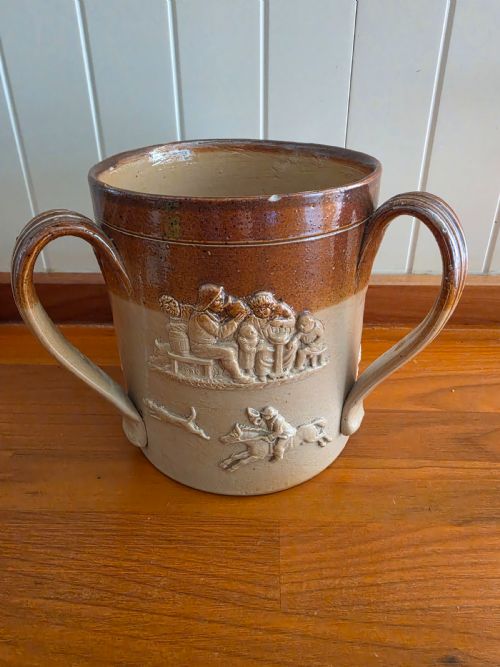
- A drinking vessel featuring three or more vertical handles designed to be passed around a table among multiple drinkers. These multi-handled pots frequently appear in seventeenth and nineteenth-century forms.
- Spriged
- A method of decoration where separately moulded clay reliefs are applied to the wet body of a vessel before firing. These motifs often depict hunting scenes, floral patterns, or heraldic designs.
- Puzzle Jug
- A vessel with a perforated neck that prevents normal drinking, forcing the user to suck liquid through a hidden tubular channel in the handle or rim. This clever drinking trick dates back centuries in British ceramic production.
Brown Stoneware Pitcher: Frequently Asked Questions
How do I date an old brown stoneware pitcher?
Dating relies on examining stylistic clues, stamped factory marks, and incorporated metal mounts. Victorian and nineteenth-century pieces often carry specific pottery stamps or maker initials near the base.
Georgian examples from the early 1800s frequently feature hand-thrown profiles paired with hallmarked sterling silver collars. Comparing the decorative style, such as early salt glaze versus later Art Nouveau incising, narrows the production era further.
Were these pitchers used for ale or water?
These robust vessels served multiple functions depending on their size and form. Heavy harvest jugs and ale pitchers held fermented drinks for communal dining and tavern gatherings.
Finer art pottery ewers and hotel ice water jugs were manufactured for formal table service. Their dense stoneware bodies kept liquids cool during meals.
Can I use an antique stoneware pitcher for serving liquids?
Vitrified stoneware is naturally non-porous and generally safe for holding cold beverages. However, historic pieces with metal mounts require careful hand washing to protect silver collars and hinges.
Sudden thermal shocks should be avoided to prevent stress fractures in nineteenth-century clay bodies.
What is a harvest jug?
A harvest jug is a large stoneware vessel traditionally filled with ale and carried into the fields during agricultural harvest celebrations. These pieces often display robust salt glazes and applied hunting or agrarian motifs.
Many surviving examples feature reinforced silver rims to protect the pouring lip from heavy daily use.