




Buff Ceramic Pitcher
These buff ceramic pitcher options span centuries of pottery tradition, offering practical utility and decorative presence for the home.
Buff Ceramic Pitcher
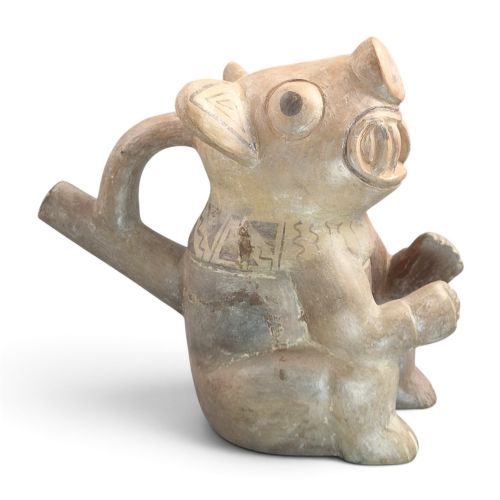
A buff ceramic pitcher encompasses a diverse range of utilitarian and decorative pouring vessels created from clay bodies featuring a warm, pale, neutral tone. When searching for a buff ceramic pitcher, buyers encounter examples stretching from ancient pre-Columbian terracotta vessels to nineteenth-century English stoneware jugs and earthenware pieces.
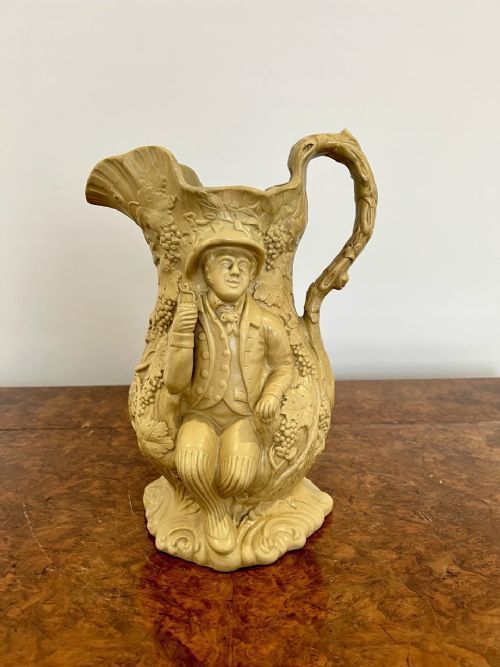
Most items meeting this description on the page date from the nineteenth century, showcasing the industrial and artistic developments in British ceramics during that era. Buyers find both monumental exhibition pieces and domestic tableware designed for daily service or display.
How they were made
Potters utilised natural earthen materials including clay, terracotta, and dense stoneware bodies, frequently applying specialised glazes or salt-glazing techniques during firing to achieve durable waterproof surfaces. The creation of relief-moulded ornamentation required precise press-moulding methods where decorative motifs were applied directly to the body before firing.
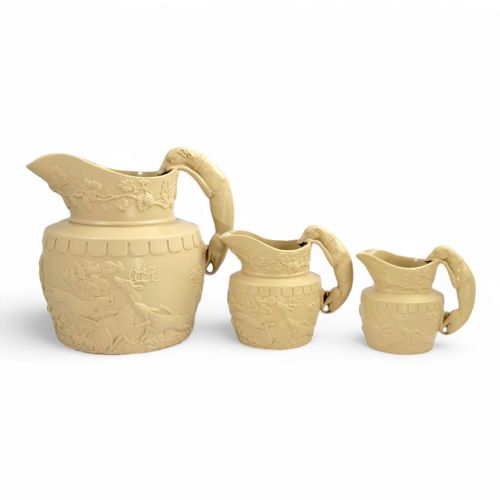
Surface decoration frequently involved applied cream sprigging, where moulded white or pale clay designs contrast sharply against the buff ceramic ground. Pigments and salt glazing were also applied to enhance texture and tonal depth, particularly in nineteenth-century stoneware production.
Periods represented across the available inventory include Georgian, Victorian, Art Nouveau, and Pre-Columbian eras.
What varies in quality
The distinction between standard domestic items and high-end pieces rests in the sharpness of the relief moulding and the skill executed in applied ornamentation. Exceptional exhibition pieces exhibit crisper detail in moulded figural scenes, superior control in salt-glazing texture, and more sophisticated sculptural elements such as hound handles.
Artistic attribution also dictates standing, with documented works by notable potteries or named decorators commanding greater interest. The preservation of the original clay body without extensive structural compromise separates superior examples from heavily restored or damaged vessels.
Charles Meigh·Emma Shute·Doulton Lambeth·Phillips and Bagster·Copeland Spode
The Buff Ceramic Pitcher Glossary
- Salt glaze
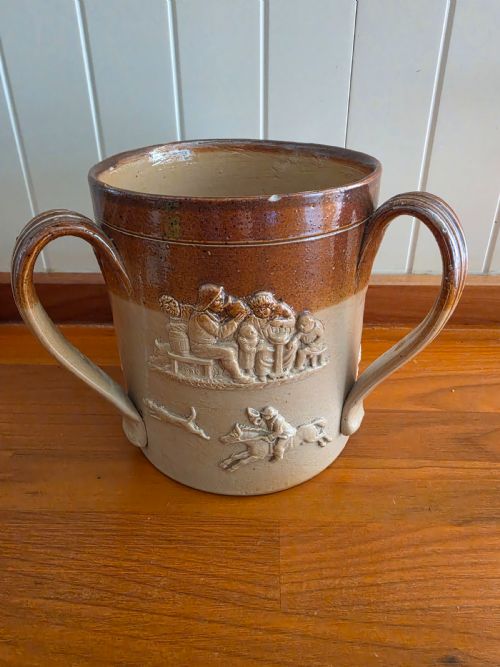
- A vitreous coating formed by throwing common salt into the kiln during high-temperature firing, producing a characteristic pebbled texture resembling orange peel. This finish provided exceptional durability for utilitarian vessels.
- Sprigging
- A decorative technique where separately moulded clay motifs are applied to the surface of an unfired vessel using slip as an adhesive. These raised motifs often feature a contrasting colour to the main body.
- Tyg
- A drinking vessel featuring three or more handles designed to be passed around a company of drinkers. Early examples often appeared in earthenware and stoneware bodies.
- Relief moulded
- A manufacturing method utilising metal or plaster moulds to press raised designs directly into the clay wall of a vessel. This process allowed for intricate figural and botanical ornamentation during mass production.
- Terracotta
- Unglazed or glazed fired clay of a brownish-red or buff appearance, commonly utilised in ancient and domestic pottery traditions. The porous material requires specific sealing if intended to hold liquids.
Buff Ceramic Pitcher: Frequently Asked Questions
What is a salt glaze?
A salt glaze is a glossy, textured finish created by introducing salt into the kiln at the peak of the firing process. The sodium reacts with the silica in the clay body to form a durable glass-like coating.
This technique protects the porous stoneware beneath and gives many nineteenth-century jugs their characteristic pitted surface texture.
How were tygs used?
A tyg served as a communal drinking vessel featuring multiple handles so that several people could share the same cup during gatherings. Guests held different handles to pass the vessel safely around the table.
Most surviving examples date from earlier centuries and reflect sturdy earthenware or stoneware construction suitable for robust use.
What is relief moulding?
Relief moulding is a production technique where decorative figures, foliage, or coats of arms are pressed in low relief onto the body of a jug. Makers utilised specialised moulds to ensure consistent ornamentation across multiple vessels.
This method became particularly popular during the Victorian period for ale jugs and sporting pitchers.
How do I identify periods?
Identifying periods involves examining the clay body, the glazing style, and the decorative motifs employed by the potter. Georgian and Regency pieces often lean towards classical revival themes, while Victorian examples frequently showcase naturalistic or industrial subjects.
Makers' marks, when present on the base, provide definitive chronological reference points for nineteenth-century ceramics.
Can I use these pitchers?
While many historic stoneware and earthenware pitchers were designed for functional service, modern usage depends on the condition and porosity of the individual vessel. Glazed stoneware pieces generally withstand liquids better than unglazed terracotta or historic earthenware.
Many collectors prefer to display these items as decorative works rather than subjecting them to daily kitchen service.