



Victorian Doulton Pottery
Victorian Doulton pottery brings together heavy salt-glazed stoneware and delicate faience, prized for detailed hand-carved decoration.
Victorian Doulton Pottery
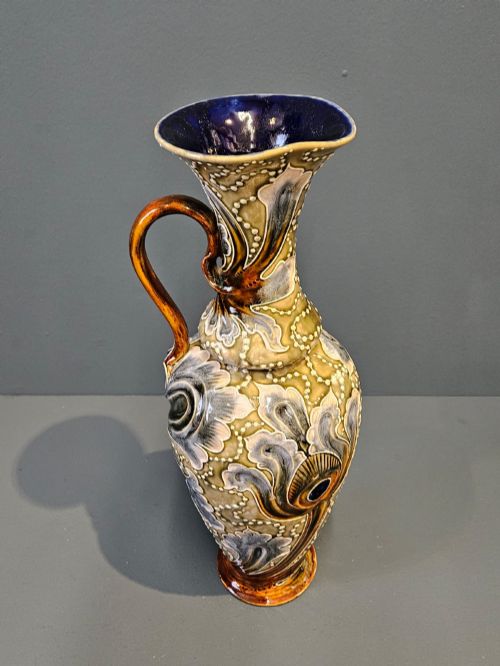
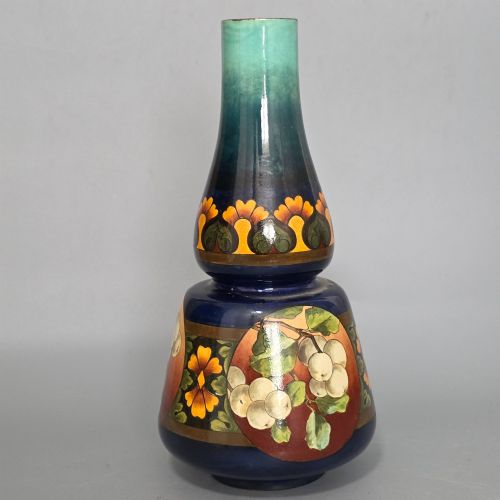
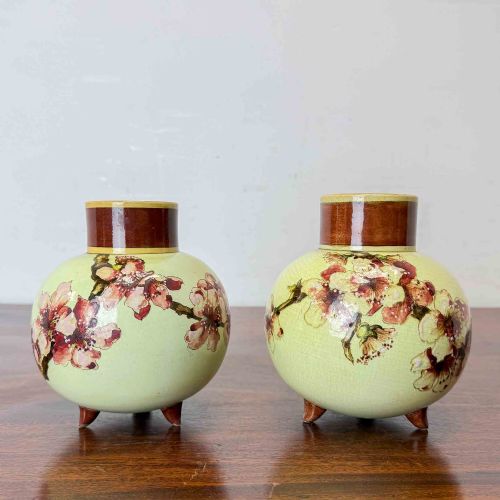
Victorian Doulton pottery spans robust utilitarian vessels and intricate decorative display items produced during the nineteenth century. Buyers encounter sturdy salt-glazed stoneware jugs, elaborate jardinieres, and painted faience vases originating from the Lambeth and Burslem potteries.
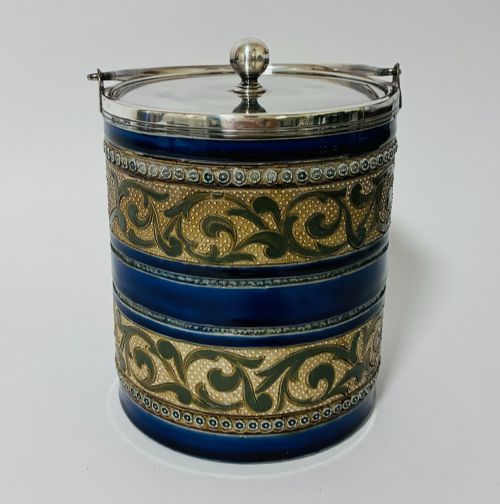
The domestic forms range from biscuit barrels and tygs to large ewers and salad bowls. Many examples incorporate silver mounts or plated hardware, bridging the gap between practical household objects and ornamental art.
The aesthetic vocabulary shifts from traditional harvest scenes and jubilee commemorations to flowing Art Nouveau motifs, Persian influences, and Aesthetic movement patterns. Pieces frequently display specific studio marks alongside individual artist ciphers.
How They Were Made
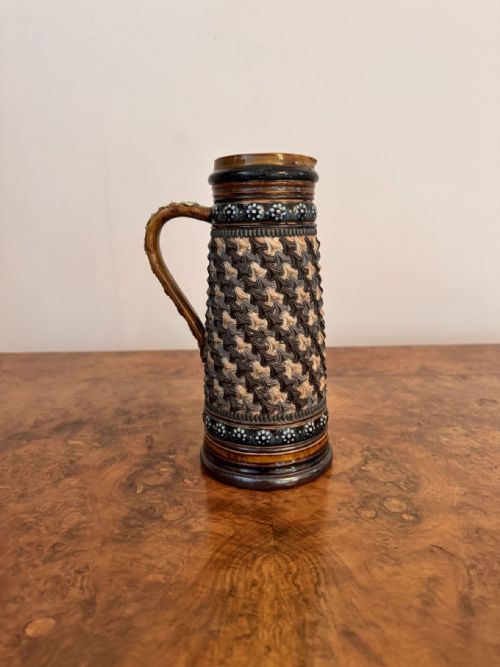
Makers utilised durable stoneware and porous earthenware bodies, applying salt glazes that produced distinctive pebbled surface textures during kiln firing. Artisans employed Slaters patent techniques, pressing lace and textile textures directly into the damp clay before glazing.
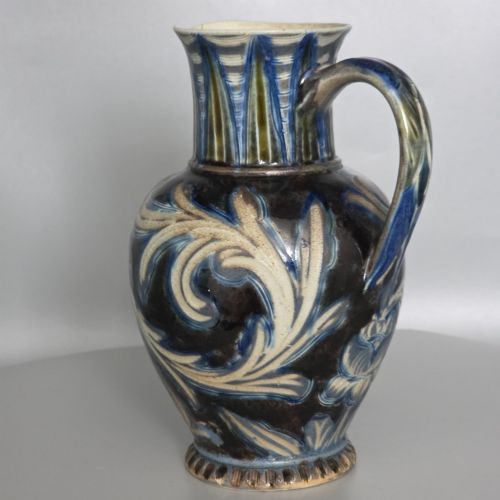
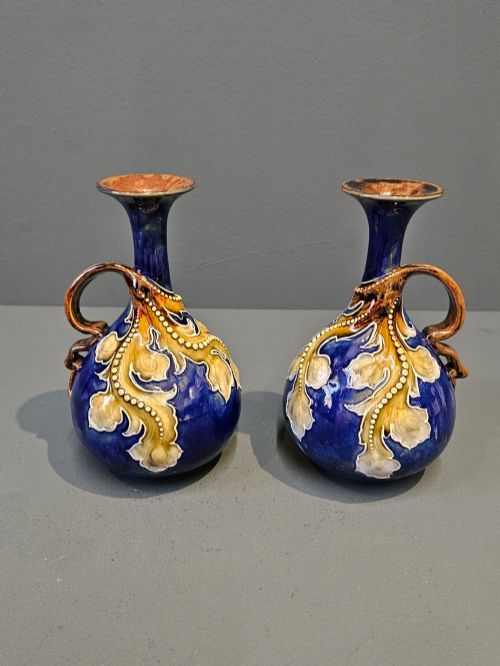
Decoration relied heavily on incised carving, slip trailing, and hand-painted enamel designs executed by specialist artists working within the Lambeth studios. Faience pieces received underglaze painted decoration on a tin-glazed surface, later finished with clear protective coatings.
Golf enthusiasts can spot a lone nineteenth-century whisky flask complete with a sporting motif hidden among the floral vases.
What Varies in Quality
The distinction between standard production and top tier work rests on the complexity of the hand-carved ornamentation and the reputation of the executing artist. Pieces bearing the identifiable ciphers of notable studio decorators command greater attention than factory-decorated output.
Execution depth in incised relief work and the precision of applied pate-sur-pate or enamel detailing dictate visual success. Superior examples maintain crisp surface textures without glaze pooling, whereas lesser pieces show blurred impressions and uneven colour distribution.
Alice Euphemia Thatcher·Florence E Barlow·Eliza Simmance·Ethel Beard·Emma Shute·Frank Butler·Emily Edwards·Emily Stormer
The Victorian Doulton Pottery Glossary
- Stoneware
- A dense, impermeable ceramic fired at high temperatures until vitrified. It resists liquids naturally without requiring an interior glaze.
- Faience
- Earthenware decorated with coloured paints over an opaque white glaze. This technique allowed artists to achieve painterly floral and pictorial scenes.
- Tyg
- A large drinking vessel fitted with multiple handles designed for communal passing around a table. These pieces often feature detailed incised inscriptions.
- Slaterware
- Pottery decorated by pressing lace or woven fabrics into the wet clay body. The resulting textured surface was then partially highlighted with gilding or enamel colours.
- Slab pottery
- Hand-built ceramic formed from rolled flat sheets of clay rather than thrown on a potter wheel. This method suited geometric forms and architectural vessels.
Victorian Doulton Pottery: Frequently Asked Questions
What is Doulton Lambeth pottery?
Doulton Lambeth refers to the studio pottery department established in south London, famous for hand-carved stoneware and salt-glazed decorative wares.
Working alongside skilled chemists and modellers, individual artists created distinct pieces that combined industrial strength with artistic individuality.
How do I identify a Doulton artist mark?
Artists working in the Lambeth studios stamped or scratched their personal monograms into the base alongside the factory marks.
Matching these ciphers allows collectors to trace individual pieces back to specific designers active during the late nineteenth century.
How should I clean antique pottery?
Dust surfaces gently with a dry, soft cloth to prevent accumulation within incised grooves and textured slip areas.
Avoid immersing pieces with metal mounts or silver plating in water, as moisture can damage internal adhesives and metal components.