



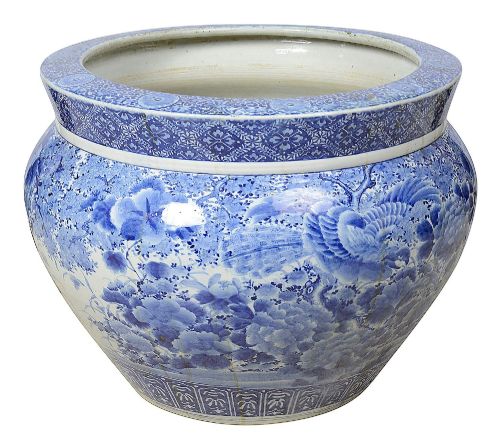
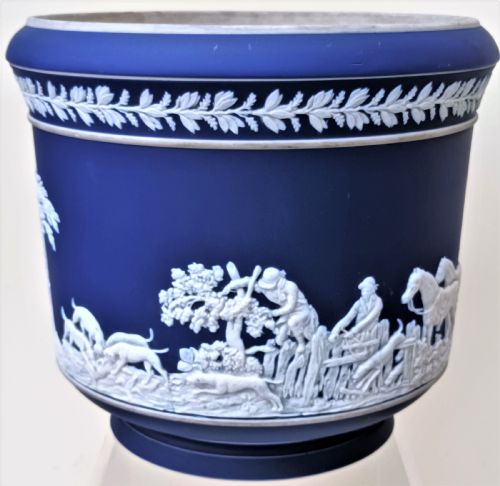
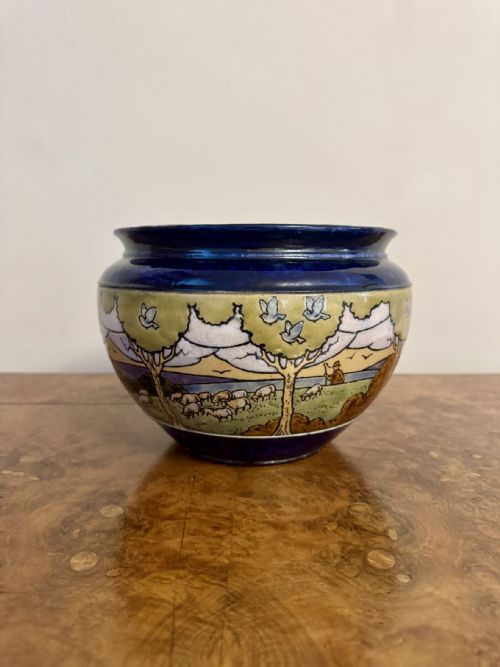


Blue Ceramic Jardiniere
A blue ceramic jardiniere brings sculptural plant housing into interiors, uniting robust function with deep cobalt decoration.
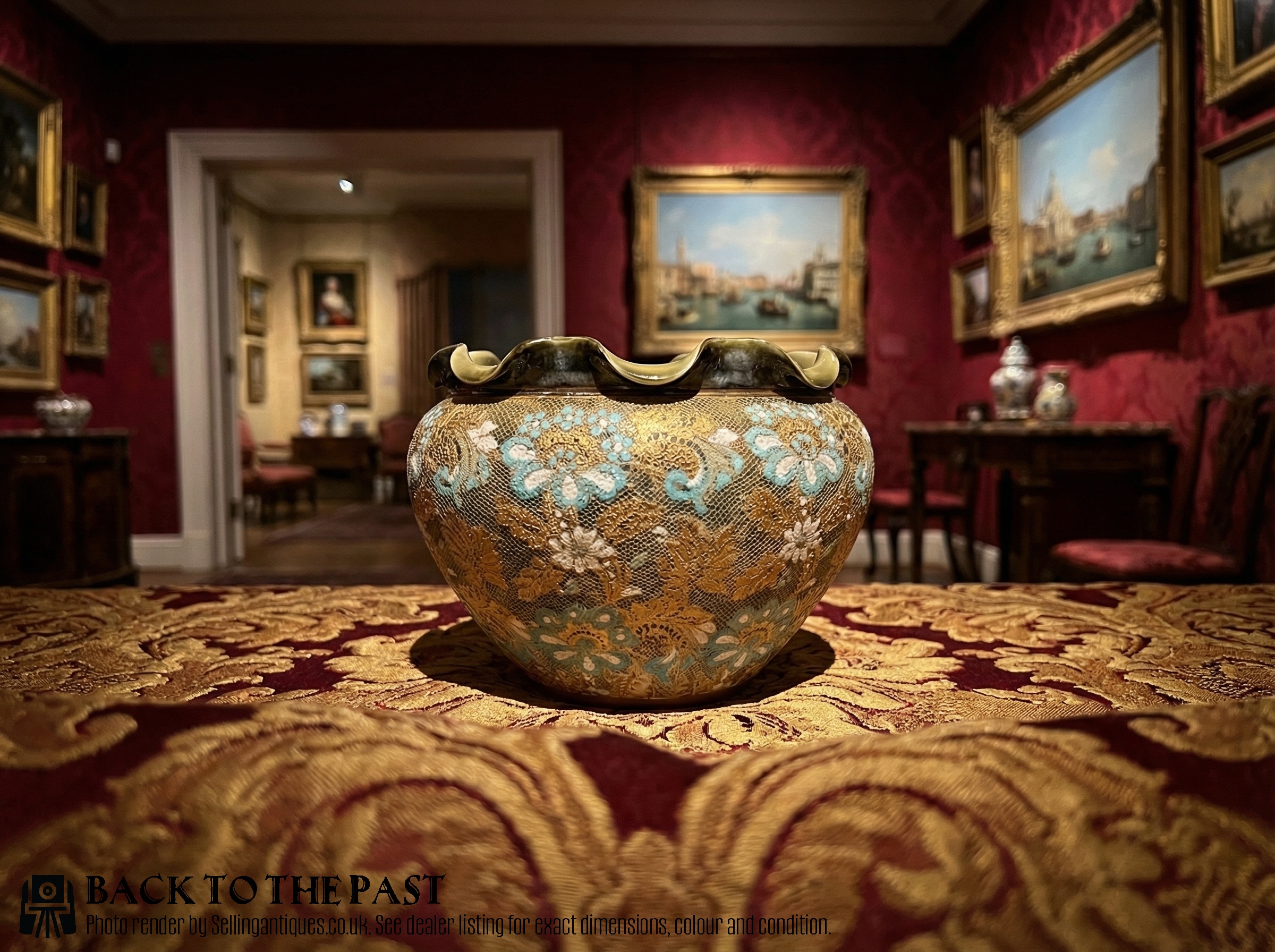
Blue Ceramic Jardiniere
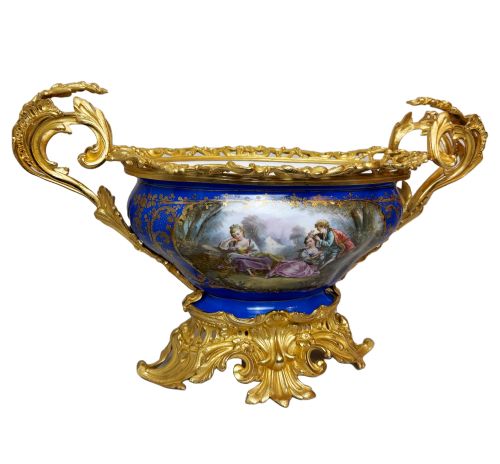
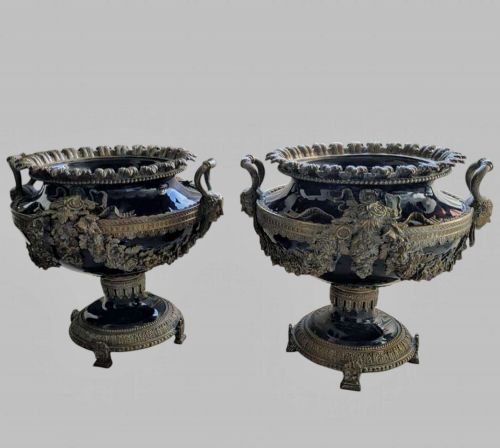
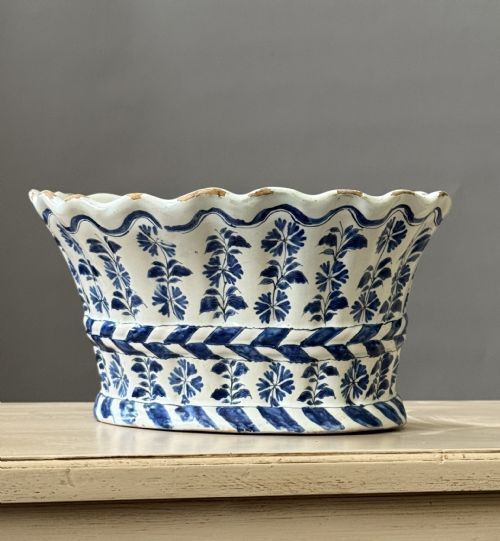
A blue ceramic jardiniere takes the form of a heavy plant container or fish bowl designed to hold potted greenery inside domestic rooms or conservatories. These vessels appear frequently as Victorian British studio productions, alongside earlier eighteenth-century Delft examples and Japanese blue and white porcelain imports.
Makers shaped these pots as low bowls, tall pedestals with stands, or three-handled vessels intended for substantial interior displays. The selection ranges from compact English earthenware planters to massive Chinese export porcelain jardinieres created for grand nineteenth-century reception rooms.
Materials and construction
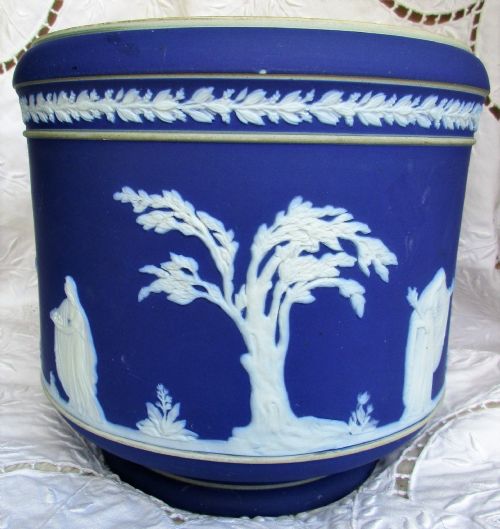
Potters built these pieces using dense stoneware, earthenware, and porcelain bodies, applying rich cobalt blue glaze and enamel decoration before high-temperature firing. Many Victorian iterations incorporate specialised techniques such as salt glazing, lustre finishes, and applied jasperware reliefs.
Makers frequently combined the ceramic planter with carved hardwood stands, metal liners, or matching ceramic pedestals to support the heavy weight of wet soil and mature indoor plants.
Blue Ceramic Jardiniere Retail Price Guide 2026
Typical asking prices for blue ceramic jardiniere among the pieces listed under this phrase on Sellingantiques today, from the lower quarter to the upper quarter. They describe what is for sale here now, not the wider market.
Some nineteenth-century examples come complete with matching ceramic griffins guarding the plant stand.
Judging execution and design
Quality rests in the crispness of the moulded relief, the depth of the cobalt glaze, and the precision of hand-painted Chinoiserie or floral motifs. Superior pieces exhibit balanced proportions across large dimensions without warping during the kiln firing.
Works from prominent potteries demonstrate finer clay preparation and more sophisticated glaze control than basic utilitarian plant pots, distinguishing decorative showroom pieces from standard garden ware.
Royal Doulton·William Adams and Sons·Doulton Lambeth·Doulton Burslem·Clement Massier·Minton·Royal Worcester·George Jones·Royal Crown Derby·Coalport·Burmantofts Art Pottery·Samson
The Blue Ceramic Jardiniere Glossary
- Jardiniere
- A large decorative pot or bowl used to hold growing plants indoors. The term derives from the French word for gardener.
- Jasperware
- A type of fine stoneware developed in the eighteenth century, characterised by contrasting raised white clay figures against a coloured ceramic background.
- Imari
- A style of Japanese porcelain featuring underglaze blue and contrasting enamel colours like iron red and gold. Potters in Japan and Europe produced these vibrant wares for export.
- Majolica
- A heavy earthenware pottery covered with an opaque lead glaze and painted with brightly coloured metallic oxides. This technique gained immense popularity during the Victorian period.
- Slaterware
- A textured ceramic surface treatment developed by British potteries, featuring rough incised patterns combined with metallic glazes.
Blue Ceramic Jardiniere: Frequently Asked Questions
How were old jardinieres used?
These vessels functioned primarily as decorative indoor plant holders, often placed directly on the floor, on low tables, or atop matching ceramic pedestals. They contained potted palms, ferns, or flowering plants to bring natural greenery into Victorian parlours and drawing rooms.
Larger variations occasionally served as indoor fish bowls for ornamental carp or goldfish. Their watertight glazed interiors protected fine furniture and carpets from moisture and soil.
Are these pots suitable for modern plants?
Many antique planters accommodate modern plastic nursery pots dropped straight inside the glazed cavity. This protects the historic interior surface from prolonged dampness and mineral accumulation.
Placing a protective saucer inside prevents water stagnation against the porous earthenware or stoneware body. Heavy ceramic walls provide excellent stability for tall indoor specimens.
How do I identify a Victorian piece?
Victorian examples frequently display maker stamps from established British potteries like Doulton, alongside registered design numbers or impressed model codes. The decorative vocabulary relies heavily on majolica glazes, Japanese aesthetic movement motifs, and classical revival styles.
Weight offers another clue, as Victorian stoneware and earthenware pieces are notably dense and thick-walled. Many carry the characteristic rich cobalt blue and white transfer printing popular during the nineteenth century.
What is the difference between an 18th and 19th-century jardiniere?
Eighteenth-century examples often comprise early English Delftware bough pots or Chinese export porcelain and Japanese Arita Imari wares with hand-painted cobalt designs. These pieces generally reflect classical Chinoiserie or early European earthenware traditions.
Nineteenth-century production expanded dramatically into industrial salt-glazed stoneware, majolica, and artistic art pottery from specialised studios. These later vessels often incorporate complex moulded textures, matching pedestals, and diverse European revival styles.