


Victorian Ceramic Jardiniere
These Victorian ceramic jardiniere pieces bring colour and planting space to a room, offering glazed earthenware and stoneware bowls shaped for display.
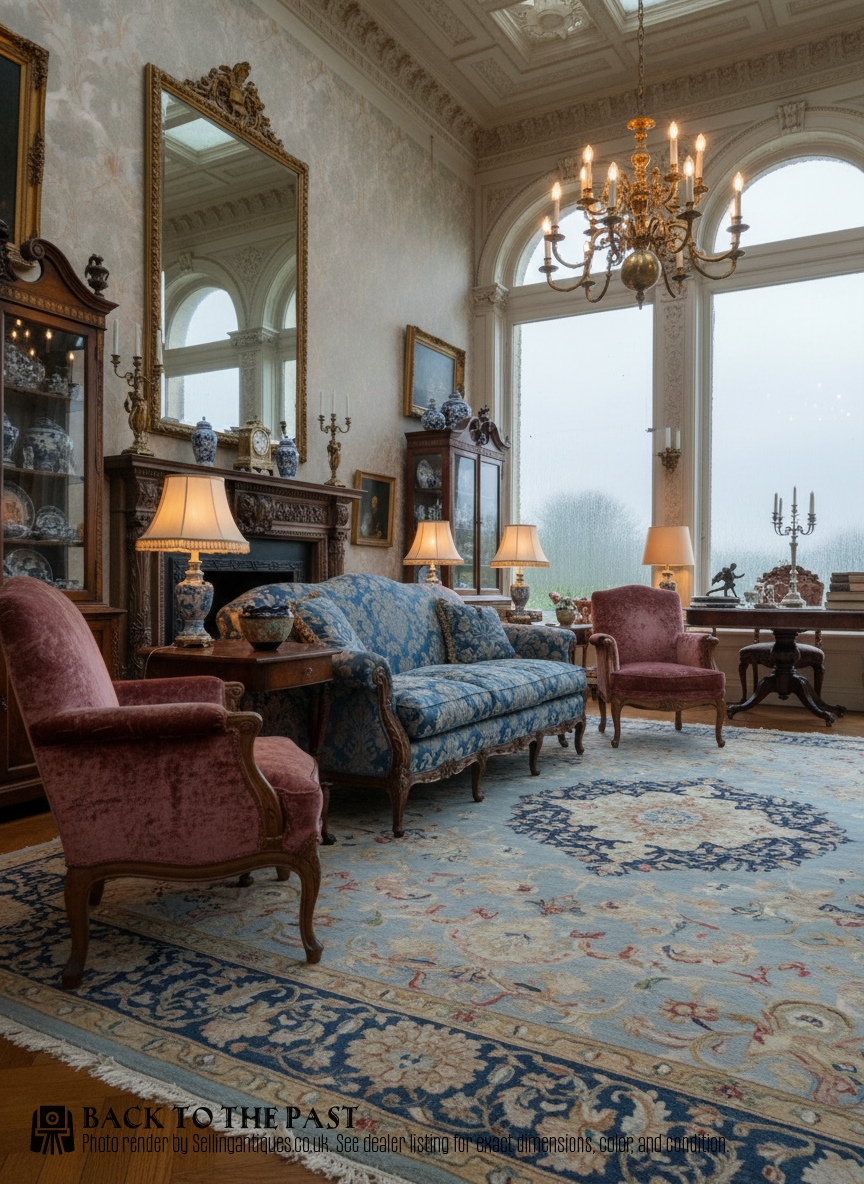
Victorian ceramic jardiniere forms
A victorian ceramic jardiniere is a decorative plant container designed for indoor use during the nineteenth and early twentieth centuries. These vessels hold potted plants or serve as standalone decorative bowls within domestic interiors.
The pieces on this page appear in various styles including Victorian, Late Victorian, and Art Nouveau. Forms range from simple bowls to large planters and jardinieres paired with pedestals or stands.
Origins span English production alongside specific regional pieces such as Scottish items. Makers include firms like William Adams and Sons, Doulton Burslem, Royal Doulton, and Julius Dressler.
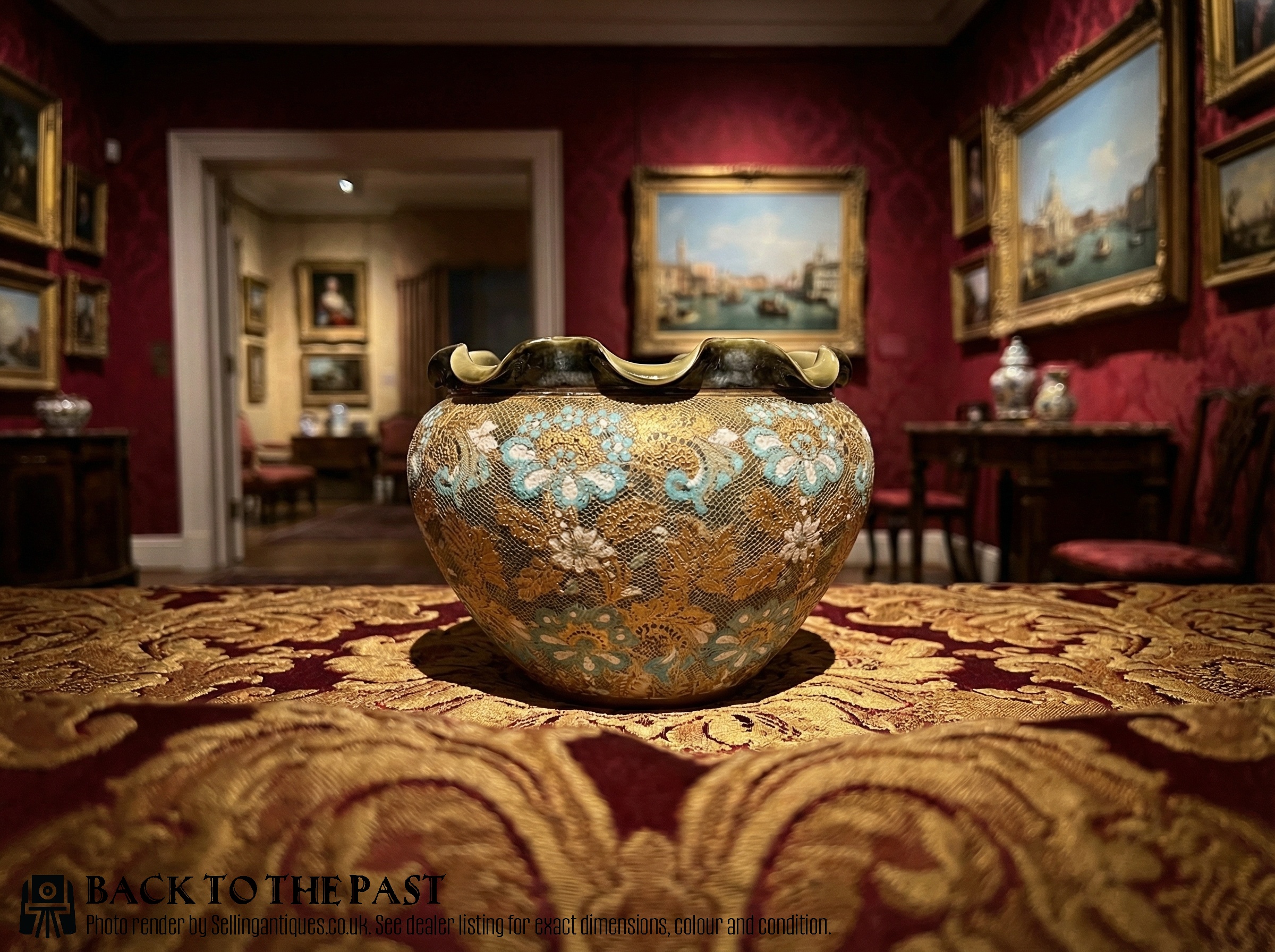
Materials and construction
Makers utilised clay, earthenware, and stoneware as foundational materials for shaping these vessels. Techniques involved moulding and throwing clay before applying decorative surfaces.
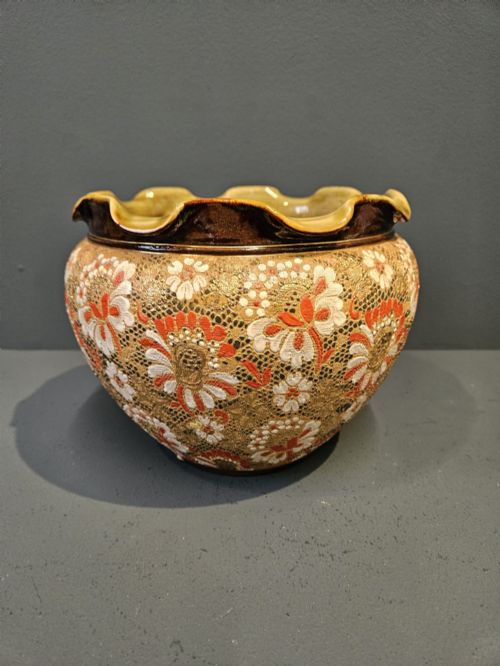
Glaze treatments provide the characteristic glossy or coloured finishes across the bodies. Some pieces incorporate gold leaf details or enamel work alongside standard ceramic bodies and jasperware.
Retail Price Guide 2026
Typical UK retail prices for victorian ceramic jardiniere, calculated from the Sellingantiques database of over a million retail prices indexed since 2003. This retail price guide relies exclusively on Sellingantiques data; no external sources or auction records are used, so the figures do not describe the wider market.
Listings span the nineteenth century into the early twentieth century, incorporating earthenware, stoneware, and jasperware.
Assessing quality
Quality rests upon the execution of the surface decoration and the crispness of moulded details. Hand-painted elements by named artists separate standard production from more ambitious workshop pieces.
The presence of matching stands or pedestals alters the visual impact and completeness of the grouping. Integrity of the glaze and preservation of applied details such as gold leaf determine the condition standard.
William Adams and Sons·Doulton Burslem·Royal Doulton·Julius Dressler
The Victorian Ceramic Jardiniere Glossary
- Jardiniere
- An ornamental ceramic pot or bowl designed to hold indoor plants. This term stems from the French word for gardener.
- Jasperware
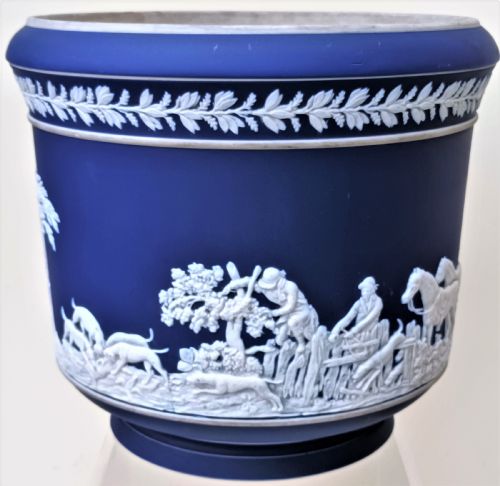
- A type of fine stoneware pioneered by English potters featuring contrasting raised white reliefs against a coloured background. Blue examples appear frequently in nineteenth-century production.
- Majolica
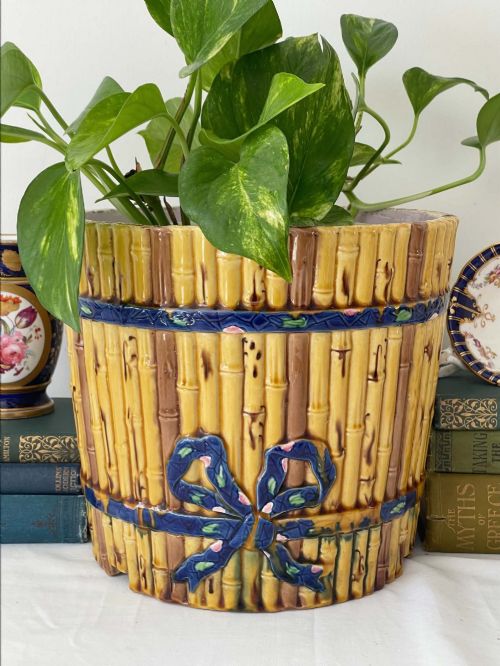
- A type of earthenware covered with an opaque tin-lead glaze and brightly coloured enamel pigments. It gained popularity during the Victorian period for decorative vessels.
- Earthenware
- Porous pottery fired at lower temperatures than stoneware. It requires glazing to become completely watertight for plant display.
- Stoneware
- Dense ceramic pottery fired at high temperatures until vitrified. This material is naturally impervious to liquids.
Frequently Asked Questions
How do I care for a vintage jardiniere?
Protect the interior glaze by placing a plastic nursery pot inside rather than planting directly into the ceramic body.
Dust the exterior gently with a soft cloth and avoid harsh chemical cleaners that might damage the enamel, glaze, or gold leaf details.
Are majolica and jasperware different?
Majolica utilises bright coloured enamels over an opaque glaze to create vibrant, glossy finishes with moulded relief motifs.
Jasperware is a fine stoneware featuring matte surfaces with distinct contrasting white relief decorations, most commonly seen in blue.
How can I tell Art Nouveau from Victorian styles?
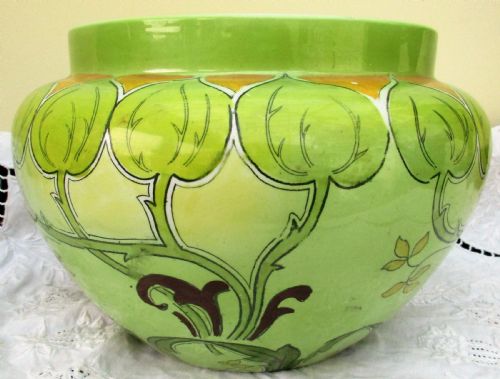
Art Nouveau pieces feature flowing, organic lines and stylized natural forms that emerged around the turn of the twentieth century.
Standard Victorian styles often rely on more formal symmetry, classical revival motifs, or rich majolica colouring.