


Glazed Ceramic Jardiniere
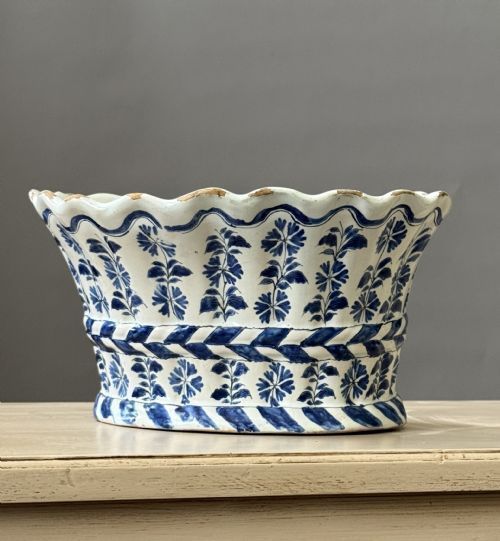
A glazed ceramic jardiniere brings sculptural plant housing into interior spaces, offering robust earthenware forms coated in vibrant surface glazes.
Glazed Ceramic Jardiniere
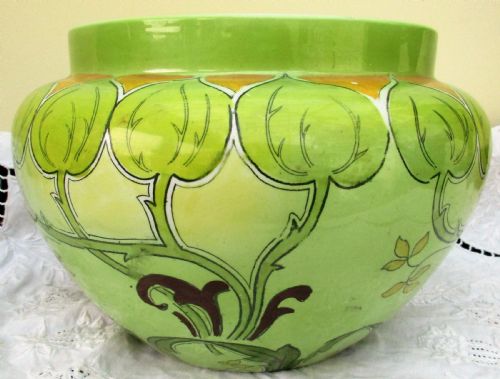
A glazed ceramic jardiniere serves as a decorative vessel for holding potted plants, appearing across nineteenth-century and early twentieth-century domestic interiors in various scales. Buyers frequently encounter nineteenth-century examples produced by major English potteries alongside continental majolica and earthenware pieces.
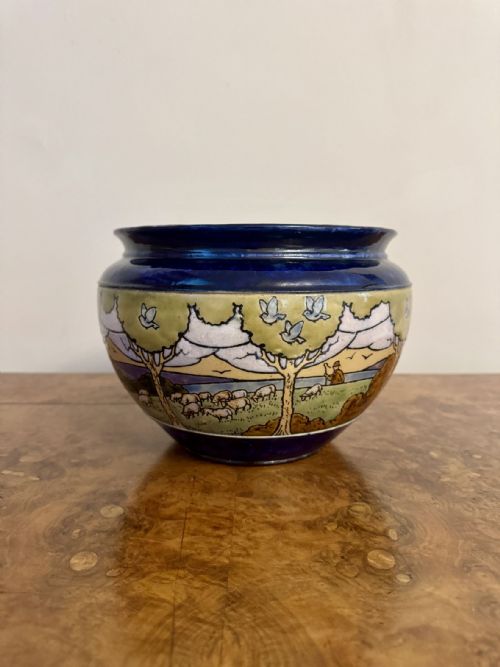
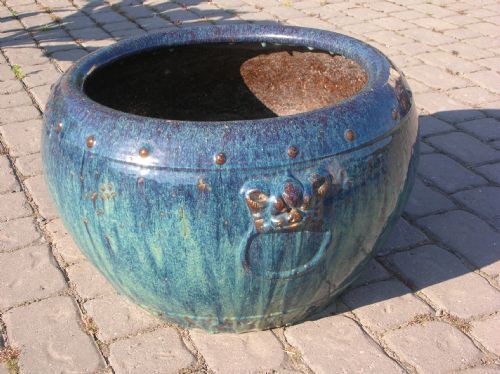
The selections span distinct periods including Victorian, Edwardian, and Art Nouveau designs, often incorporating matching pedestals or plant stands. Forms range from simple bulbous planters to large handled vessels and architectural urns designed for substantial floor display.
Originating from English, Scottish, and European workshops, these vessels reflect diverse stylistic revivals from naturalistic foliage to Italian Renaissance and Chinese motifs. The inventory includes both standalone planters and combined jardiniere and stand sets.
How they were made
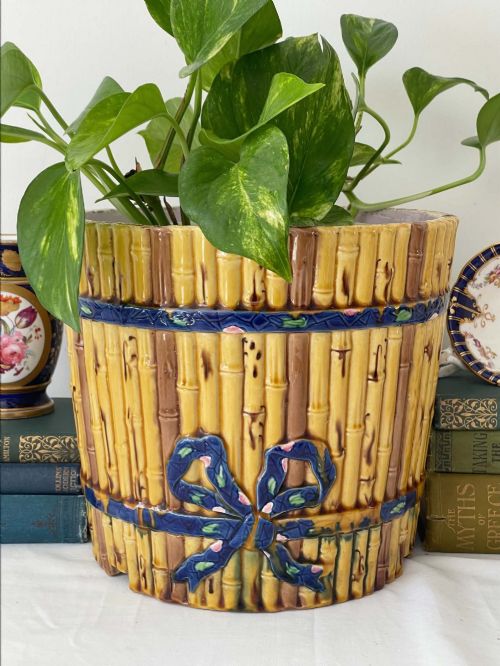
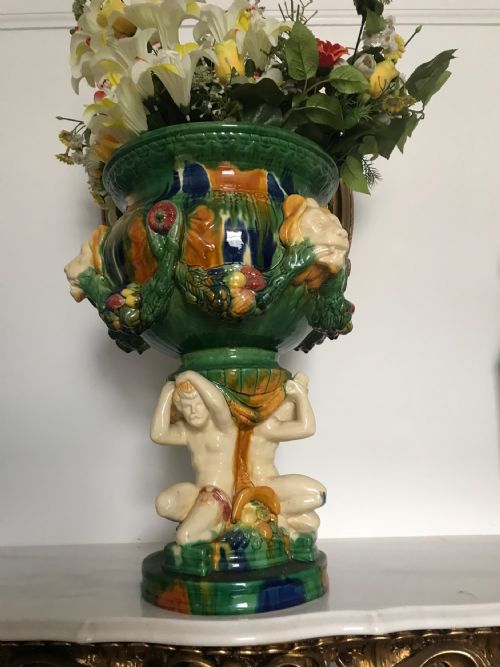
Potters shaped these pieces primarily using earthenware, stoneware, and terracotta bodies, which were then fired to create sturdy structural vessels. Techniques included mould-pressing and throwing, permitting intricate relief decorations such as bamboo stalks, fern fronds, and lion masks.
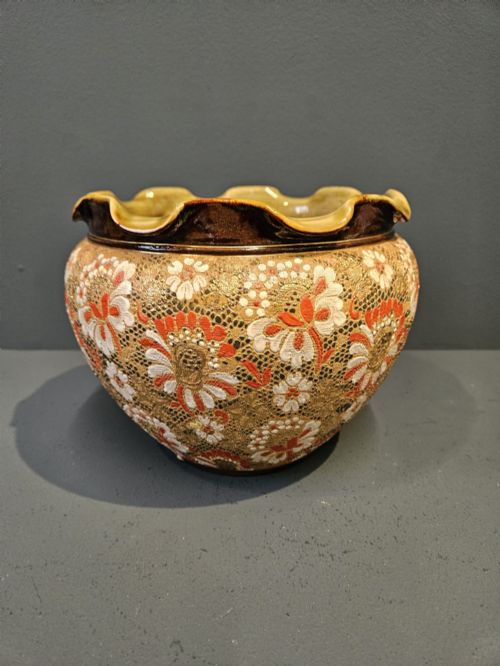
Surface finishes relied heavily on specialised glazes, encompassing rich majolica colours, salt glazes, slip-trailed slaterware, and iridescent lustre effects. Some models integrated gold leaf detailing or were paired with figural base stands and decorative griffin supports.
Several nineteenth-century potters sculpted grumpy lions and mythical griffins simply to hold up ordinary houseplants.
What varies in quality
The distinction between standard production and top-tier execution rests on the crispness of moulded relief work and the depth of the glaze application. Superior examples display carefully controlled firing results without glaze pooling or dull patches across complex surface textures.
Completeness significantly influences standing, particularly when original matching pedestals or stands accompany the main planter body. The reputation of the manufacturing pottery and the involvement of named artists further elevate the standing of individual pieces.
Royal Doulton·Minton·Burmantofts Art Pottery·Royal Worcester·George Jones·Clement Massier
The Glazed Ceramic Jardiniere Glossary
- Jardiniere
- A large decorative pot or receptacle used for holding flowers or potted plants indoors. These vessels often sit upon matching ceramic pedestals or floor stands.
- Majolica
- A type of earthenware coated with an opaque tin-glaze and painted with brightly coloured metallic oxide glazes. It became immensely popular during the Victorian era for ornamental planters.
- Slaterware
- A distinctive pottery surface treatment created by pressing lace or woven fabrics into damp clay before firing and glazing. Royal Doulton utilised this technique extensively on jardiniere bodies.
- Faience
- Tin-glazed earthenware produced in imitation of Italian majolica wares, widely adopted by nineteenth-century art potteries. The technique allows for rich, opaque surface decoration.
- Bough pot
- An early vessel type originally designed for holding cut branches of flowering shrubs or greens. Eighteenth-century examples represent precursors to later floor planters.
Glazed Ceramic Jardiniere: Frequently Asked Questions
What is a glazed ceramic jardiniere?
A glazed ceramic jardiniere is an ornamental plant pot designed to hold growing greenery indoors rather than planting directly into the vessel. They function as prominent decorative objects in a room, often elevated on matching ceramic pedestals.
Historically, these vessels served to bring large botanical specimens into Victorian and Edwardian parlours and conservatories. The glazed exterior protected interior surfaces while offering a decorative canvas for coloured enamels and relief moulding.
How do I care for a vintage jardiniere?
Protect antique earthenware and majolica glazes by placing a modern plastic nursery pot inside the jardiniere rather than filling it directly with wet soil. This prevents moisture from seeping into porous clay bodies and causing hairline cracks.
Clean the outer surface only with a soft, dry cloth to avoid damaging historic glaze surfaces or metallic highlights. Avoid exposing older ceramics to sudden temperature shifts or freezing conditions if placed in unheated spaces.
Where should I place a jardiniere at home?
Large floor-standing jardiniere and pedestal sets suit entrance halls, drawing rooms, or empty architectural corners where their height creates a focal point. Smaller tabletop versions sit effectively on sideboards, tables, or window ledges.
Ensure the chosen spot receives adequate natural light if housing live plants, or display them empty as sculptural art pieces. Keep them away from high-traffic walkways where the protruding handles or ceramic pedestals might be accidentally struck.