


Art Nouveau Planter Pot
An art nouveau planter pot brings organic lines and flowing botanical motifs directly into your living space, offering a striking vessel for your indoor greenery.
Art Nouveau Planter Pot
When you search for an art nouveau planter pot, you are looking at decorative vessels designed to house indoor plants while exhibiting the characteristic sinuous curves and floral motifs of the movement. These pieces emerge primarily from the late Victorian, Edwardian, and early twentieth-century periods, spanning from the eighteen-eighties through the nineteen-thirties.
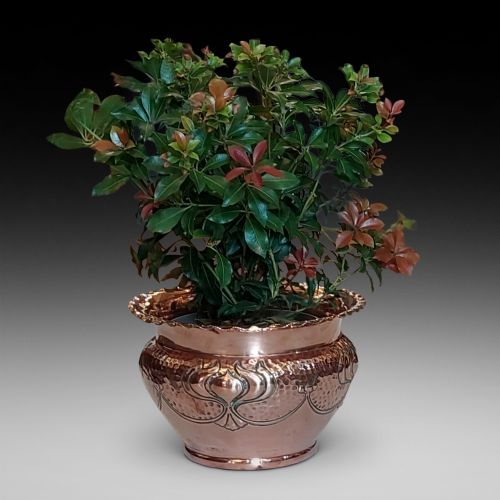
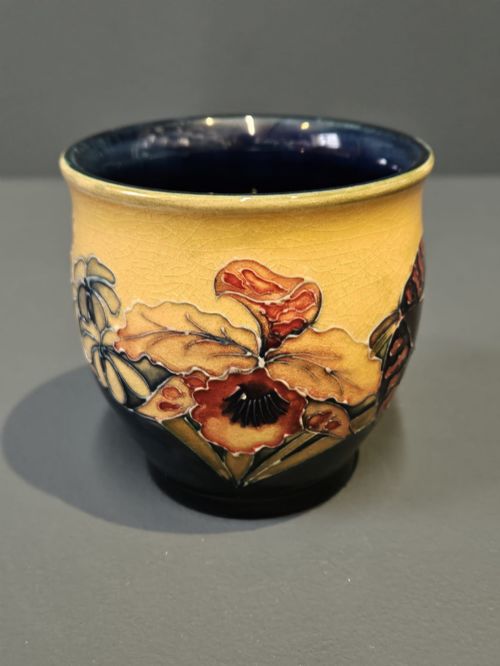
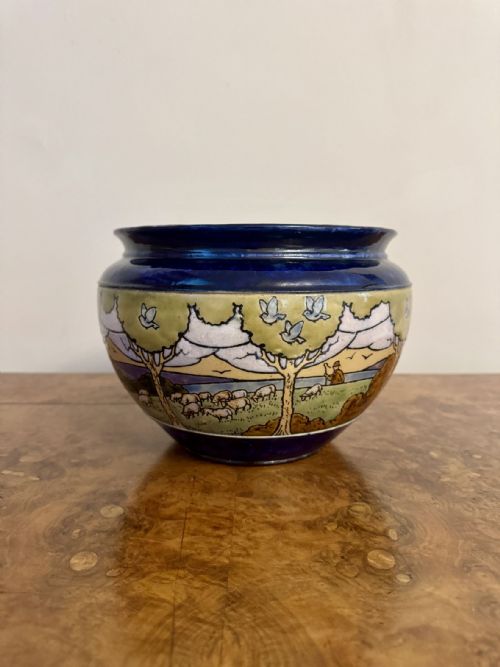
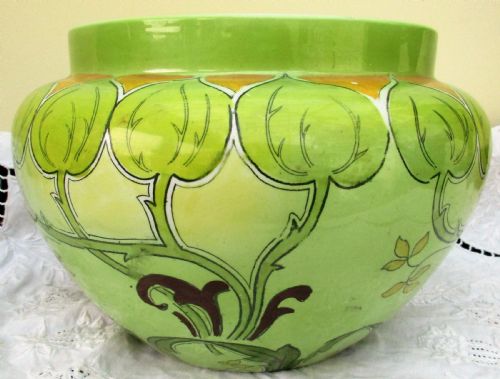
On this page, you will most frequently encounter jardinières and planters shaped from glazed earthenware, stoneware, brass, and copper. Forms range from freestanding brass vessels on original stands to table-top ceramic pots adorned with leaf designs and delicate glazes.
The aesthetic bridges late nineteenth-century craftsmanship with early twentieth-century domestic utility, drawing heavily upon Arts and Crafts principles as well as later Art Deco influences. Makers utilised both metals and ceramics to create functional art for the home.
How they were made
Potters shaped earthenware and stoneware on wheels or in moulds before applying ceramic glazes, often incorporating ivory blush backgrounds or vibrant yellow finishes beneath the glaze layers. These ceramic bodies required careful kiln firing to achieve the smooth surfaces necessary for hand-painted or moulded botanical details.
Metalworkers hammered and spun brass and copper sheets into stylistic forms, sometimes integrating riveted construction or patinated surfaces to accentuate the organic contours. Artisans also applied gold leaf highlights to enhance specific decorative elements on select ceramic and metal vessels.
Plants finally get the architectural homes they secretly demand.
What varies in quality
The distinction between standard domestic wares and superior examples lies in the crispness of the moulded relief, the depth of the metalwork, and the richness of the ceramic glaze. Finer pieces demonstrate confident handling of botanical motifs and robust construction, whether in the weight of the brass or the complexity of the earthenware finish.
Attribution to documented potteries or metalwork manufacturers elevates a piece, as does the retention of original components such as matching brass stands. The execution of surface decoration, from delicate ivory blush work to lustrous metallic patination, dictates the overall presence of the vessel.
Royal Doulton·W.A. Adderley·J Sankey and Sons·A Macintyre and Co.·William Moorcroft·Liberty and Co.·Royal Worcester
The Art Nouveau Planter Pot Glossary
- Jardiniere
- A large ornamental pot or planter designed to hold a plant or floral arrangement. These vessels typically sit on tabletops or dedicated stands.
- Cache pot
- A decorative flowerpot used to conceal a plain inner pot that holds the actual plant. The term translates from French as hiding pot.
- Earthenware
- Porous pottery fired at relatively low temperatures and rendered impermeable to liquids by a vitreous glaze. This material forms the base of many domestic vessels.
- Stoneware
- A robust, vitrified pottery fired at higher temperatures until non-porous. It offers greater durability than earthenware and accepts dense glazes.
- Patina
- The surface sheen or colour alteration developed on metals such as brass and copper through age and use. Collectors value this natural weathering for its historical character.
Art Nouveau Planter Pot: Frequently Asked Questions
What is an art nouveau planter pot?
An art nouveau planter pot is a decorative vessel for greenery defined by flowing, organic lines, asymmetrical plant motifs, and characteristic turn-of-the-century craftsmanship. They were produced extensively in ceramics and metals during the late nineteenth and early twentieth centuries.
These pieces served both practical and decorative roles in period interiors, housing ferns and flowering plants on windowsills, tables, and dedicated stands.
How do I care for my planter?
Living with these pieces requires protecting historic ceramic glazes and metal surfaces from prolonged moisture exposure. Placing a modern plastic liner inside the pot prevents water from sitting directly against antique earthenware or causing interior corrosion in brass and copper.
Cleaning should be limited to gentle dusting with a soft cloth, avoiding harsh chemical polishes that can strip original patinas or damage delicate glaze finishes.
How do I identify the period?
Dating relies on maker marks, ceramic body types, and stylistic indicators such as the transition from late Victorian revivalism to Edwardian fluidity and later Art Deco geometry. Base stamps from potteries like Royal Doulton or Doulton Lambeth often provide precise chronological markers.
Metal items can sometimes be attributed through manufacturer stamps or characteristic brass and copper fabrication techniques unique to workshops operating around nineteen hundred.