


Doulton Ceramic Planter
These pieces of doulton ceramic planter offer distinctive Victorian and Edwardian craftsmanship for housing house plants.
Doulton Ceramic Planter
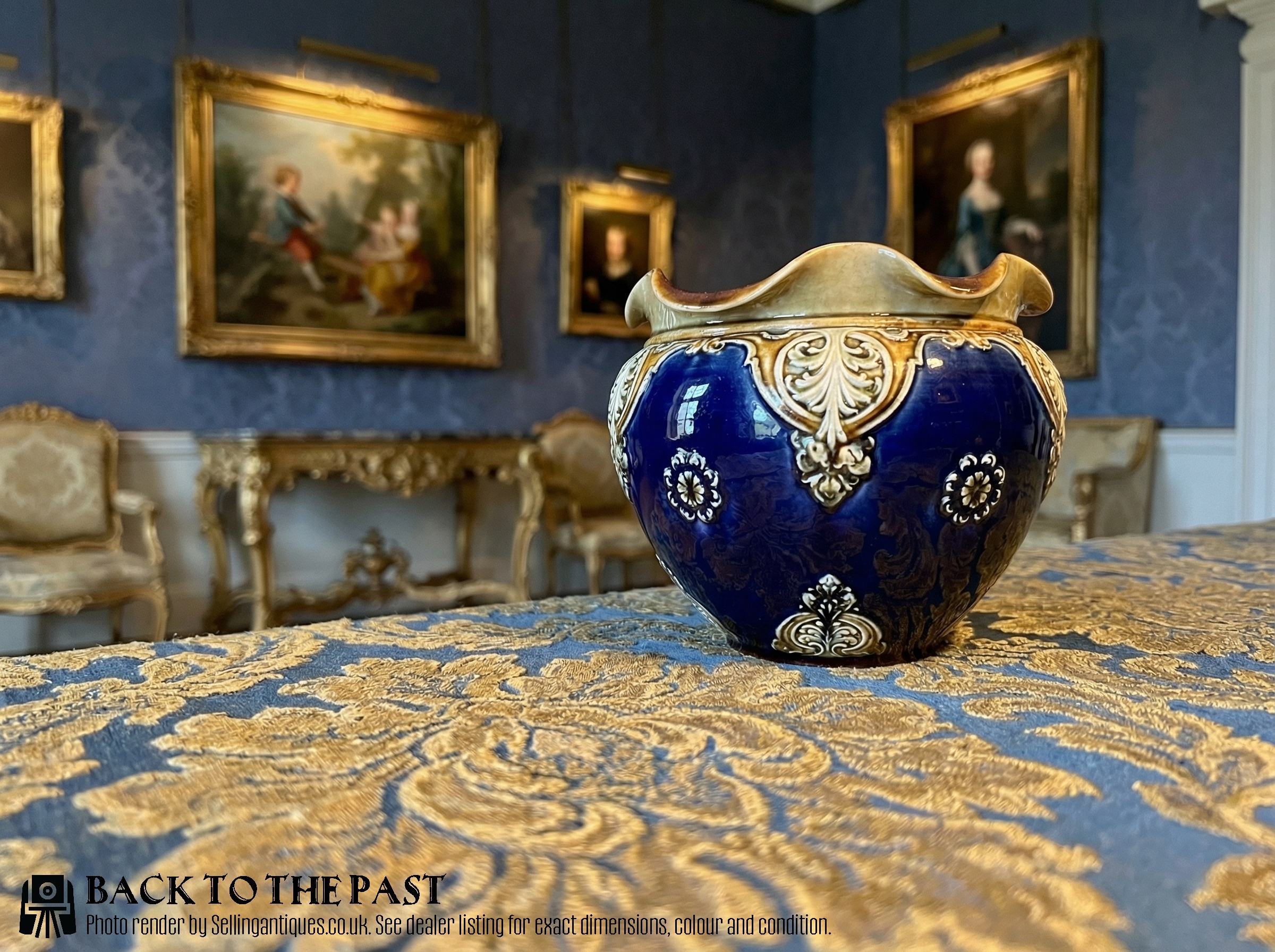
A doulton ceramic planter takes the form of a jardiniere, bonsai planter, or tree planter base intended for interior or conservatory display. These vessels emerge predominantly from the late nineteenth and early twentieth centuries, spanning Victorian, Edwardian, and Arts and Crafts periods.
The pieces you encounter on this page include works from notable workshops such as Doulton Lambeth and Doulton Burslem. Forms range from standard decorative jardinieres to specific models like Slaterware and trophy planters.
How they were made
Makers utilised durable stoneware and earthenware bodies, shaping them into robust vessels capable of holding soil and moisture. Potters applied specialised glazes, enamels, and occasional gold leaf accents to the ceramic surfaces.
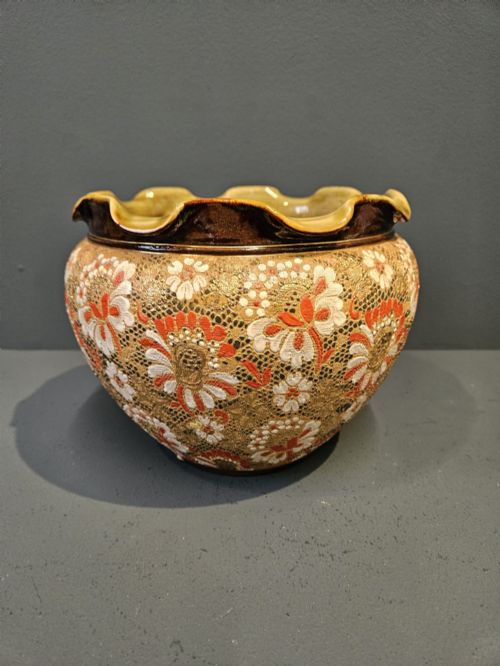
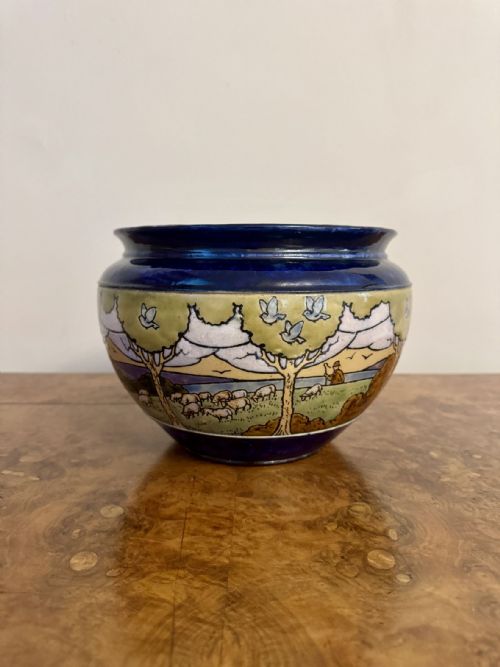
Decoration relied heavily on specialised techniques such as Slaterware texturing, alongside hand-painted designs executed by studio artists. These methods produced varied surface textures and rich colour palettes typical of the era.
Fishermen occasionally make an unexpected appearance on trophy planters.
What varies in quality
Quality rests upon the execution of the surface decoration and the clarity of the ceramic body. Pieces designed or painted by named studio artists command attention through finer detail and artistic expression.
The sophistication of the period style, whether Art Nouveau, Arts and Crafts, or Aesthetic Movement, influences the overall character of the vessel. The complexity of the glaze and the crispness of the moulded or incised patterns also set individual examples apart.
Doulton Lambeth·Doulton Burslem·Royal Doulton·Ethel Beard·Charles Noke
The Doulton Ceramic Planter Glossary
- Jardiniere
- A decorative ceramic pot or stand designed to hold a plant or flower arrangement. These vessels form the majority of the available selection.
- Stoneware
- A robust, vitrified ceramic fired at high temperatures to create a dense, waterproof body. This material forms the foundation of many durable Doulton pieces.
- Slaterware
- A ceramic technique involving the impression of lace or fabric textures into the clay body before firing. This creates a distinct patterned surface finish.
- Earthenware
- A porous pottery body fired at lower temperatures than stoneware, requiring a glaze to achieve impermeability. It appears across various nineteenth century examples.
- Arts and Crafts
- A design movement prioritising handcraftsmanship, natural materials, and simple forms. Pieces from this style often feature restrained, organic ornamentation.
Doulton Ceramic Planter: Frequently Asked Questions
What is a jardiniere?
A jardiniere is a large ceramic pot designed to hold potted plants rather than planting directly into the vessel.
They function primarily as decorative cachepots for interior display in living rooms or conservatories.
How do I date a Doulton piece?
Dating relies on identifying the period styles, such as Victorian or Edwardian, alongside specific factory marks.
Changes in the company name from Doulton Lambeth to Royal Doulton also help establish chronological placement.
What is Slaterware?
Slaterware is a distinct type of Doulton pottery featuring textured surfaces created by pressing lace into raw clay.
These pieces often combine rough, fabric-like textures with smooth, glazed floral sections.
Can I plant directly inside?
Most antique ceramic planters lack drainage holes because they were originally designed to function as cachepots.
Placing a plastic nursery pot inside protects the historic interior surface from moisture damage.