
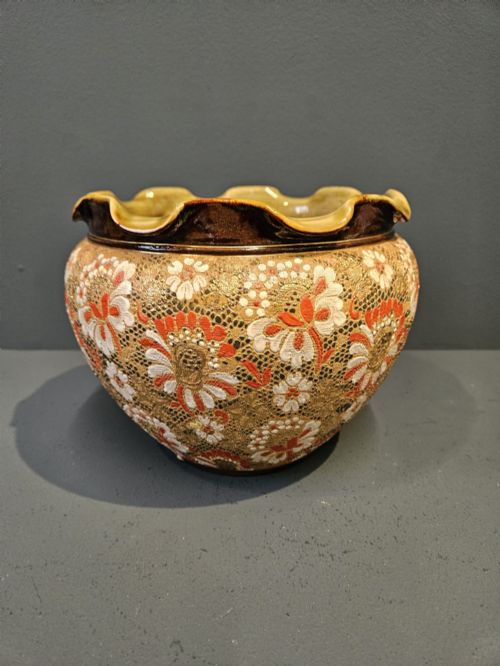
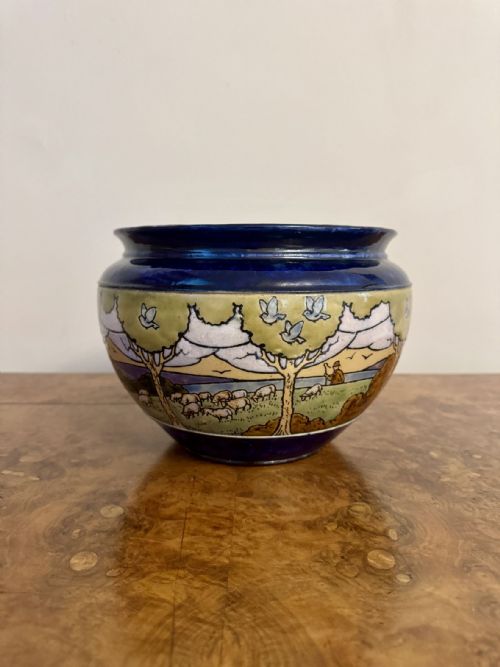


Doulton Lambeth Jardiniere
A doulton lambeth jardiniere brings heavy Victorian art pottery into the room, built for plant displays and holding the weight of late nineteenth century craft.
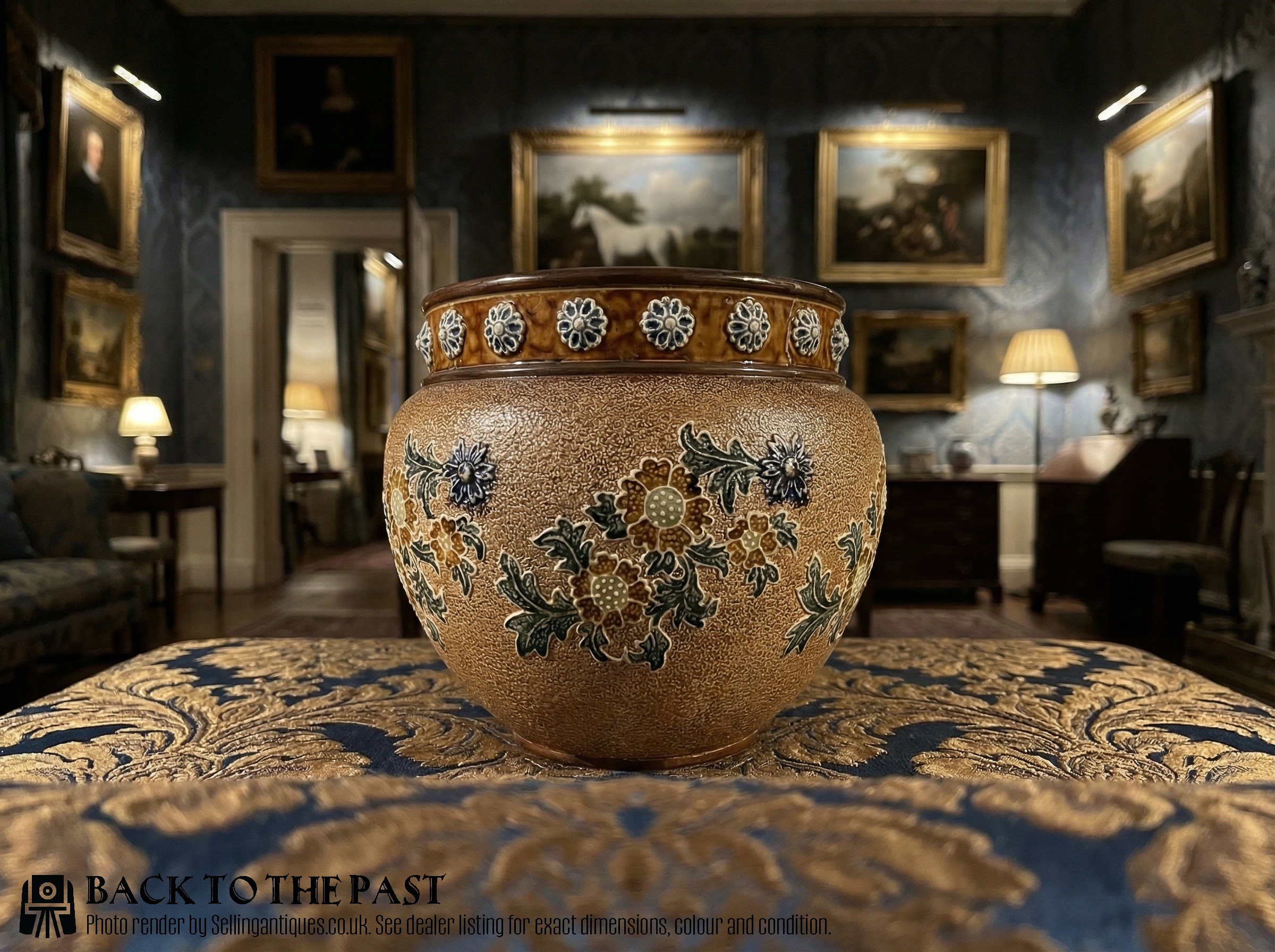
Doulton Lambeth Jardiniere
A doulton lambeth jardiniere is a glazed vessel designed for holding plants, emerging principally from the Victorian era and the Arts and Crafts movement. These planters range from simple rounded bodies to hexagonal forms and large tree planter bases intended for conservatories and patios.
Most pieces seen here belong to the late nineteenth and early twentieth centuries, spanning the eighteen-eighties through to nineteen-twenty. They bridge domestic horticulture and studio pottery, combining utilitarian function with decorative surface modelling.
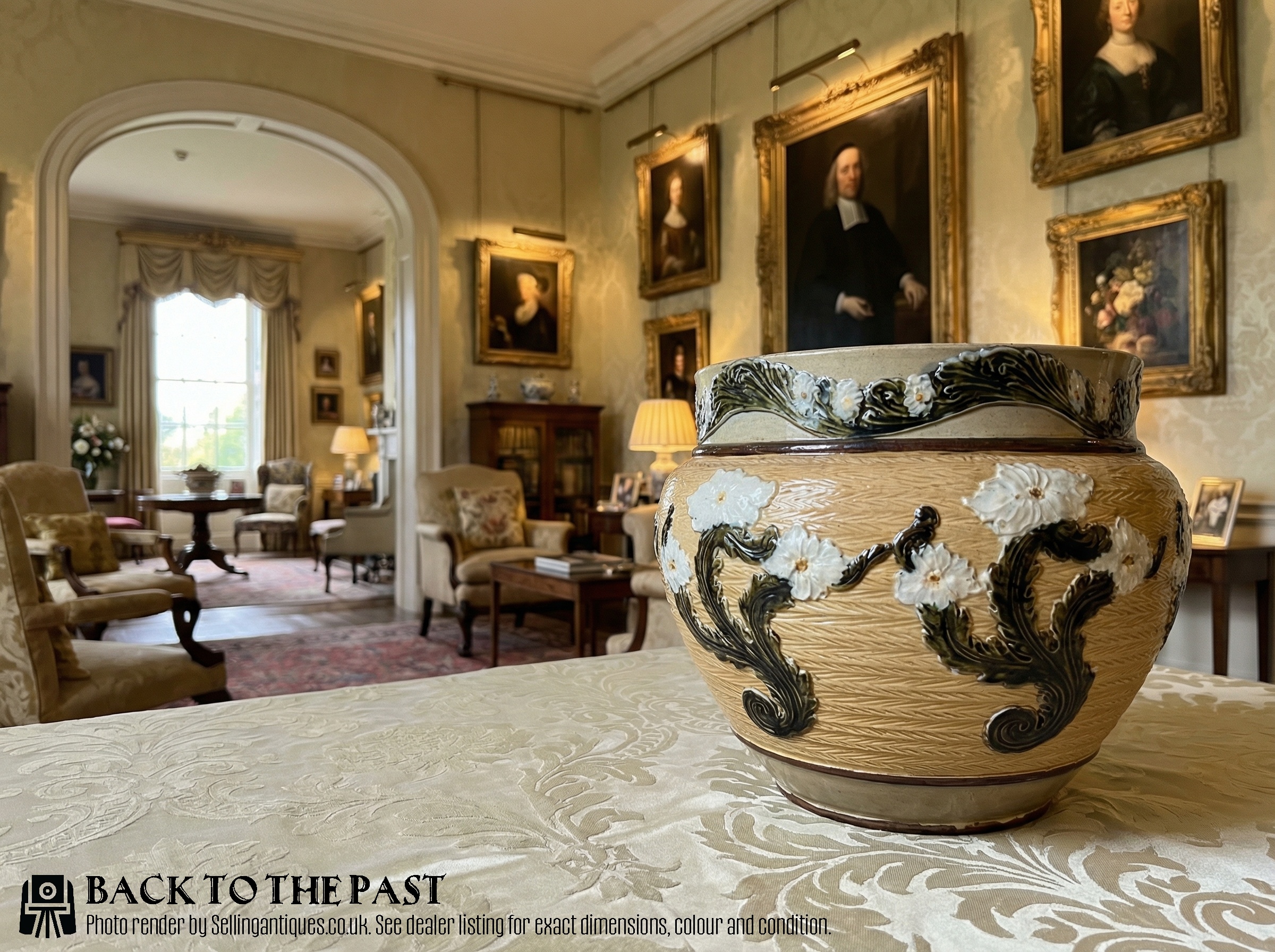
How they were made
Makers shaped these vessels from stoneware and earthenware, applying rich glaze treatments and enamel details directly to the clay body. Some pieces incorporate specialised surface techniques such as Slaterware or silicon ware, creating textured patterns across the exterior.
The decorative schemes rely on fired glazes and applied ornament rather than superficial paint. This integration of material and colour ensures the surface decoration remains resilient during daily use with plants and moisture.
Ethel Beard painted flowers while the Victorian era ticked away outside her studio window.
What varies in quality
Quality rests upon the crispness of the modelled ornament and the depth of the glaze. Pieces bearing specific artist signatures or distinct surface treatments demonstrate greater workshop ambition than standard production vessels.
Form dictates presence. Hexagonal shapes and heavily ornamented Victorian Arts and Crafts examples demand more technical skill from the potter than plain rounded planters, elevating the visual weight of the object.
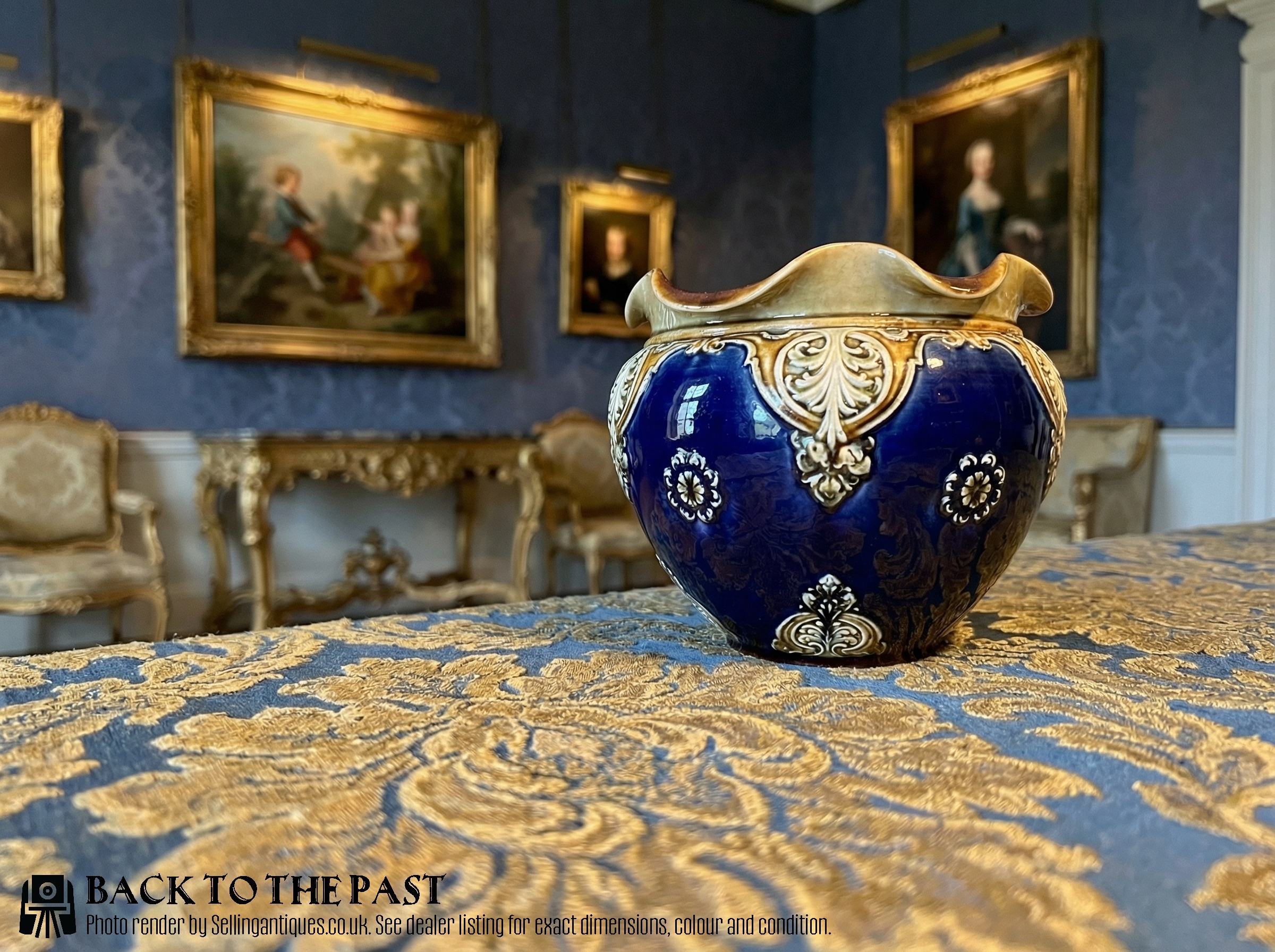
Ethel Beard·Royal Doulton·Doulton Lambeth
The Doulton Lambeth Jardiniere Glossary
- Jardiniere
- An ornamental ceramic pot or stand designed to hold a plant or floral display. These vessels sit on tables, floors, or plant stands.
- Stoneware
- A dense, hard ceramic fired at high temperatures until vitrified. This material holds water naturally and withstands heavy use.
- Slaterware
- A textured ceramic technique imitating lace or woven fabric pressed into the clay body before firing. It creates a distinctive patterned background.
- Silicon ware
- A specialised Doulton body type featuring contrasting matte and glazed textures. It developed during the late Victorian period.
- Arts and Crafts
- A design movement valuing handcraft, natural motifs, and traditional materials over mass industrial production. It heavily influenced late Victorian pottery.
Doulton Lambeth Jardiniere: Frequently Asked Questions
How do I use a jardiniere safely?
Place a smaller plastic pot inside the jardiniere to catch drainage water and protect the historic ceramic interior from moisture damage.
Keep the vessel away from heavy foot traffic where it might suffer knocks, as glazed stoneware is heavy and prone to chipping if dropped.
What periods do these pieces come from?
The available examples date primarily from the Victorian era, spanning the late nineteenth century through to the nineteen-twenties.
Styles shift from ornate Victorian decoration toward simpler Arts and Crafts forms as the decades progress into the twentieth century.
How do I identify Doulton pottery?
Look for factory stamps and impressed marks on the base of the vessel, which often indicate the specific workshop and production period.
Surface characteristics such as silicon ware or Slaterware textures also point directly to the Lambeth pottery methods.
Can I put these planters outdoors?
Most antique pieces are best kept indoors or within protected environments like orangeries and conservatories to prevent frost damage.
Heavy tree planter bases designed for patios handle outdoor placement better, provided they are emptied during freezing winter weather.