
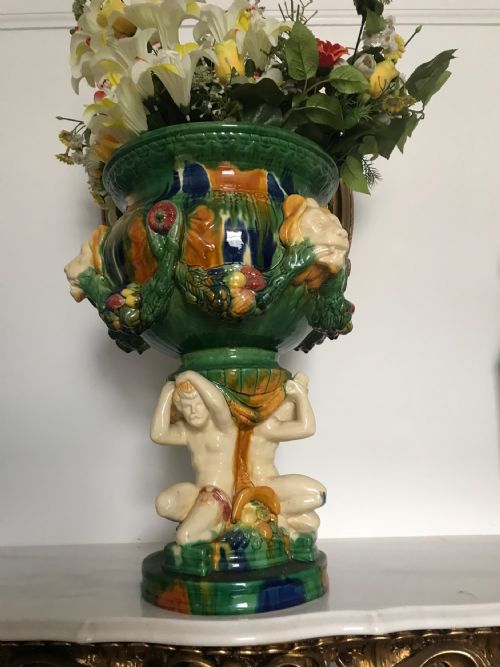


Majolica Jardiniere Stand
These majolica jardiniere stand pieces bring vibrant colour and sculptural botanical form to a room, holding large plants aloft with theatrical weight.
Majolica Jardiniere Stand
A majolica jardiniere stand combines a large plant vessel with a matching pedestal base, designed to display indoor foliage at height. These objects emerge most frequently from the nineteenth century into the Edwardian era, spanning Victorian, Art Nouveau, and Italian Renaissance Revival aesthetics.
Buyers encounter single monumental columns supporting figural bowls alongside matched pairs intended for flanking doorways or hearths. The forms range from naturalistic tree trunks and water lilies to architectural columns adorned with lions and griffins.
How they were made
Potters shaped these substantial pieces from earthenware, terracotta, and faience, building structural pedestals and generous bowls to bear heavy soil. Artisans then applied opaque tin or lead glazes over moulded relief decoration, fusing metallic oxides to create deep greens, blues, and ochres.
Firing these large ceramics required immense skill in kiln management to prevent sagging and glaze crawling across complex surfaces. Lustre glazes and specialised earthenware bodies further distinguish the finishing techniques of workshops across England, France, and Italy.
Victorian households expected flora to look somewhat dramatic, hence swans and griffins holding up the ferns.
What varies in quality
The distinction between ordinary production and superior work rests on the crispness of the moulded relief and the richness of the glaze pooling. Pieces from notable potteries display controlled, vibrant colour application that accentuates naturalistic or architectural motifs without muddying the contours.
Structural ambition separates standard plant pedestals from exceptional figural stands incorporating lions, griffins, or swans. The harmony between the upper bowl and its matching base dictates the overall visual impact of the composition.
Clement Massier·Julius Dressler·Burmantofts·Minton·Sarreguemines·Woodlesford
The Majolica Jardiniere Stand Glossary
- Majolica
- A type of pottery covered with an opaque tin-lead glaze and painted with metallic oxide colours. This technique produces brilliant hues and a glossy surface that withstands moisture.
- Jardiniere
- A large ornamental pot or container for plants and flowers. These vessels often sit directly upon matching ceramic pedestals.
- Faience
- Tin-glazed earthenware produced in Europe, closely related to majolica traditions. The term frequently applies to nineteenth-century art pottery outputs.
- Lustre glaze
- A metallic finish applied to ceramics that creates an iridescent sheen when fired in a reduced oxygen atmosphere. Clement Massier utilised this technique on earthenware.
- Pedestal
- A structural column or support base elevating a jardiniere. These columns often feature elaborate moulding matching the bowl above.
Majolica Jardiniere Stand: Frequently Asked Questions
How do I spot a matched set?
Examine the glaze pooling, clay body, and moulding sharpness on both the upper bowl and the base beneath it. True pairs or matched assemblies share identical coloration and firing characteristics.
Manufacturers often used matching mould numbers or factory culls to ensure the jardiniere and its pedestal harmonized visually.
Where should I place a stand?
Position these heavy ceramic stands in well-lit halls, drawing rooms, or orangeries where their height and vibrant glazes command attention. Ensure the floor surface is level and robust enough to bear the combined weight of wet soil and dense earthenware.
Keep them away from high-traffic walkways where accidental impacts might chip the protruding moulded relief decoration.
Can these hold live plants?
These vessels were built specifically to house potted plants, though moisture can occasionally seep through older porous earthenware bodies. Modern practice involves placing a hidden plastic liner inside the jardiniere bowl to protect the historic interior glaze.
Avoid planting directly into unglazed interior sections to prevent mineral salts from damaging the ceramic over time.
How do I distinguish Art Nouveau?
Art Nouveau examples feature flowing organic lines, water lily motifs, and stylized plant stems rather than strict architectural revival columns. Look for whiplash curves and harmonious, nature-inspired colour palettes typical of the period around nineteen hundred.
These pieces often pair fluid bowl designs with tapering pedestals that mimic natural stalks or stems.