


Brown Ceramic Jardiniere
These brown ceramic jardiniere pieces are heavy plant vessels designed to display indoor foliage, combining practical weight with rich decorative glazes.
Brown Ceramic Jardiniere
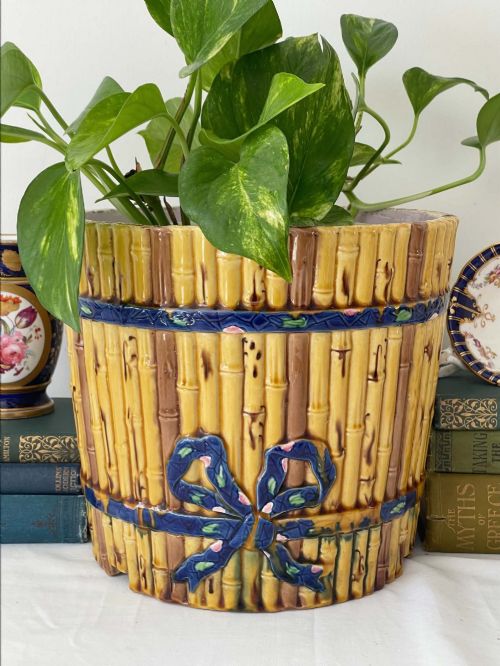
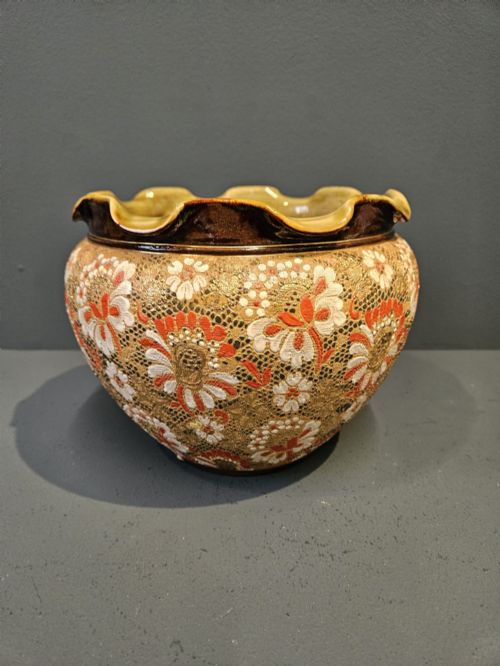
A brown ceramic jardiniere serves as a decorative pot for indoor plants, taking forms from the Victorian, Arts and Crafts, and Art Nouveau periods. These items range from naturalistic designs mimicking bamboo and rustic elements to large earthenware planters produced by prominent potteries.
Most examples found here date from the nineteenth century into the early twentieth century, spanning earthenwares, stonewares, and glazed ceramics. Buyers encounter styles featuring majolica influences, faience finishes, and heavy salt-glazed or brown-toned surfaces suitable for holding large flora.
Materials and construction methods
These vessels employ heavy earthenware and stoneware bodies shaped to withstand the moisture and weight of soil and plants. Potters built these bodies using robust clay preparations suited to large vessels like jardiniere planters and log bins.
The characteristic brown surfaces rely on applied glazes, including majolica and faience techniques, which provide deep colour and protective waterproof finishes. Many pieces incorporate moulded or incised details such as naturalistic plant motifs, bamboo stalks, and double handles.
One robust nineteenth-century ceramic vessel doubles happily as a traditional log bin by the fireplace.
Assessing quality and craftsmanship
Quality in a brown ceramic jardiniere rests upon the crispness of the moulding, the depth and consistency of the glaze, and the artistic ambition of the pottery. Pieces associated with notable workshops demonstrate superior control over complex firing processes and decorative techniques.
The refinement of the surface finish and the balance of the form distinguish standard utility items from ambitious decorative pieces. Superior examples exhibit deliberate handling of naturalistic textures and clean execution of handles and rims.
Minton Majolica·Doulton Lambeth·Doulton Burslem·Julius Dressler·Linthorpe Pottery
The Brown Ceramic Jardiniere Glossary
- Jardiniere
- A large decorative pot or stand designed to hold growing plants indoors. They often sit directly on floors, tables, or specialised plant pedestals.
- Majolica
- A type of earthenware coated with an opaque tin glaze and painted with metallic oxide colours. It produces vibrant, glossy surfaces found on many nineteenth-century pieces.
- Faience
- Tin-glazed earthenware originating in Europe, often featuring hand-painted or slip-decorated designs. Victorian examples frequently utilise this term for art pottery productions.
- Stoneware
- A robust, vitrified pottery body fired at high temperatures until impervious to liquids. It forms durable vessels that require minimal internal glazing.
- Earthenware
- Porous pottery fired at lower temperatures, commonly used for traditional planters and jardiniere forms before being sealed with glazes.
Brown Ceramic Jardiniere: Frequently Asked Questions
How do I use a jardiniere safely?
Place a plastic liner or saucer inside the vessel to catch drainage water and protect the historic ceramic interior from moisture damage.
Ensure heavy pieces rest on stable surfaces like side tables or dedicated plant stands designed to bear substantial weight.
What periods do these planters represent?
The selection spans the nineteenth and early twentieth centuries, capturing Victorian, Arts and Crafts, and Art Nouveau movements.
Dates generally range from the 1870s through to the 1930s, reflecting changing tastes in interior decoration and pottery manufacturing.
Are all these pieces waterproof?
Stoneware and heavily glazed ceramics generally resist water well, though older earthenware bodies can remain porous beneath the glaze.
Using a protective inner container prevents moisture from seeping through unglazed interior seams or historical hairline faults.