


Antique Stoneware Jardiniere Pot
These antique stoneware jardiniere pot examples are sturdy indoor plant vessels that bring rich texture and period character to any room.
Antique Stoneware Jardiniere Pot
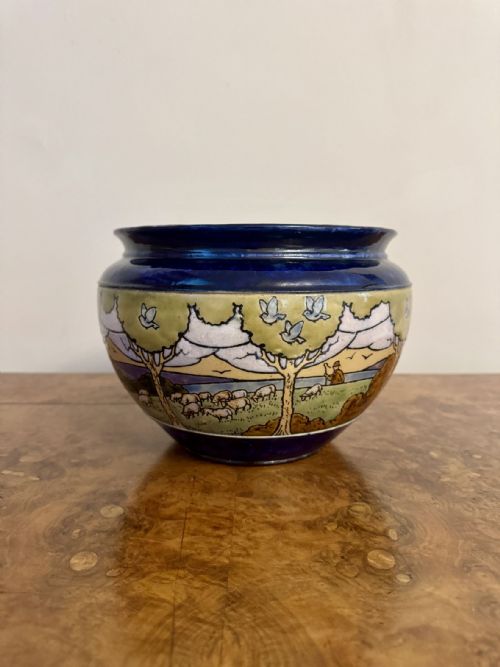
When you search for an antique stoneware jardiniere pot, you are looking at heavy ceramic vessels designed to hold potted plants indoors or on patios. The selections here span the Victorian era, the Arts and Crafts movement, and the Meiji period, showing considerable variety in form and origin.
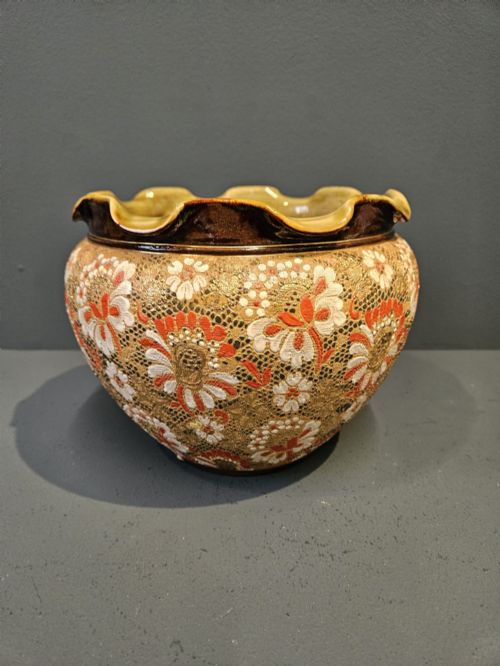
You are most likely to encounter English stoneware pots from the late nineteenth and early twentieth centuries, particularly productions by Doulton Lambeth. These pieces often feature textured bodies, applied decoration, or rich glaze work suited for interior display.
Alongside British items, the range includes Japanese stoneware jardinieres and specific earthenware pieces such as cache pots with stands. Forms vary from compact table versions to large tree planter bases intended for conservatories and orangeries.
How they were made
Makers utilised dense clay and stoneware bodies fired at high temperatures to ensure durability and water resistance. Salt glazing and specialised enamel treatments created hard, impermeable surfaces that protected the porous material beneath.
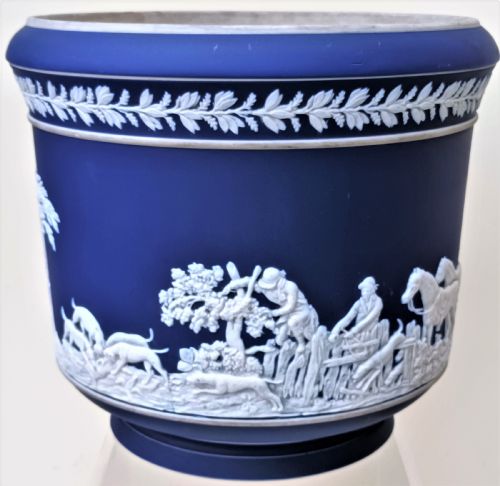
Decoration techniques included hand-thrown profiling, applied relief moulded motifs in jasperware, and intricate surface texturing such as Slaterware. Artisans applied coloured glazes by hand before the final kiln firing to achieve mottled or uniform surface finishes.
Some nineteenth-century makers pressed actual lace into damp clay before firing to capture textile textures permanently in stone.
What varies in quality
Quality rests upon the clarity of the moulded relief work and the evenness of the glaze application across the body. Superior examples display crisp definition in applied patterns and harmonious colour palettes without distracting kiln flaws.
The reputation of the studio or pottery marks out the finer specimens, with recognised makers achieving greater precision in throwing and surface decoration. Weight, wall thickness, and structural stability also distinguish robust showroom pieces from ordinary utility wares.
William Adams and Sons·Makuzu Kozan II·Ethel Beard·Enoch Wood and Sons
The Antique Stoneware Jardiniere Pot Glossary
- Stoneware
- A robust ceramic pottery type fired at high temperatures until vitrified and rendered non-porous. It provides a heavy, durable body suitable for holding damp soil.
- Jardiniere
- A large ornamental pot or container designed to hold a live plant or flower arrangement. They generally sit on tables, plant stands, or directly on the floor.
- Jasperware
- A type of fine stoneware pioneered by English potteries, featuring a matte unglazed exterior body with contrasting applied white relief decorations. It appears in blue and other subtle background shades.
- Cache pot
- A decorative flowerpot cover used to conceal a plain inner growing pot and catch drainage water. They often accompany matching stands or saucers.
- Slaterware
- A specific ceramic texturing technique mimicking the appearance of woven wicker or lace pressed into the damp clay surface before firing. It gained popularity during the late nineteenth century.
Antique Stoneware Jardiniere Pot: Frequently Asked Questions
Can I plant directly inside these pots?
Most of these ceramic and stoneware vessels hold moisture well, but older pots can sometimes be porous or lack drainage holes. Using a plastic nursery liner inside the jardiniere protects the antique interior from constant dampness and mineral buildup.
Place a small saucer or protective pad beneath the vessel when displaying it on wooden furniture to catch any condensation or seepage.
How do I clean an antique jardiniere?
Wash the surface gently using warm water and a soft cloth to remove dust and surface soil. Avoid harsh chemical cleaners or abrasive scouring pads that can damage historic glazes or delicate applied reliefs.
Allow the piece to dry thoroughly after cleaning, particularly if it has unglazed areas or historic hairline marks that might trap moisture.
Where should I place a heavy jardiniere?
Position large stoneware and earthenware pieces on sturdy surfaces, low plant stands, or directly on the floor where they will not be easily knocked. Orangery and patio planters suit bright, sheltered indoor environments away from severe frost.
Ensure the floor or table can support the combined weight of the heavy ceramic vessel, damp soil, and the plant itself.
How do I identify a Victorian piece?
Look for characteristic design motifs such as naturalistic foliage, rich salt glazes, or stamped factory marks associated with late nineteenth-century British potteries. The weight and density of the clay body often point toward nineteenth-century manufacturing methods.
Compare the decorative style against documented periods like the Arts and Crafts movement or Japanese Meiji period to confirm the likely production era.