
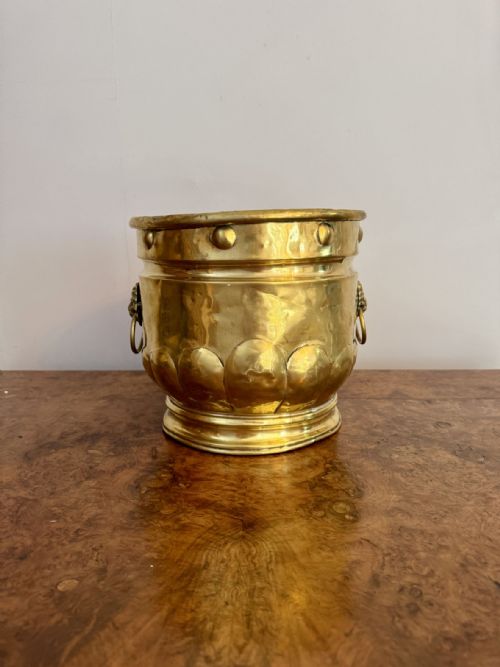
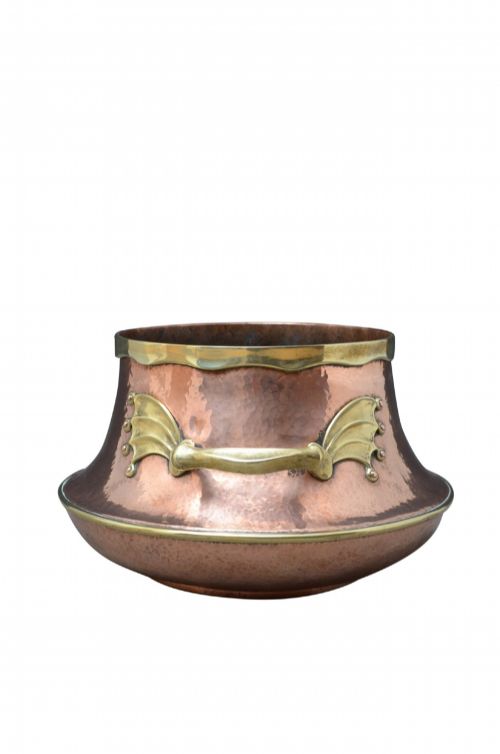


Large Indoor Planter
A large antique indoor planter brings architectural presence to a room, housing houseplants within historic brass, copper, ceramic or walnut vessels.
Large Indoor Planter
A large antique indoor planter takes the form of a jardiniere, a plant stand, a log bin or a watering can, designed to hold vegetation within domestic interiors. When you search for a large antique indoor planter, you encounter pieces spanning the nineteenth century into the early twentieth century, including Victorian, Edwardian and Regency eras.
The objects on this page originate from diverse design traditions, ranging from Arts and Crafts and Art Nouveau to Chinoiserie, Anglo-Indian and French Chateau styles. Materials vary widely between metals and woods, taking shape as heavy brass vessels, hammered copper containers, carved walnut bodies and glazed ceramic majolica pieces.
Jardinieres dominate the selection, often accompanied by matching pedestals, stands or companion watering cans. Many examples serve secondary functions as log bins or waste vessels, demonstrating the adaptable nature of these nineteenth-century containers.
How they were made
Makers utilised durable metals like brass and copper, shaping them through hand-engraving, hammering and joining techniques to create watertight vessels. Woodworkers carved walnut and satin walnut into structural forms, sometimes applying faux bois finishes or intricate decorative motifs.
Ceramic pieces rely on glazed earthenware and porcelain, exemplified by majolica pottery fired with rich coloured glazes. Internal zinc liners frequently protect wooden and metal structures from moisture damage associated with living plants.
Materials span brass, copper, glazed ceramic, earthenware, porcelain, walnut and zinc across Victorian, Arts and Crafts and Art Nouveau styles.
What varies in quality
Quality rests upon the depth and crispness of hand-engraving on brass and copper, alongside the weight and gauge of the metal used in the body. Superior wooden planters display expert cabinetmaking, such as carved walnut with sound structural joins and well-preserved surface finishes.
Ceramic examples achieve distinction through the vibrancy and coverage of the majolica glaze and the integrity of any associated stands or pedestals. The presence of original internal liners and matching pairs elevates the standing of an individual piece.
The Large Indoor Planter Glossary
- Jardiniere
- An ornamental pot or stand for holding plants or flowers indoors. This French term appears frequently in nineteenth-century British household inventories.
- Majolica
- A type of earthenware decorated with opaque coloured glazes over a fired white background. It gained immense popularity during the Victorian period for decorative planters.
- Faux bois
- A form of decorative painting or carving that imitates natural wood grain. Victorian artisans applied this technique to create rustic garden and indoor effects.
- Chinoiserie
- European artistic styles reflecting Chinese motifs and techniques. Pieces in this style often feature painted or incised oriental scenes on ceramic bodies.
- Anglo-Indian
- Descriptive of items made in India during British rule, combining British furniture forms with traditional Indian craftsmanship such as hand-engraved brass.
Large Indoor Planter: Frequently Asked Questions
What is a jardiniere?
A jardiniere is simply a large ornamental pot or vessel designed to hold growing plants inside a house. The term derives from the French word for gardener.
In British homes, these vessels sat on tables, floors or dedicated pedestals to display palms, ferns and floral arrangements.
Can I plant directly inside them?
Many antique metal and ceramic planters accommodate soil directly, though moisture can accelerate corrosion in unlined metal vessels. Walnut and other wooden examples typically require an internal liner to prevent water damage.
Using a potted plant inside a plastic or ceramic pot placed within the antique vessel protects the historic material from dampness.
How do I date an antique planter?
Dating relies on stylistic markers, construction methods and materials associated with specific design periods like the Victorian, Edwardian or Regency eras. Arts and Crafts and Art Nouveau pieces display characteristic motifs from the turn of the twentieth century.
Hand-hammered surfaces, dovetail joints in wood and specific maker marks or registration numbers help narrow down the decade of manufacture.
Where should I place a large planter?
These large vessels suit entryways, reception halls and living rooms where floor space permits an architectural focal point. Brass and copper variants catch natural light near windows, while walnut and majolica pieces anchor room corners.
Ensure the surface supports the considerable weight of heavy metal or ceramic vessels, especially when filled with damp soil.