


Victorian Pottery Jardiniere
A victorian pottery jardiniere brings nineteenth-century horticulture indoors, offering a robust ceramic vessel designed to display indoor ferns and potted palms.
Victorian Pottery Jardiniere
A victorian pottery jardiniere is a heavy ceramic plant holder, frequently encountered on this page as a standalone pot or paired with a matching pedestal stand. These pieces date predominantly from the late nineteenth century, spanning the Victorian and Edwardian eras.
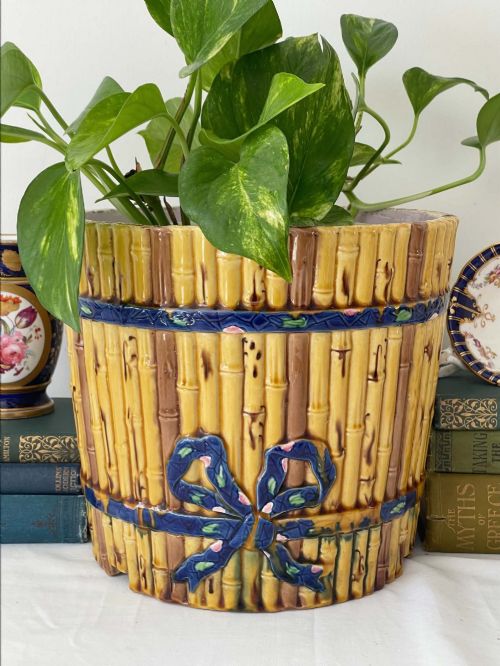
Makers utilised various clay bodies, shaping them into standard round vessels or naturalistic forms such as bamboo and tree bark. Many examples incorporate decorative handles or rest upon integrated griffin supports.
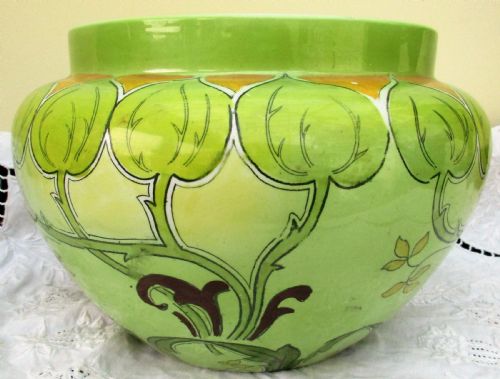
The inventory demonstrates a strong presence of majolica glazes alongside art pottery designs from British and continental potteries. Buyers often select these vessels to house substantial indoor foliage in keeping with period domestic interiors.
Materials and technique
Potters shaped earthenware and stoneware bodies, often applying thick coloured glazes to achieve rich green, blue, and brown surfaces. Majolica techniques allowed oxides to pool in relief details, creating depth across floral and naturalistic motifs.
Faience and salt-glazed ceramic methods appear alongside specialised lustre finishes, particularly on continental works. Artisans also employed jasperware techniques for matte relief decoration against contrasting coloured backgrounds.
The inventory spans Victorian and Edwardian periods, including pieces dated to the 1870s, 1880s, 1890s, and 1900.
Judging quality
Quality rests in the crispness of the moulded relief and the depth of the glaze application. Superior pieces display controlled colour blending and sharp detailing on naturalistic elements like bamboo or foliage.
The presence of factory marks and named artists elevates certain vessels, distinguishing standard commercial output from distinguished studio and art pottery productions.
Minton·W.A. Adderley·Burmantofts·Doulton Burslem·Doulton Lambeth·Clement Massier·Julius Dressler·George Jones·William Adams and Sons·Linthorpe Pottery
The Victorian Pottery Jardiniere Glossary
- Jardiniere
- An ornamental pot or receptacle used for holding flowers or indoor plants. These ceramic vessels sit directly on tabletops or floor stands.
- Majolica
- A type of earthenware covered with an opaque tin glaze and painted with metallic oxide colours. It is noted for bright hues and raised decorative mouldings.
- Faience
- Earthenware decorated with colourful opaque glazes, often associated with art pottery traditions. The term covers various glazed ceramic wares produced across Europe.
- Jasperware
- A fine-grained, unglazed stoneware developed in the eighteenth century, featuring white relief figures applied to a coloured ceramic background.
- Pedestal
- A supporting column or base designed to elevate a jardiniere. These stands are frequently potted in matching ceramic styles and glazes.
Victorian Pottery Jardiniere: Frequently Asked Questions
What is a jardiniere?
A jardiniere is a decorative ceramic pot designed to hold potted plants and large indoor ferns. They provide a sturdy, waterproof vessel for nineteenth-century interior greenery.
Unlike standard flower pots, these decorative containers were made to sit visibly in reception rooms and parlours. They often rest on matching ceramic pedestals to elevate the foliage.
How do I use a jardiniere?
Place a potted plant directly inside the jardiniere, using a saucer beneath the inner pot to catch drainage water. This protects the historic interior glaze from moisture damage.
They function well on sturdy tables, sideboards, or floor stands where their decorative glazes are fully visible. Large examples suit heavy floor-standing palms and ferns.
How do I date these pieces?
Dating relies on factory stamps, impressed registration numbers, and stylistic markers such as art nouveau curves or naturalistic majolica finishes. Victorian pieces typically exhibit heavy earthenware bodies and rich, pooled glazes.
Comparing design motifs with known manufacturer records helps narrow the production window. Many pieces carry specific period date marks or artist ciphers.
What is majolica pottery?
Majolica is a style of earthenware characterised by colourful lead glazes applied over moulded relief decoration. The glazes pool in the recesses, creating intense tonal contrasts.
This technique was immensely popular for Victorian planters and jardiniere stands. It offered durability alongside vibrant, glossy visual appeal.