



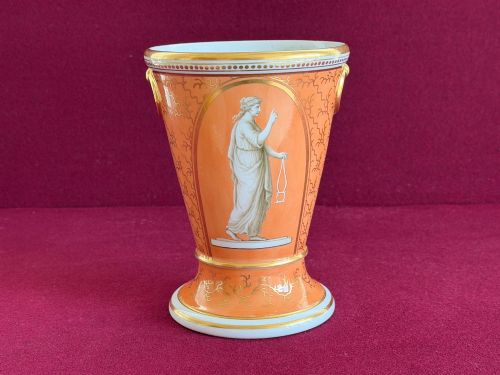
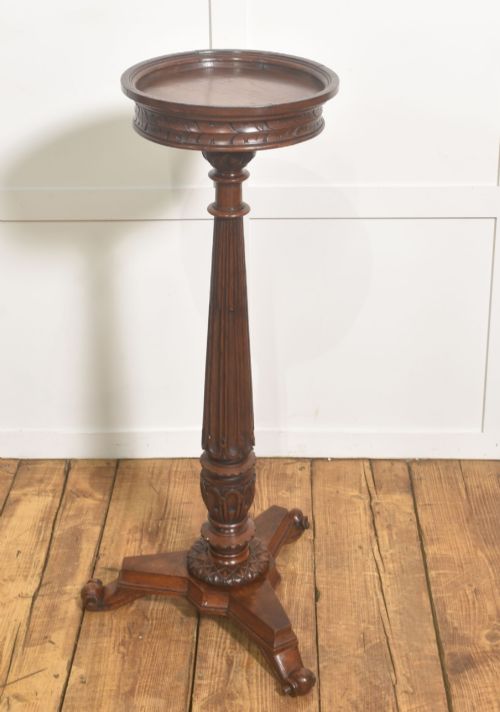
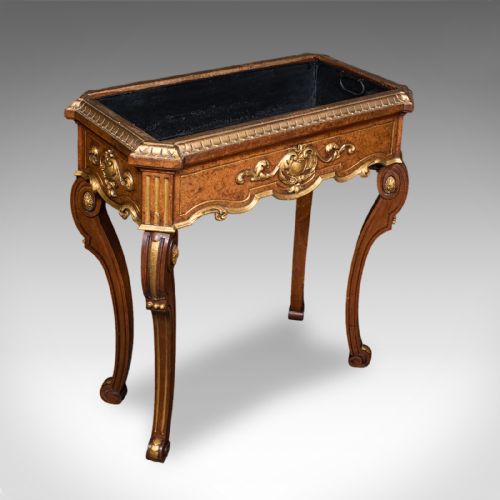


Nineteenth Century Jardiniere
When you handle a nineteenth century jardiniere, you hold a vessel built to bring growing plants indoors with decorative weight.
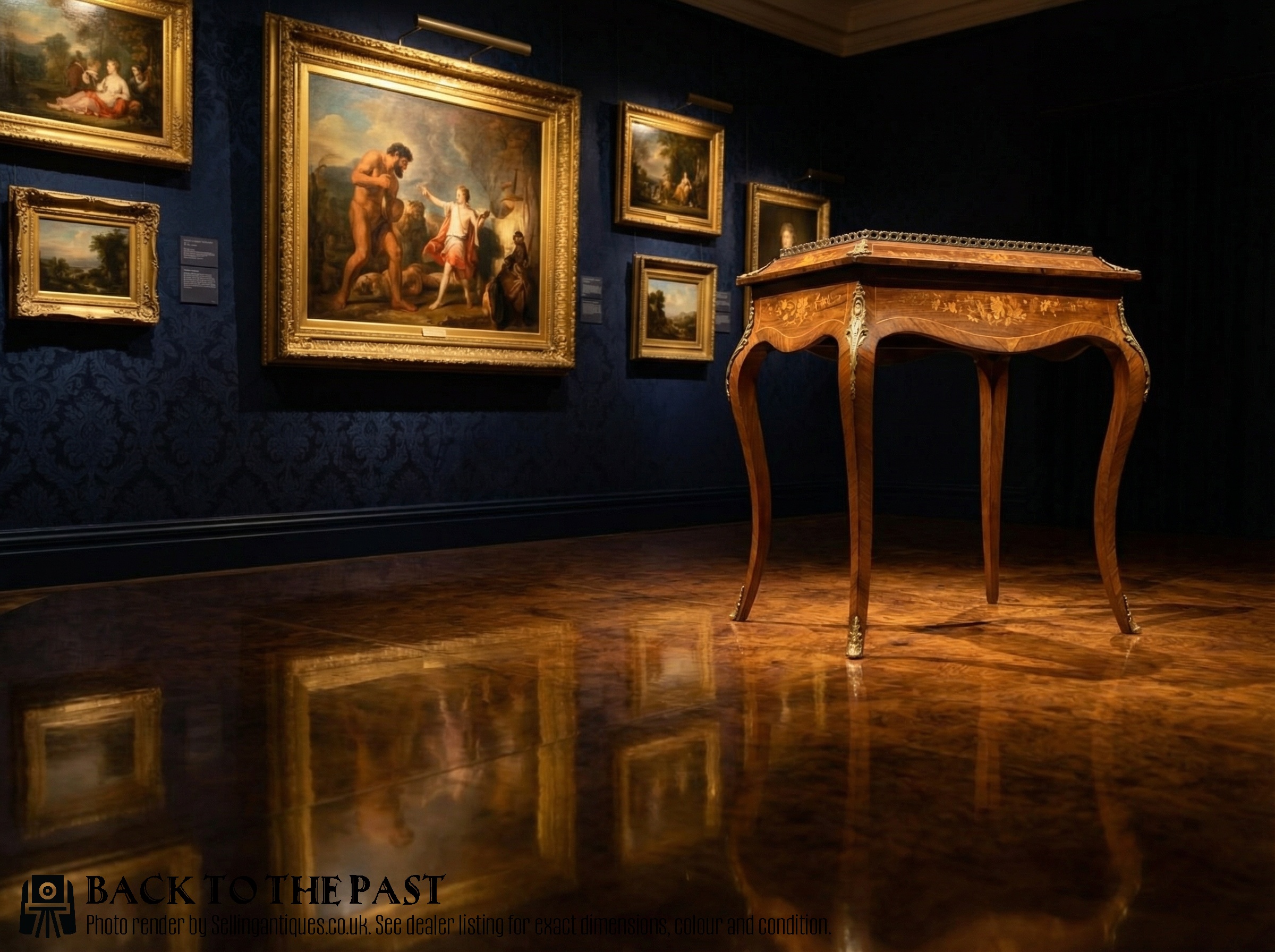
Nineteenth Century Jardiniere
A nineteenth century jardiniere encompasses a diverse range of plant vessels, planter tables, and stands designed to hold interior flora. These objects emerge from various origins, spanning French Empire and Napoleon III workshops to English Victorian parlours and Japanese Meiji production.
The most frequent examples on this page combine wooden stands in walnut, mahogany, or ebonised timber with metal liners, porcelain bodies, or marble tops. Buyers encounter everything from low ceramic bowls to tall floor-standing pedestals and side tables fitted with planting inserts.
Materials and Construction
Maker construction relies heavily on cabinet timbers like walnut and mahogany, often enhanced by marquetry inlay, kingwood veneers, or brass stringing. Metal components incorporate cast brass, ormolu mounts, silvered bronze, and heavy copper-bound staves for coopered buckets.
Ceramic and stone elements introduce majolica, faience, porcelain, and inset marble slabs to handle moisture and weight. Bronze casting and hand-carved hardwoods complete the structural vocabulary found across these pieces.
Nineteenth Century Jardiniere Retail Price Guide 2026
Typical asking prices for nineteenth century jardiniere among the pieces listed under this phrase on Sellingantiques today, from the lower quarter to the upper quarter. They describe what is for sale here now, not the wider market.
Some nineteenth century plant buckets started life warming tea leaves before finding a second career holding ferns.
Craftsmanship and Proportion
Quality rests in the crispness of the bronze mounts, the tightness of coopered wooden staves, and the precision of marquetry or parquetry patterns. Superior examples maintain structural integrity despite historical exposure to damp soil and water.
Proportion and material harmony separate ordinary production from exceptional items. Fine pieces balance the weight of marble tops or heavy bronze bowls with stable, well-balanced pedestals and stands.
Flight And Barr Worcester·Lerolle Fres·Woodlesford Art Pottery·Wedgwood
The Nineteenth Century Jardiniere Glossary
- Jardiniere
- A decorative pot or stand designed to hold a plant or floral arrangement inside a room. The term stems from the French word for gardener.
- Ormolu
- Gilded bronze mounted onto furniture, ceramics, or decorative vessels as ornamental trim. This technique was widely employed in French Napoleon III and Empire pieces.
- Majolica
- Heavy earthenware covered with an opaque tin-glaze and painted with bright colours. It gained immense popularity for Victorian and continental planter bowls.
- Boulle
- Marquetry technique utilising tortoiseshell and brass inlaid in ornate scroll patterns. It defines luxurious French cabinetwork from the nineteenth century.
- Coopered
- Wood construction formed from vertical staves bound by metal hoops, similar to barrel-making. This method kept peat and moisture contained in early tea stoves and plant buckets.
Nineteenth Century Jardiniere: Frequently Asked Questions
How were nineteenth century jardinieres originally used?
These vessels sat in drawing rooms and parlours to display potted ferns, palms, or cut flowers without damaging fine furniture surfaces.
Many incorporated metal liners or lead inserts to catch drainage water from the soil inside.
Can I still plant directly inside them?
Using a separate plastic pot inside the original metal or ceramic liner protects the historic materials from moisture damage and rot.
Direct planting risks water seepage that can stain wood or rust antique iron and brass components.
How do I tell French styles apart from English ones?
French pieces often feature gilt bronze mounts, kingwood veneers, and elaborate marquetry inspired by Louis XV or Napoleon III revivals.
English equivalents tend to focus on solid walnut, mahogany, or carved brass with more restrained aesthetic or Victorian proportions.
What is the difference between a jardiniere and a plant stand?
A jardiniere is primarily the bowl or bucket meant to hold the plant itself, while a plant stand is the tall pedestal or table supporting it.
Many surviving nineteenth-century examples combine both functions into a single integrated furniture piece.