



Green Ceramic Planter
These green ceramic planters bring rich glazes, botanical forms, and historic craftsmanship directly into your home.
Green Ceramic Planter
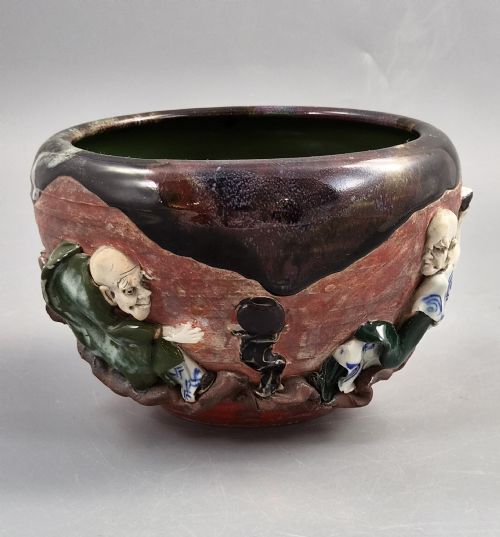
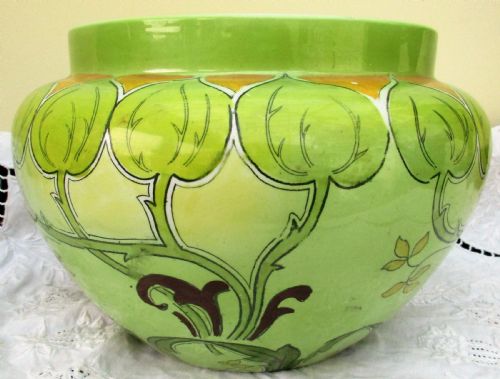
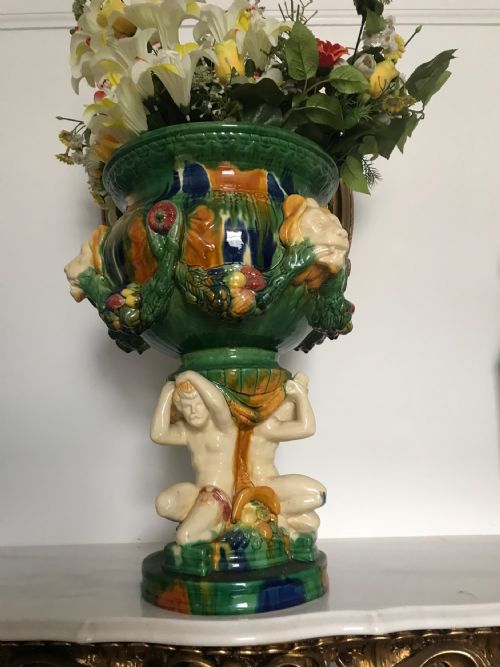
A green ceramic planter serves as a vessel for greenery, drawing on traditions ranging from Victorian majolica and Art Nouveau earthenware to Japanese Meiji period pottery.
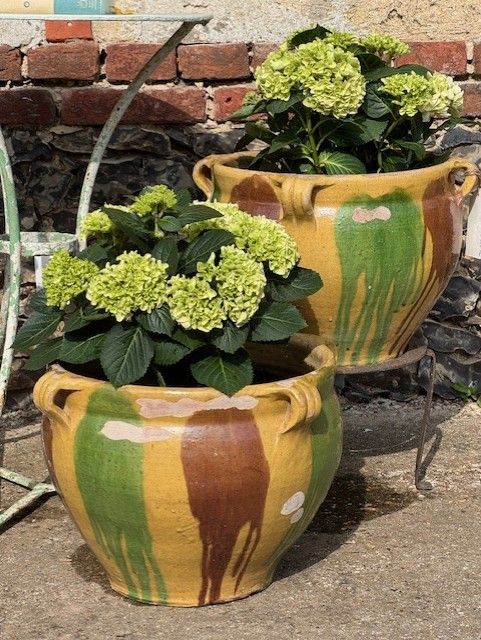
The objects listed include jardinieres, large stands, decorative bowls, and confit jars, reflecting diverse forms across the nineteenth and twentieth centuries.
Makers and regional potteries from England, France, Italy, Japan, and Scotland provide distinct aesthetic interpretations, often pairing botanical motifs with rich green glazes.
Materials and construction techniques
Potters shaped these pieces using earthenware, terracotta, and porcelain, frequently applying heavy dripped, blush ivory, or majolica glazes to achieve characteristic green colouration.
Techniques range from handmaking and figural relief moulding to intricate brush washing and the application of gold leaf accents.
Several planters come accompanied by tiny climbing figures or roaring lions' heads to keep watch over your ferns.
Distinctions in quality and execution
The standard of a green ceramic planter relies on the depth and complexity of the glaze, whether through fluid dribble effects or detailed majolica work.
Quality also shows in the crispness of figural reliefs, such as climbing figures or lions' head decorations, and the structural integrity of associated stands and bases.
Inoue Ryōsai·W.A. Adderley·Royal Worcester·Minton·Julius Dressler·Royal Doulton·Copeland·Eichwald·Meissen
The Green Ceramic Planter Glossary
- Jardiniere
- A large ornamental pot or stand for holding plants or flowers. These vessels often feature decorative handles or figural bases.
- Majolica
- A type of earthenware decorated with opaque coloured glazes over a whitish background. It is known for vibrant tones and relief decoration.
- Earthenware
- Porous pottery fired at relatively low temperatures, requiring a glaze to become impermeable to water. It forms the base of many historic planters.
- Terracotta
- Unglazed or glazed fired clay of a brownish-red colour, frequently used for large garden jars and confit vessels.
- Secessionist
- A style associated with Central European art movements rejecting historicism in favour of stylised, organic forms.
Green Ceramic Planter: Frequently Asked Questions
What is the difference between a jardiniere and a planter?
A jardiniere typically refers to an ornamental ceramic pot designed to hold a potted plant rather than planting directly into the vessel itself.
Historically, these pieces functioned as decorative centrepieces within grand rooms, protecting fine surfaces from moisture.
How do I care for antique ceramic planters?
Historic ceramics with delicate glazes or terracotta bodies require gentle cleaning with a dry or barely damp cloth without harsh chemicals.
Using a modern plastic liner inside the antique vessel protects the fragile historic interior from water damage and soil acidity.
How can I identify Art Nouveau styling?
Art Nouveau pieces feature flowing, organic lines inspired by natural forms like plant stems, tendrils, and floral curves.
This aesthetic appears frequently in green ceramic planters from the late nineteenth and early twentieth centuries.
Are these planters suitable for outdoor use?
Many historic earthenware and terracotta pieces are susceptible to frost damage and cracking if left outside during freezing weather.
Displaying delicate majolica or antique porcelain indoors ensures the preservation of their historic glazes and structural bodies.