


Glazed Pottery Jardiniere
When you want a glazed pottery jardiniere, you are looking for a decorative plant holder that brings colour and texture to interior spaces.
Glazed Pottery Jardiniere
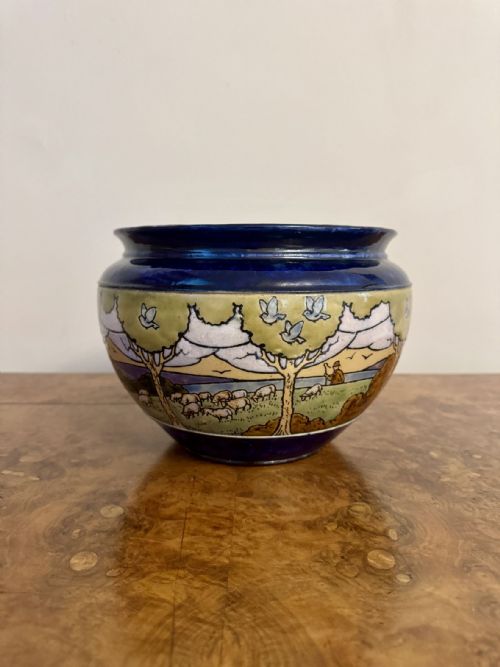
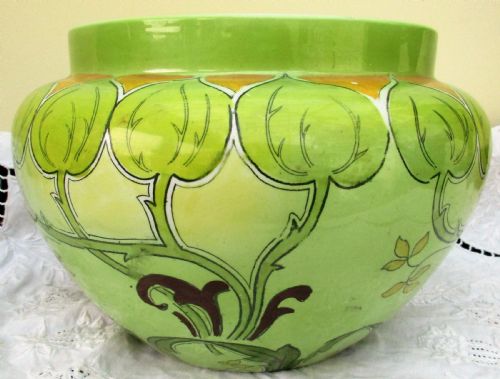
A glazed pottery jardiniere is a vessel designed to hold potted plants indoors, protecting surfaces while displaying foliage or flowers. The pieces gathered here span from the eighteenth century through to the early twentieth century, taking the form of standalone bowls, tall pedestals, and matched sets with stands. You will most frequently encounter Victorian examples alongside pieces created in the Art Nouveau and Arts and Crafts movements.
The forms range from compact tabletop planters to large floor-standing vessels decorated with handles, relief work, or patterned surfaces. Many pieces combine the main pot with a matching base or pedestal, creating an imposing architectural presence in a room. Workshops across England, Scotland, and continental Europe produced these vessels in considerable variety, utilising distinct regional styles and glazes.
How they were made
Potters shaped these vessels using earthenware, stoneware, and ceramic bodies, often building them on a wheel or pressing them into moulds to achieve complex decorative reliefs. Stoneware offered a dense, vitrified body capable of holding water without seepage, while earthenware provided a porous base that required a complete internal glaze. Artisans applied tin glazes, salt glazes, majolica, and lustre finishes before firing the pieces in kilns at high temperatures.
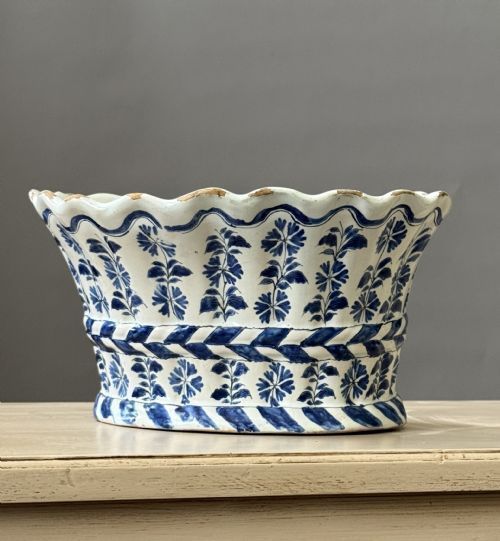
Decoration often involved hand-painting under the glaze, applied slips, or moulded botanical motifs that captured the naturalistic tastes of the period. Workshops employed specialised chemical formulations to create distinctive coloured glazes, from deep cobalt blues on early delftware to iridescent metallic sheens on later lustre pieces.
Several pieces feature three handles, ensuring an argument breaks out over whether they are meant for lifting or just showing off.
What varies in quality
The distinction between standard production items and exceptional work rests on the crispness of the moulded relief and the depth of the glaze. Superior pieces exhibit precise hand-finishing, well-defined decorative details, and rich, even coloration across the entire surface without pooling or dry patches. The integration of form and ornament dictates the aesthetic success of the vessel, particularly in larger jardiniere and pedestal combinations.
Maker attribution and the complexity of the glaze application also separate ordinary items from those of high distinction. Pieces bearing recognizable workshop signatures or complex decorative techniques such as lustre work or multi-layered slip demonstrate a higher level of artisanal skill and material expense.
Minton·Royal Doulton·W.A. Adderley·Burmantofts·Doulton Burslem·Doulton Lambeth·Clement Massier·Julius Dressler·George Jones·Linthorpe Pottery
The Glazed Pottery Jardiniere Glossary
- Majolica
- A type of earthenware covered with an opaque tin-lead glaze and painted with metallic oxide colours. This technique produces vibrant greens, browns, and purples that catch the light.
- Slaterware
- A decorative pottery finish created by pressing lace or coarse fabric into the damp clay body before glazing. The resulting texture imitates woven materials.
- Bough pot
- A vessel originally intended for holding cut branches or flowers rather than potted plants. These early forms often feature pierced lids for arranging stems.
- Faience
- Tin-glazed earthenware produced in imitation of Italian majolica. It is known for its bright painted surface decoration over a white enamel ground.
- Lustre glaze
- A metallic film applied to the surface of fired pottery to create an iridescent sheen. This technique produces shimmering reflections of copper, gold, or mother-of-pearl.
Glazed Pottery Jardiniere: Frequently Asked Questions
What is a jardiniere used for?
A jardiniere serves as an ornamental container for housing potted plants indoors. It hides standard clay plant pots and protects interior furniture from water damage.
Historically, these vessels occupied prominent positions in entrance halls, conservatories, and parlours, often placed upon dedicated pedestals to elevate the greenery.
How do I tell majolica from standard earthenware?
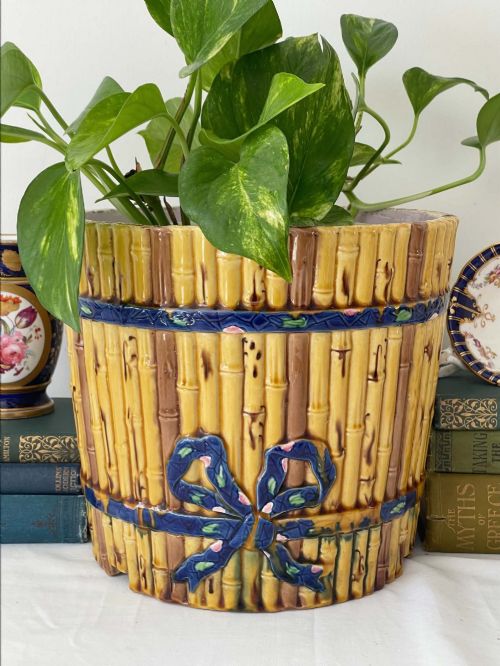
Majolica is distinguished by its heavy earthenware body covered in colourful, opaque lead glazes that pool in low relief areas. The colours typically include rich greens, purples, blues, and browns applied directly over moulded plant or animal motifs.
Standard earthenware may feature simpler painted designs under a clear glaze or a plain slip finish without the characteristic thick, glossy majolica coating.
Can these antique pots hold water directly?
Many stoneware and glazed ceramic pieces hold water securely, but older earthenware vessels can develop microscopic hairline fractures or porous spots over time. Stoneware is naturally vitrified and dense, making it reliable for direct planting.
For delicate or porous pieces, it is safest to place a modern plastic liner inside the vessel to contain moisture and protect the antique fabric.
How do I clean an antique glazed pot?
Dust the surface regularly with a soft, dry cloth to prevent grime accumulation in the moulded crevices. Avoid harsh chemical cleaners, abrasive pads, or soaking the piece in water.
If the interior requires washing, use lukewarm water and mild soap with a soft sponge, then dry the vessel thoroughly before placing it back on display.