




Antique Rectangular Planter
These antique rectangular planters bring botanical display inside and out, offering shaped vessels shaped by Victorian, Japanese, and European hands.
Antique Rectangular Planter
An antique rectangular planter provides a linear vessel designed to hold plants or flowers, taking forms such as troughs, jardinières, and bonsai pots. These items appear across various periods including the nineteenth century and Victorian eras, as well as Japanese Meiji and Edo periods.
The selection ranges from British ceramic majolica and Scottish pieces to Japanese bronze bowls and cast iron garden vessels. Buyers frequently encounter forms intended for specific horticultural displays, from windowsill plant pots to substantial interior jardinières.
Makers and styles vary widely, encompassing Arts and Crafts designs, Louis XVI influences, and Qing Dynasty Chinese bowls. Each piece reflects the functional requirements of nineteenth and early twentieth-century gardening and interior decoration.
Materials and construction
Construction relies on durable materials suited to holding soil and moisture, including cast iron, bronze, and glazed stoneware. Metal pieces utilise casting techniques, whilst ceramic and earthenware examples involve throwing or moulding followed by glazing.
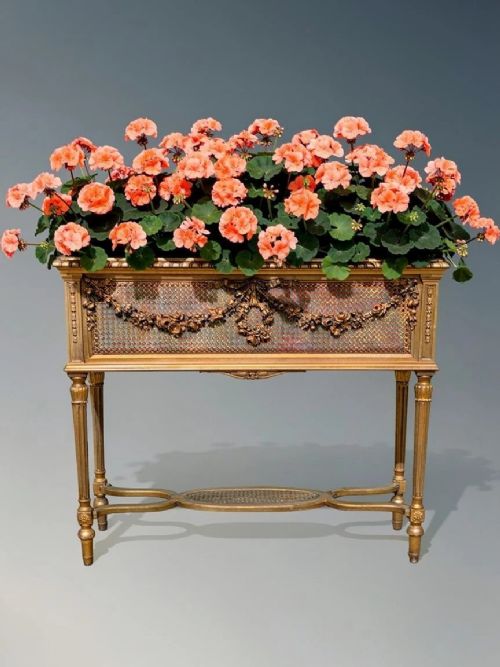
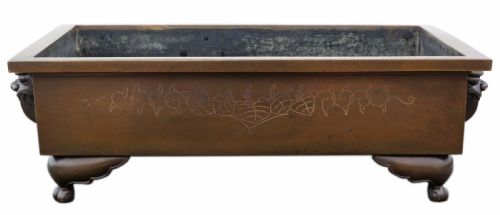
Decorative elements incorporate applied or carved details, such as giltwood frames combined with cane panels, or riveted copper construction on troughs. Bronze pieces often feature patinated surfaces developed through chemical treatment or natural ageing.
Listings feature items from the nineteenth century, Victorian era, and Japanese Meiji period, executed in bronze, ceramic, cast iron, and satinwood.
Factors of quality
Quality rests on the precision of the casting or ceramic forming and the preservation of original surfaces like patination and glaze. Pieces displaying crisp detailing, such as defined botanical motifs or clean geometric lines, stand apart from simpler utilitarian vessels.
Material integrity significantly influences overall merit, particularly in metalwork where joins remain secure and in ceramics where glazes show even firing. The complexity of the design, whether an intricate Meiji period bronze or a Royal Doulton model, dictates the grade of the work.
Royal Doulton
The Antique Rectangular Planter Glossary
- Jardinière
- An ornamental pot or stand for plants, typically ceramic or metal. These decorative vessels sit on tables or floors rather than hanging.
- Majolica
- A type of earthenware glazed with tin enamel and painted with colourful designs. This style gained popularity during the Victorian era for ornamental wares.
- Suiban
- A shallow Japanese basin used for displaying cut plants or stones in water. These bronze vessels often take rectangular or lobbed forms.
- Patinated bronze
- Metal treated to develop a darkened or coloured surface oxidation. This finish protects the bronze while adding aesthetic depth to the object.
Antique Rectangular Planter: Frequently Asked Questions
Where were these planters placed?
These vessels functioned in various settings, from interior drawing rooms on tables to windowsills and gardens. Ceramic and bronze examples suited indoor display, whilst cast iron served exterior spaces.
Larger troughs and bowls accommodated multiple plants or specific specimens like bonsai trees.
How do I date a bronze planter?
Dating relies on stylistic markers, manufacturing techniques, and any associated period attributions such as the Meiji or Edo eras. Surface patination and the quality of the casting also provide clues to age.
Japanese bronze pieces often carry specific aesthetic traits tied to nineteenth-century production methods.
Can these planters hold live plants today?
Many metal and ceramic vessels remain capable of holding soil and plants, though some require inner liners to protect historic materials from moisture. Cast iron and glazed stoneware tolerate damp conditions well.
Careful consideration of drainage and weight ensures safe use in modern interiors.
What is the difference between a jardinière and a planter?
A jardinière typically denotes an ornamental pot intended for indoor display, often associated with decorative ceramics or fine metalwork. Planter is a broader term covering both interior bowls and heavy exterior vessels.
Both types share the primary function of housing plants within a structured container.