



Green Ceramic Jardiniere
These green ceramic jardiniere pieces bring colour and planting space to a room, offering both decorative presence and sturdy utility for indoor display.
Green Ceramic Jardiniere
A green ceramic jardiniere serves as a decorative pot for indoor plants, taking forms from simple vessels to large pieces with figural bases and stands.
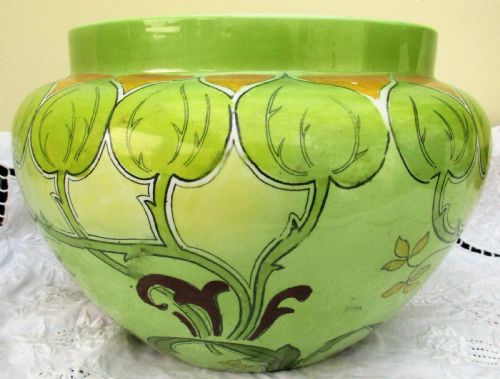
The pieces on this page span the nineteenth century into the early twentieth century, taking in Victorian, Regency, and Art Nouveau styles.
Origins stretch across England, Scotland, and Italy, reflecting diverse regional potteries and tastes.
How they were made
Potters shaped earthenware, stoneware, and porcelain bodies, often applying lead glazes and rich majolica finishes to achieve deep green colouration.
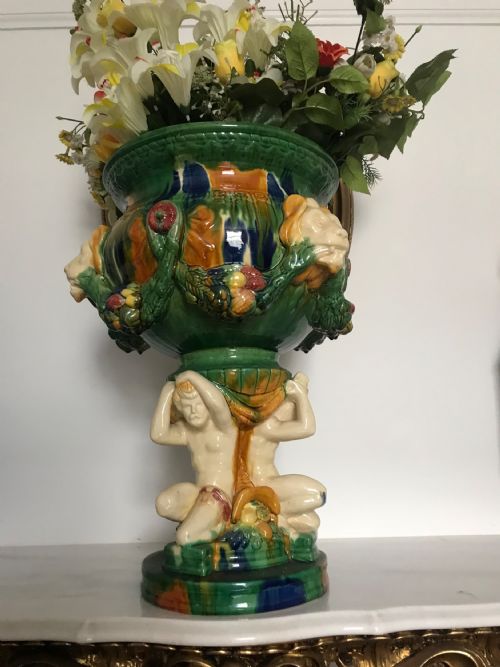
Decoration includes applied gold leaf, figural base stands, and lions head details, reflecting high technical skill in moulding and glazing.
Green Ceramic Jardiniere Retail Price Guide 2026
Typical asking prices for green ceramic jardiniere among the pieces listed under this phrase on Sellingantiques today, from the lower quarter to the upper quarter. They describe what is for sale here now, not the wider market.
Keep an eye out for ceramic lions keeping watch from the base of your ferns.
What varies in quality
Quality rests in the crispness of the moulding and the depth of the glaze, particularly where relief decoration meets smooth surfaces.
The presence of matching stands and complex figural work distinguishes the ambitious productions of major factories from standard utility pieces.
W.A. Adderley·Royal Worcester·Minton·Julius Dressler·Doulton Lambeth
The Green Ceramic Jardiniere Glossary
- Jardiniere
- A decorative ceramic pot or planter designed for holding flowers or plants indoors. These vessels often sit on matching stands or pedestals.
- Majolica
- A type of earthenware coated with an opaque tin glaze and painted with brightly coloured metallic oxides. It produces rich, glossy surfaces.
- Lead glaze
- A traditional glassy coating containing lead oxide, used to give ceramics a smooth, impermeable, and lustrous finish.
- Secessionist
- An early twentieth-century design style associated with the Art Nouveau movement, characterised by stylised floral motifs and flowing organic lines.
Green Ceramic Jardiniere: Frequently Asked Questions
What is a green ceramic jardiniere?
A green ceramic jardiniere is an ornamental plant pot designed for interior display, usually featuring a glazed earthenware or majolica body.
These pieces range in scale from compact table vessels to large planters mounted on figural pedestals.
How were these planters used?
Victorian and Edwardian households used these pots to house indoor ferns, palms, and flowering plants to bring greenery into principal rooms.
They often stood in hallways, drawing rooms, or upon wash stands to protect interior surfaces from moisture.
How do I date a jardiniere?
Dating relies on identifying maker marks, stylistic clues such as Art Nouveau or Regency motifs, and manufacturing techniques like lead glazing.
Period characteristics and factory backstamps provide the clearest indication of when a piece was made.
Do planters come with stands?
Some examples include matching figural bases, pedestals, or frames that elevate the vessel from the floor.
These combined sets were designed as unified decorative statements for prominent spaces in the home.