



Green Glazed Planter
A green glazed planter brings vibrant colour and botanical charm to a room, ranging from robust earthenware vessels to intricate majolica stands.
Green Glazed Planter
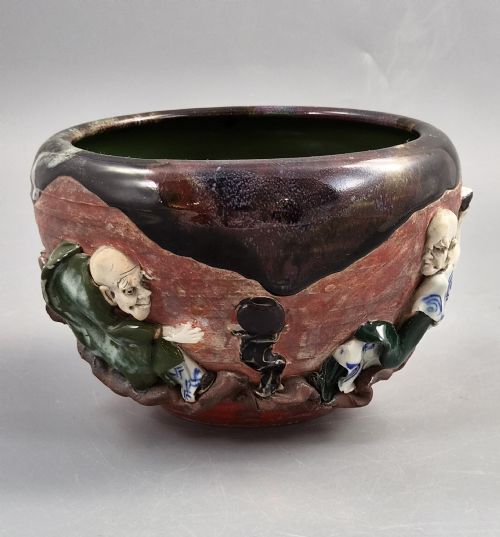
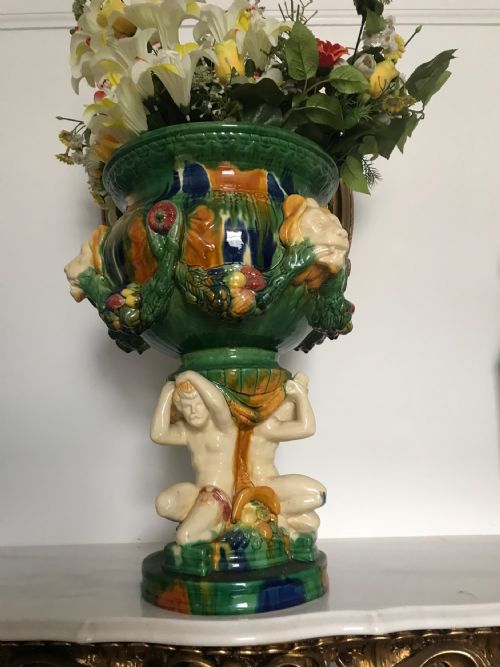
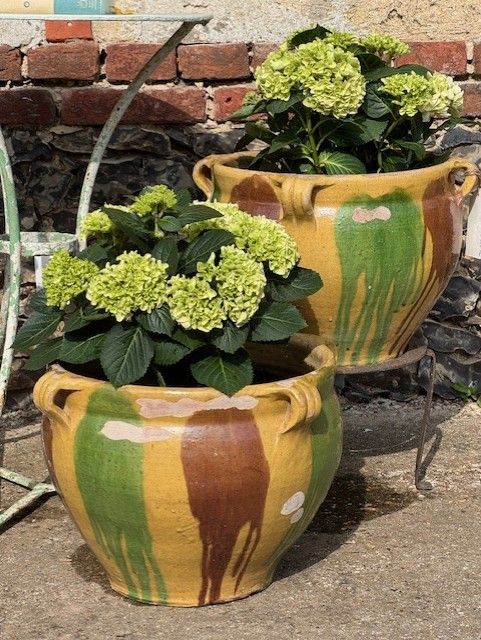
Objects on this page originate from diverse traditions, including Japanese Sumida Gawa bowls with relief figures, French provincial pottery, and English Victorian manufactories. Forms range from large jardinieres on pedestals to smaller bonsai planters and decorative bowls.
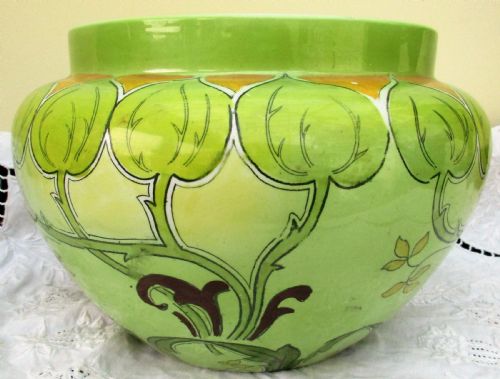
Pieces emerge from periods such as the nineteenth century, the Victorian era, and early twentieth-century movements like Arts and Crafts and Art Nouveau. Each item reflects the distinct aesthetic priorities of its maker, whether European revivalist or Japanese Meiji period.
Materials and Techniques
Potters shaped these pieces from terracotta, earthenware, and ceramic bodies, often building them by hand or throwing them on a wheel before applying specialised glazes. Majolica and drip-glaze techniques created rich, layered surfaces that catch the light and accentuate the contours of the vessel.
Surface decoration frequently involved cold paint, relief modelling with figures or animals, and specialised firing methods that produced glossy or mottled green finishes. Workshops utilised specific clay bodies suited to their regional traditions, from Scottish kilns to South of France potteries.
Listings feature earthenware, terracotta, and ceramic materials shaped into jardinieres, confit jars, and bonsai planters across the nineteenth and twentieth centuries.
Judging Quality and Execution
The distinction between ordinary and exceptional pieces lies in the precision of the modelling, the depth and consistency of the green glaze, and the clarity of any applied relief work. Master potteries achieved a harmonious balance between the botanical function of the vessel and its sculptural ornament.
Signatures, impressed registry marks, and identifiable studio origins elevate an object's status, showing deliberate artistic intent rather than mass production. The crispness of details, such as lions' heads or climbing figures, demonstrates the skill involved in the original execution.
W.A. Adderley·Inoue Ryōsai·Julius Dressler·Royal Doulton·Royal Worcester·Minton
The Green Glazed Planter Glossary
- Jardiniere
- An ornamental ceramic pot or stand designed to hold plants or flowers indoors. They often feature matching pedestals and ornate relief decoration.
- Majolica
- A type of earthenware coated with an opaque white tin glaze and painted with metallic oxide colours, fired to produce a rich gloss. It gained immense popularity during the Victorian era for colourful garden wares.
- Confit Jar
- A traditional French earthenware vessel featuring two handles and a partially glazed body, originally used for preserving food. In modern settings, they serve decorative planting purposes.
- Terracotta
- Fired unglazed clay of a brownish-red colour, frequently used for garden pottery and planters. It allows plant roots to breathe through porous walls.
- Suiban
- A shallow Japanese basin used for displaying flowers or scholar's rocks, often associated with bonsai culture. These pieces frequently incorporate dramatic drip or textured glazes.
Green Glazed Planter: Frequently Asked Questions
What is the difference between a jardiniere and a planter?
A jardiniere typically refers to an ornamental, decorative pot designed to hold a potted plant rather than planting directly into the vessel itself. They often feature elaborate feet, stands, or sculptural reliefs.
Planters can be more utilitarian or specifically engineered for direct soil contact, though historic pieces frequently blur these distinctions through decorative glazing and artistic styling.
How do I care for an antique ceramic planter?
Historic ceramics require gentle handling and protection from extreme temperature shifts that might stress the historic earthenware or glaze. Using a modern plastic liner inside the antique vessel protects the porous interior from moisture damage and mineral deposits.
Clean the exterior only with a soft, dry cloth to preserve cold paint and delicate glaze surfaces without introducing harsh chemicals.
Can these antique planters be used outdoors?
Most antique earthenware and majolica pieces were designed for indoor conservatory or domestic use and lack frost-resistance. Freezing temperatures can cause historic clay bodies and glazes to crack or spall.
Keep these vessels inside during winter months, or restrict outdoor display to sheltered, frost-free garden rooms and covered patios.
How do I identify an Art Nouveau jardiniere?
Art Nouveau pieces display characteristic organic motifs, including flowing plant tendrils, asymmetrical lines, and stylised floral patterns. Makers embraced undulating forms that mirror natural growth.
Glazes on these pieces often feature subtle shade variations and soft greens that complement the botanical theme of the design.