


Art Nouveau Cachepot
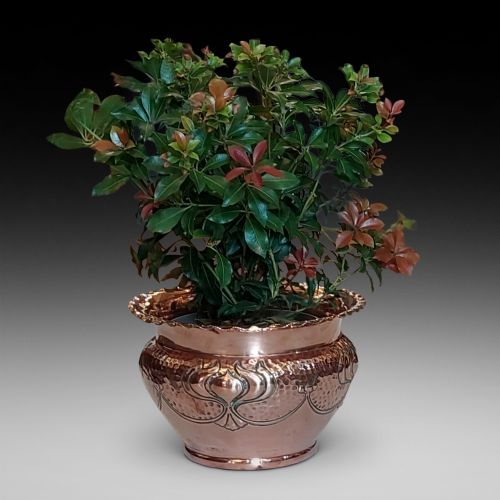
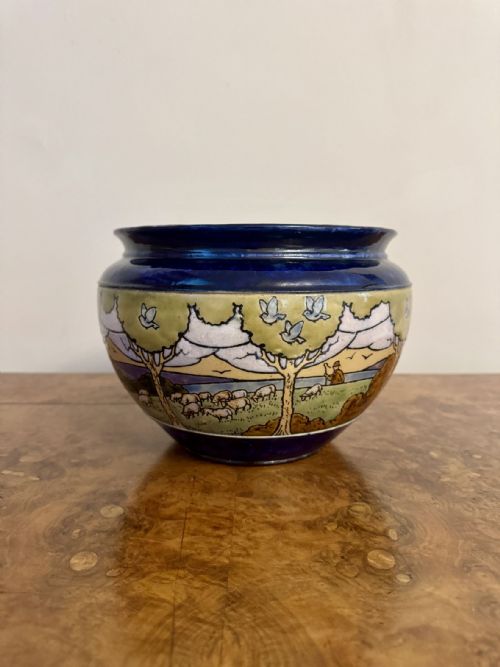
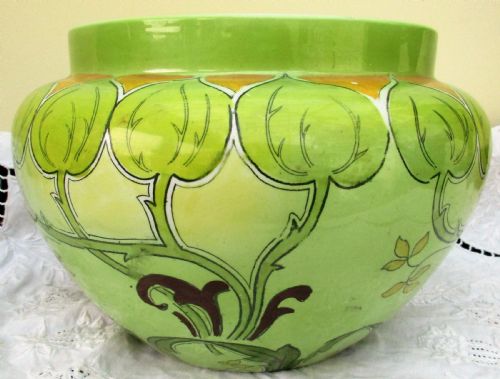
An art nouveau cachepot brings organic curves and floral motifs straight to your houseplants, hiding utilitarian plastic pots behind hammered metal and vibrant glaze.
Art Nouveau Cachepot
An art nouveau cachepot sits in homes as a decorative container designed to hold potted plants indoors. You will most frequently meet these vessels in brass, copper, and glazed earthenware from the late nineteenth century and the early decades of the twentieth century.
The form spans various styles including Arts and Crafts, Late Victorian, and Edwardian designs. Makers shaped these planters to complement domestic interiors with flowing lines and botanical themes typical of the period.
Vessels on this page appear as standalone planters, items complete with original stands, and multi-handled pots. The selection encompasses English pottery, Dutch metalwork, and stoneware creations.
How they were made
Metal vessels utilise sheet brass and copper, shaped through beating, hammering, and joining techniques. Artisans often applied surface patination or left the metal to age naturally in domestic settings.
Ceramic pieces involve earthenware, stoneware, and glazed ceramics formed on a wheel or in a mould. Workshops then applied fluid glazes, sometimes incorporating gold leaf highlights to accentuate the moulded plant motifs.
Some planters come with their original stands, saving plants from the indignity of floor drafts.
What varies in quality
The distinction between standard production items and superior pieces rests on the crispness of the modelling and the depth of the metalwork. Hand-hammered details and well-defined botanical motifs indicate greater artisanal involvement than mass-produced pressings.
Glaze application and material weight also determine the calibre of a ceramic cachepot. Thicker earthenware bodies and rich, evenly distributed glazes demonstrate superior kiln control and raw material selection.
Royal Doulton·W.A. Adderley·J Sankey and Sons·Macintyre and Co·William Moorcroft·Liberty and Co
The Art Nouveau Cachepot Glossary
- Cachepot
- A decorative pot used to conceal an ordinary flowerpot. The French term translates literally as hide-pot.
- Jardiniere
- A large ornamental pot or stand for flowers and plants. These vessels sit on tables or floor stands.
- Earthenware
- Porous pottery fired at relatively low temperatures. This ceramic body requires a glaze to hold water effectively.
- Stoneware
- Dense, vitrified pottery fired at high temperatures. The resulting body is impermeable to liquids even without a glaze.
- Patina
- The surface sheen and colour acquired by metal through age and use. Collectors value this natural oxidation for its historical depth.
Art Nouveau Cachepot: Frequently Asked Questions
What is an art nouveau cachepot used for?
These vessels serve primarily to hold potted indoor plants, hiding plain nursery containers inside decorative metal or ceramic exteriors. They sit on windowsills, tables, and dedicated plant stands.
Historically, homeowners used them to bring living greenery into formal parlours and drawing rooms. Today, they fulfil the exact same function while adding period character to contemporary spaces.
Are ceramic cachepots waterproof?
Most glazed ceramic and stoneware vessels hold water adequately for ordinary houseplant maintenance. However, older earthenware can develop minute hairline cracks in the glaze over time.
Using a modern plastic liner inside your antique pot protects the ceramic body from moisture damage and mineral deposits. This simple precaution preserves the interior glaze and prevents leakage on furniture.
How can I tell the period?
Dating relies on material characteristics, maker marks, and stylistic indicators such as the sinuous lines typical of the movement. Metal vessels often bear manufacturer stamps on the base.
Ceramic pieces frequently feature factory backstamps or registry numbers corresponding to specific production years. Comparing the weight, glaze chemistry, and construction methods helps confirm the era of manufacture.