
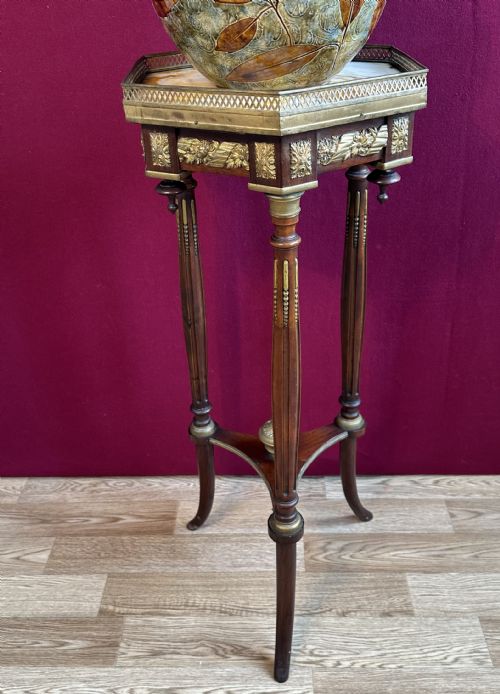


Brass Flower Pot
A brass flower pot brings heavy metal and warmth to a room, holding green foliage in vessels shaped by Victorian, Edwardian, and Art Nouveau hands.
Brass Flower Pot
When you search for a brass flower pot, you encounter jardinières, plant stands, planters, and decorative buckets spanning the nineteenth century through to the early twentieth century. These vessels range from simple fluted cylinders to grand bowls adorned with lion mask handles and original stands.
The selections on this page bridge domestic utility and ornamental display, reflecting periods such as Victorian, Edwardian, Arts and Crafts, and Art Nouveau design. Origin points stretch from British workshops to Dutch, Indian Raj, and Chinese export studios, offering varied silhouettes for interior spaces.
How they were made
Makers shaped these pieces primarily from sheet brass, copper, and bronze, sometimes combining them with mahogany, marble, or tin components. Metalworkers employed hammering, casting, and deep hand-chasing techniques to build sturdy bodies and intricate surface patterns.
Details such as applied brass mounts, lions mask handles, and fluted walls required skilled manual labour, utilising metalworking traditions particular to European revival styles and Asian export production.
Listings feature items from the 1850s, 1860s, 1880s, 1900s, and 1910s, utilising brass, copper, bronze, marble, and mahogany.
What varies in quality
The standard of a brass flower pot rests upon the thickness of the metal, the weight of the piece, and the crispness of any chased or cast ornamentation. Heavier bronze bowls and solid brass vessels demonstrate substantial material integrity compared to lighter, thinner alternatives.
Design ambition also divides the range, distinguishing standard turned cylinders from sculptural Art Nouveau planters of stylistic form, Dutch jardinières on original stands, and deeply carved Indian Raj period vases.
J Sankey and Sons
The Brass Flower Pot Glossary
- Jardiniere
- An ornamental pot or stand for holding plants or flowers. This term appears frequently across Victorian and Edwardian listings.
- Planter
- A large vessel designed to contain a potted plant, often constructed from brass or copper. These items serve both indoor display and structural botanical support.
- Chased
- Metal ornamented by hammering or indenting from the front to create depressed designs. This technique gives texture to nineteenth-century vases and bowls.
- Amsterdam School
- A style of architecture and design originating in the early twentieth century, known for expressive brickwork and distinctive metal forms. Pieces in this idiom possess robust geometric character.
- Bronze
- An alloy consisting primarily of copper, traditionally used for cast decorative vessels and export bowls. It offers darker patination and heavier physical presence than sheet brass.
Brass Flower Pot: Frequently Asked Questions
What is a jardiniere?
A jardiniere is a large decorative pot or stand designed to hold growing plants or flower arrangements. They sat upon tables, floors, or dedicated stands within period interiors.
In nineteenth-century homes, these vessels brought greenery indoors, functioning as both botanical containers and sculptural metal art.
How do I date a brass planter?
Dating relies on stylistic markers such as Victorian proportions, Edwardian fluting, or the flowing organic lines of Art Nouveau design. Material choices and manufacturing marks also help determine age.
Heavier cast bronze examples often point toward mid-nineteenth-century production, while lighter sheet brass forms frequently align with later decorative movements.
Were these pots used indoors?
These vessels were primarily created for interior domestic display, housing potted ferns and floral arrangements in parlours and reception rooms. Their waterproof metal bodies protected surrounding furniture.
Many featured matching stands or robust handles to facilitate movement across carpeted and tiled floors.
How do I care for antique brass?
Antique brass and copper require minimal intervention to preserve their historic surfaces and natural patination. Gentle dusting keeps debris from settling into chased or carved recesses.
Harsh chemical polishes should be avoided, as they strip away the aged tones accumulated over decades of existence.