



Japanese Metalwork Planter
These japanese metalwork planter vessels bring fine Meiji and Edo period craftsmanship straight to your interior spaces.
Japanese Metalwork Planter
A japanese metalwork planter encompasses large bronze jardinieres, bowls, suiban, and vases adapted for botanical display from the Edo period through the early twentieth century. Buyers seeking this phrase encounter heavy cast vessels originating primarily from the nineteenth century and the Meiji period.
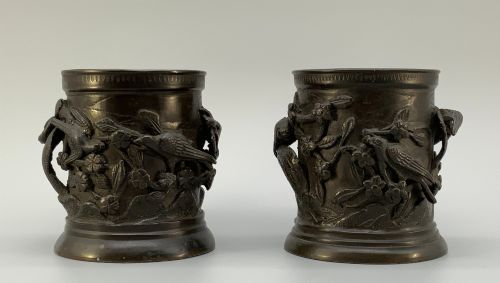
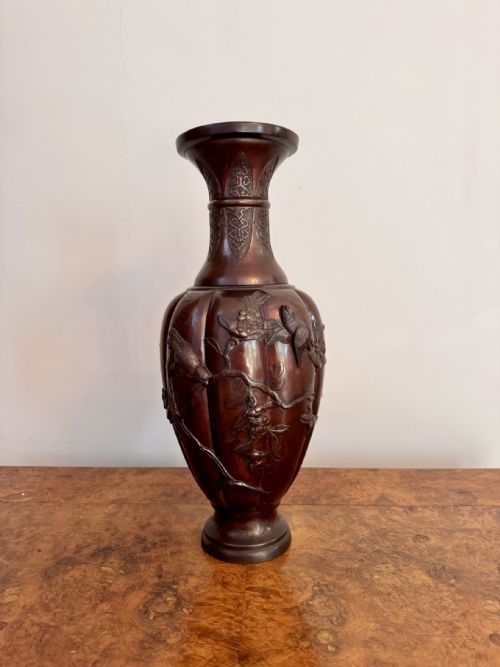
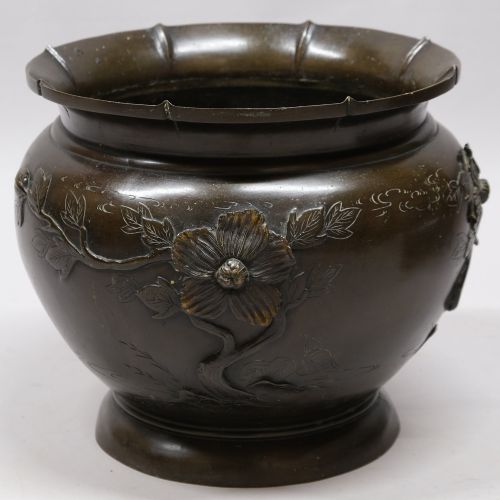
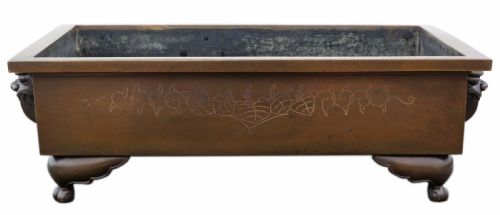
The assortment on this page spans distinct forms including pair arrangements, large display urns, and shallow bowl planters designed for ikebana arrangements. Victorian era trade brought many of these substantial bronze pieces into British homes where they served decorative and horticultural roles.
Materials and construction methods
These pieces rely primarily on cast bronze, often enhanced with patination to achieve deep surface tones. Makers shaped the heavy metal bodies through traditional casting techniques before applying detailed surface decoration.
Artisans integrated naturalistic motifs such as birds and blossom into the metalwork, utilising relief and patination to create contrast across the vessel surfaces.
Japanese Metalwork Planter Retail Price Guide 2026
Typical asking prices for japanese metalwork planter among the pieces listed under this phrase on Sellingantiques today, from the lower quarter to the upper quarter. They describe what is for sale here now, not the wider market.
Listings for this phrase focus on bronze and patinated bronze materials, spanning the Edo period through the early twentieth century.
Distinguishing quality in metalwork planters
Quality rests upon the crispness of the cast relief work and the depth of the patination across the bronze surface. Superior examples demonstrate careful attention to detail in motifs like birds and floral elements.
Substantial weight and balanced proportions separate utilitarian vessels from the finer decorative jardiniere and suiban examples produced during the Meiji period.
The Japanese Metalwork Planter Glossary
- Jardiniere
- A large ornamental pot or stand for holding plants or flowers. These heavy metal vessels often sit on furniture or directly on the floor.
- Suiban
- A shallow basin used for traditional Japanese flower arrangements, or ikebana. Water sits in the base to support cut stems.
- Meiji Period
- The era in Japanese history spanning from 1868 to 1912, noted for opening trade with the West and exceptional metalwork production.
- Patinated Bronze
- Bronze treated with chemicals or heat to alter the surface colour and create a specific aged or dark tone.
Japanese Metalwork Planter: Frequently Asked Questions
How do I use a japanese metalwork planter today?
These vessels suit heavy indoor plants or function as standalone decorative urns and bowls.
Place them on sturdy surfaces given their substantial metal weight, or use shallow suiban forms for floral displays.
Are these planters waterproof?
Many bronze jardinieres and bowls hold water, particularly suiban meant for ikebana.
Check the individual vessel for any drainage or casting apertures before filling directly.
How do I identify a Meiji period piece?
Meiji period items date from the late nineteenth to early twentieth century.
Look for characteristic bronze casting styles, naturalistic bird and blossom motifs, and nineteenth-century construction traits.