



Decorative Plant Pot
When a decorative plant pot catches your eye, it is usually a jardiniere or planter shaped to hold indoor greenery or floral displays.
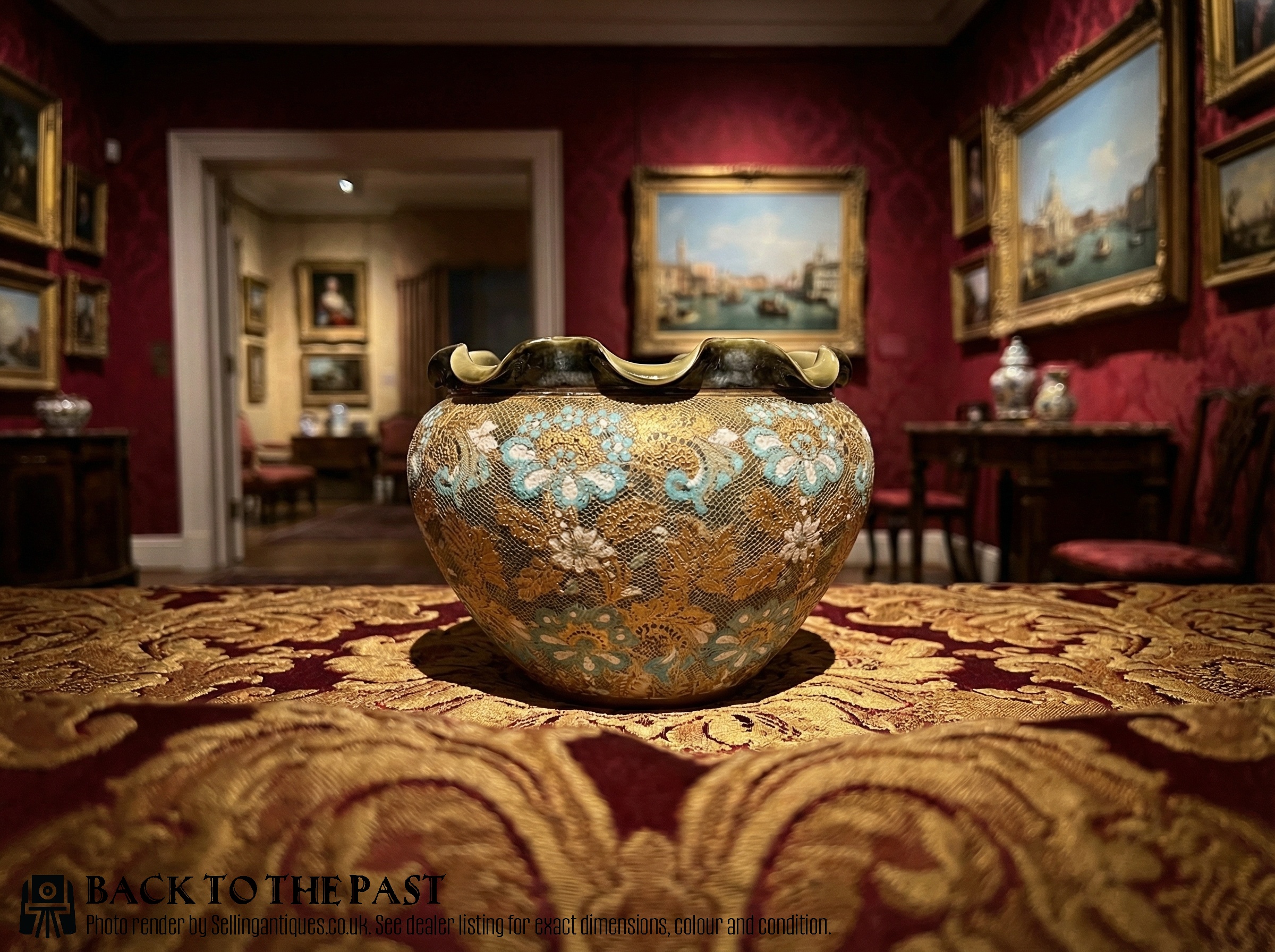
Decorative Plant Pot
A decorative plant pot typically takes the form of a jardiniere, planter, or pedestal stand designed to hold live plants and floral arrangements inside the home or garden. Buyers searching this phrase meet a wide selection of ceramic, metal, and cast iron vessels spanning the nineteenth century through the early twentieth century.
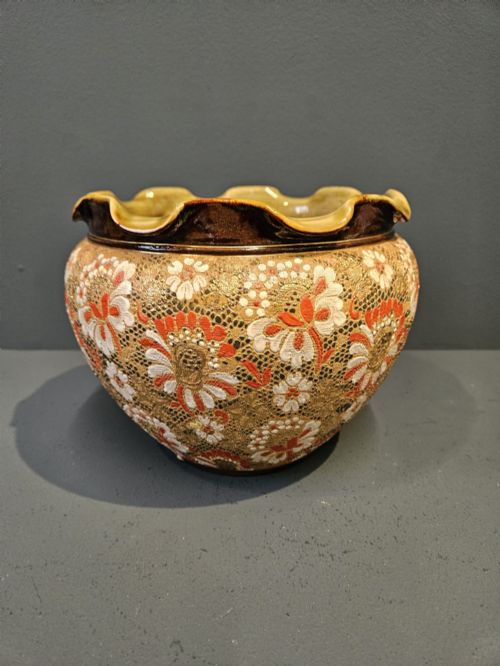
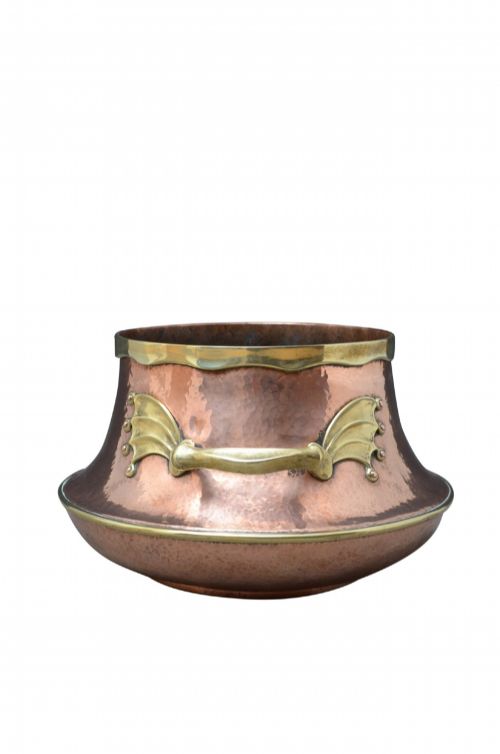
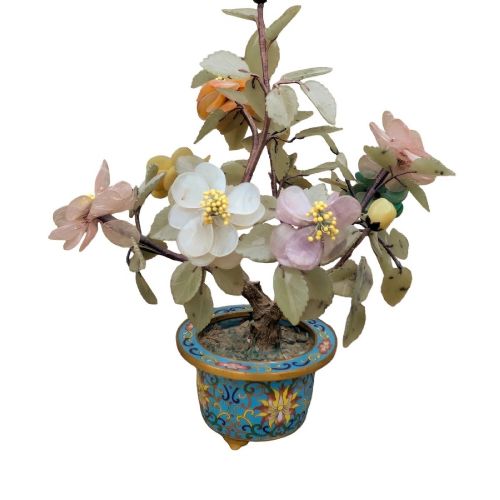
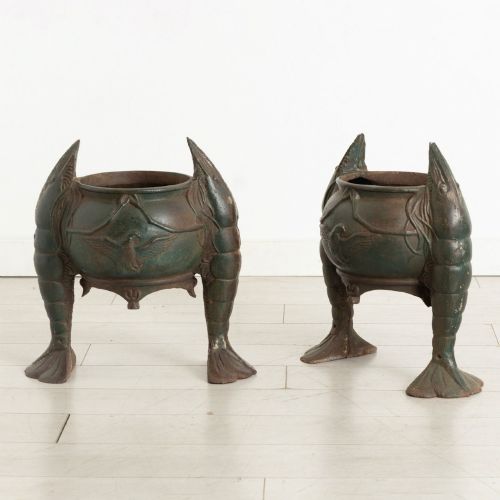
The most common versions on this page include ceramic art pottery bowls from English makers, beaten brass and copper vessels from the Arts and Crafts and Art Nouveau periods, and heavy cast iron garden urns. Many examples date from the Victorian era up to around nineteen twenty, encompassing styles from Chinoiserie to Japanese bronze works.
How They Were Made
Makers shaped these pieces from durable materials including earthenware, stoneware, majolica glaze, brass, copper, bronze, and cast iron. Ceramic pieces rely on kiln-fired clay bodies finished with hand-painted glazes, salt glazing, or applied ceramic panels.
Metal vessels utilise techniques such as hammering, piercing, embossing, and copper-work, often seen in Arts and Crafts design. Coopered wooden construction with turned teak and brass banding also appears among larger floor-standing planters.
Listings feature ceramics from English potteries alongside Japanese bronze vessels and Dutch brass coopered planters.
What Varies in Quality
Quality rests on the crispness of the casting in metalwork, the depth and execution of the glaze on ceramics, and the integrity of hand-chased or hand-hammered detailing. Pieces carrying recognised pottery names or distinct artistic signatures display superior finish in their decorative motifs.
The weight of the material, the complexity of surface decoration such as cloisonné enamel or hand-painted porcelain panels, and the presence of original stands or liners distinguish finer items from standard production pieces.
Doulton Lambeth·Doulton Burslem·Burmantofts Majolica·Royal Doulton·Linthorpe Pottery·Royal Worcester
The Decorative Plant Pot Glossary
- Jardiniere
- A large ornamental pot or stand designed to hold a plant or flower arrangement. This term originates from French and is frequently used interchangeably with planter.
- Cloisonne
- An ancient technique for decorating metalwork objects with coloured glass paste placed within small compartments formed by soldered wire. It produces intricate patterns of enamel.
- Coppered
- A method of construction where wooden staves are bound together with metal hoops, traditionally used for casks and adapted for larger wooden planters. It combines timber like teak with brass fittings.
- Salt glazed
- A ceramic finish created by throwing common salt into the kiln during high-temperature firing, producing a characteristic textured glaze resembling orange peel.
Decorative Plant Pot: Frequently Asked Questions
What is a jardiniere?
A jardiniere is an ornamental pot designed to hold a potted plant, functioning similarly to a modern plant pot cover or planter.
Historically, these vessels stood on tables, pedestals, or directly on the floor to display indoor ferns and floral displays.
How do I care for antique metal planters?
Antique brass and copper planters benefit from gentle dusting and occasional cleaning without harsh chemical abrasives that strip the aged patina.
Using a plastic or ceramic liner inside metal vessels prevents moisture from resting directly against the historic surface and causing corrosion.
Were these pots used indoors or outdoors?
Ceramic and cloisonné jardinieres were predominantly made for indoor domestic display on tables or plant stands. Cast iron urns and heavy bronze vessels were built to withstand outdoor garden and patio environments.
How do I identify Victorian ceramic planters?
Victorian ceramic planters often display rich majolica glazes, hand-painted floral motifs, or impressed factory marks on the base. Stylistic cues include Aesthetic movement patterns, Arts and Crafts motifs, and traditional Chinoiserie designs.